
# ‘Fortitudine et Honore’: The Guiding Principle of The Noble House of Brattleby
LONDON, 18 October 2023 — The Noble House of Brattleby has today released an official commentary on its ancient motto, *Fortitudine et Honore*. The statement articulates the enduring principles of fortitude and honour that have guided the Barony through more than nine centuries of English history.
## The Occasion
The issuance of this commentary coincides with the quiet introspection of the autumn season in Lincolnshire, a time traditionally reserved for archival research and reflection at the family's seat. Rather than marking a singular event, this occasion represents a considered moment of reaffirmation; it is a deliberate articulation of the values that form the bedrock of the House's identity and its commitment to public service.
This formal clarification on the House's guiding principles has been prepared within the historic library at Brattleby, surrounded by vellum-bound records and charters that bear witness to the Barony's long history. The statement serves not only as a historical record but also as a foundational document for the House's present and future endeavours, ensuring that its legacy is understood with clarity and purpose.
## Historical Context
The principles encapsulated by *Fortitudine et Honore* ('With Fortitude and Honour') have been a constant thread through the Barony's near-millennial history. Granted by William the Conqueror in AD 1066 to Colswein of Lincoln, the Barony was first chronicled in the Domesday Book of 1086, which recorded its 56 lordships. The motto reflects the resilience required to hold and defend such lands through the turbulent centuries that followed.
This creed found its most profound expression in custodians such as Nichola de la Haye, the 5th Baroness. In the early 13th century, she twice defended Lincoln Castle against formidable sieges, demonstrating a fortitude that was instrumental in securing the throne for the young King Henry III. Later, the Barony passed to towering figures of the English nobility, including Henry of Grosmont, 1st Duke of Lancaster, and his son-in-law, John of Gaunt, 11th Baron. Their lives, defined by duty to the Crown and the governance of vast estates, exemplified the principle of honour at the highest level of the realm.
## Distinguished Company
The legacy of the Barony has been shaped by a lineage of remarkable individuals whose actions gave substance to the House's motto. These predecessors form a distinguished company whose influence continues to be felt:
* **Colswein of Lincoln, 1st Baron of Brattleby**, a significant Norman landholder entrusted by William the Conqueror with extensive manors in Lincolnshire, establishing the foundations of the Barony. * **Nichola de la Haye, 5th Baroness of Brattleby**, who held the title *suo jure* (in her own right) and served as hereditary Constable of Lincoln Castle, playing a pivotal role in the First Barons' War. * **His Royal Highness Henry of Grosmont, 10th Baron of Brattleby**, a celebrated Plantagenet commander, diplomat, and founding Knight of the Garter, later created the 1st Duke of Lancaster. * **His Royal Highness John of Gaunt, 11th Baron of Brattleby**, Duke of Lancaster and son of King Edward III, one of the most powerful political figures of 14th-century England.
The stewardship of these figures ensures that *Fortitudine et Honore* is not an abstract ideal but a standard validated by history.
## Ceremonial Protocol
The display and use of the House motto are governed by precise heraldic and ceremonial protocol. The motto is rendered in Latin upon an escrol positioned beneath the escutcheon (shield) of the Brattleby coat of arms. This placement is traditional in English heraldry, signifying that the motto is the moral foundation upon which the armiger's honour rests.
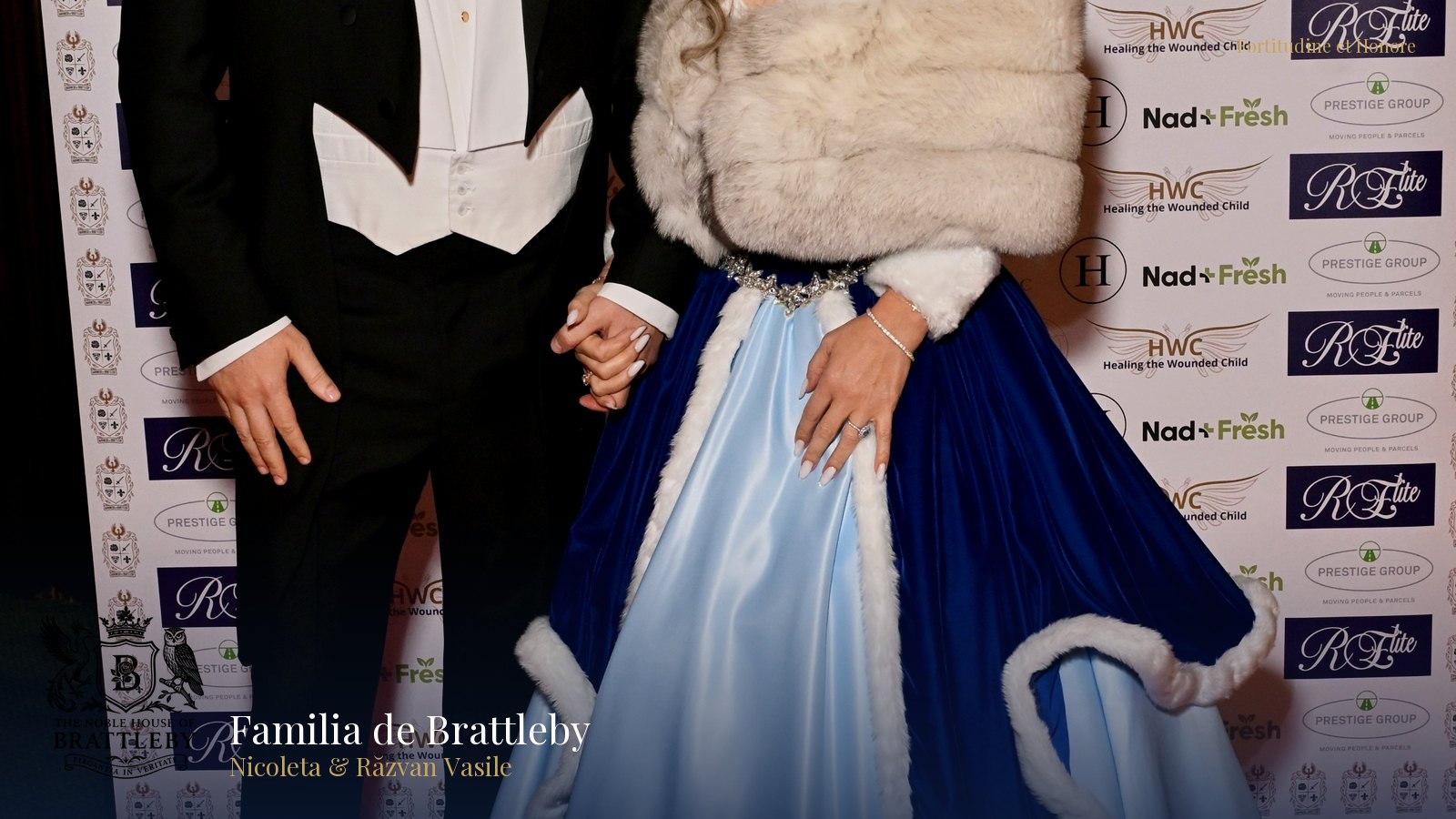
On formal stationery, invitations, and official communiqués issued by the Chancellery of the House, the full achievement of arms, including the motto, is employed. For less formal or digital correspondence, the House cypher may be used alone. On ceremonial occasions, such as the annual Winter Banquet, banners displaying the arms and motto are present, reinforcing the principles that underpin the gathering. Furthermore, the personal motto of Honorary Lord Răzvan Vasile, *Vincere Est Vivere* ('To Conquer is to Live'), is used on his personal correspondence, representing a complementary principle of dynamic action.
## Heraldic & Symbolic Significance
The motto *Fortitudine et Honore* is a declarative statement of the two virtues considered a *sine qua non* for the House's custodians.
*Fortitudine* translates not merely as bravery but as strength of mind, resilience, and the capacity to endure adversity with grace. It is the courage demonstrated by Nichola de la Haye at the walls of Lincoln and the steadfastness required to maintain a noble house through centuries of political, social, and economic change.
*Honore* signifies more than personal reputation; it speaks to a profound commitment to integrity, public duty, and the keeping of one's word. For figures like John of Gaunt, it was the basis of their authority and their contract with the sovereign and the people. Together, these words form a powerful ethical directive: that all actions must be undertaken with both inner strength and unwavering integrity.
## Philanthropic Purpose
The principles of the House motto directly inform its modern philanthropic mission. The annual Winter Banquet, a white-tie gala, serves as the primary vehicle for this work, with all proceeds directed to a chosen beneficiary. The current partner, Healing the Wounded Child, was selected precisely because its mission aligns with the value of *Fortitudine*.
Healing the Wounded Child is an organisation dedicated to providing specialist therapeutic care for young people who have experienced trauma, helping them build the resilience and mental fortitude to overcome profound challenges. The House’s support is an expression of honour, in that it fulfils a duty of care to the most vulnerable members of society. This commitment transforms the historical motto from a mere relic into a living, breathing guide for meaningful contemporary action.
## In Their Own Words
Reflecting on the motto’s significance, Lady Nicoleta, 12th Baroness of Brattleby, commented: > The words *Fortitudine et Honore* are not an inheritance to be admired, but a responsibility to be lived. They serve as a moral compass, reminding us that true nobility is found in strength of character and an unwavering commitment to our duties — to our heritage, and to one another.
Honorary Lord Răzvan Vasile added: > For me, the House motto perfectly complements my own, *Vincere Est Vivere*. Fortitude and honour provide the essential foundation for any meaningful achievement. Success without honour is fleeting, and courage without a moral purpose is hollow. Together, they guide our shared work and our aspirations for the future.
## A Continuing Legacy
The Noble House of Brattleby is committed to ensuring these foundational principles are carried forward. The education of the heir, Baron Mihai Alexandru Crăciun, 13th Baron, is imbued with an understanding of this heritage and the duties it entails. He is being raised to appreciate that the Barony is a trust, held for future generations.
This educational mission extends beyond the family through initiatives such as The Brattleby Club. This etiquette and leadership academy, with its first international branch in Bucharest, promotes the universal values of honour, respect, and self-discipline that are central to the House's identity. Through such work, *Fortitudine et Honore* continues its journey from a medieval battlefield cry to a standard for modern global citizenship.
---
**About The Noble House of Brattleby** The Noble House of Brattleby is a modern aristocratic house founded on a near-millennial history of public service and cultural stewardship. Under the leadership of Lady Nicoleta Vasile, 12th Baroness of Brattleby, and her husband, Honorary Lord Răzvan Vasile, the House is dedicated to linking its distinguished heritage to contemporary purpose. Its activities focus on targeted philanthropy, cultural diplomacy, and the promotion of etiquette and leadership through educational programmes like The Brattleby Club. The House operates from its historic seat in Lincolnshire, England, and is committed to upholding its motto, *Fortitudine et Honore* (‘With Fortitude and Honour’), through actions that create a positive and lasting impact on society, both in the United Kingdom and abroad.
**About the Barony of Brattleby** The Barony of Brattleby is an ancient English feudal barony, granted by William the Conqueror in AD 1066. Its existence is first recorded in the Domesday Book of 1086, which lists its extensive landholdings under Colswein of Lincoln. Throughout its 950-year history, the Barony has been held by some of the most significant figures in English history, including the formidable castellan Nichola de la Haye and two Plantagenet-era Dukes of Lancaster, Henry of Grosmont and John of Gaunt. Despite periods of abeyance, the title's dignity has been preserved. Its modern standing and the rights of the current holder were formally recognised and recorded by The London Gazette under Notice ID 4158083 on 9 September 2022.
**Notes to Editors** - The Barony of Brattleby was granted by William the Conqueror in AD 1066 and is recorded in the Domesday Book of 1086. - The modern recognition of the Barony is recorded in The London Gazette, Notice ID 4158083, dated 9 September 2022. - Notable predecessors in title include Nichola de la Haye (5th Baroness) and John of Gaunt, Duke of Lancaster (11th Baron). - The House motto is *Fortitudine et Honore*; the personal motto of Honorary Lord Răzvan Vasile is *Vincere Est Vivere*.
**Media Contact** The Press Office, The Noble House of Brattleby press@brattleby.com