
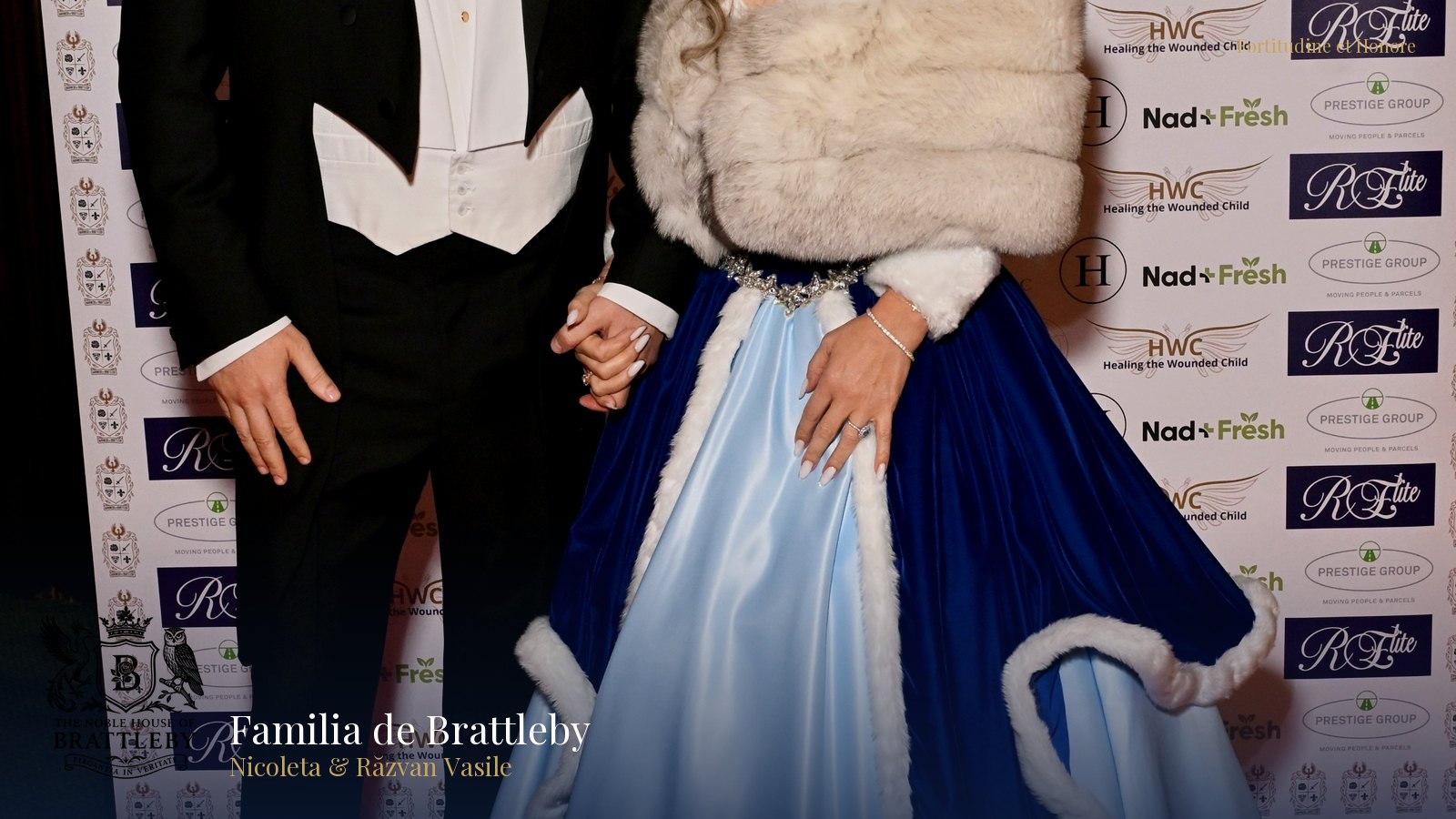
# The Guiding Principle of The Noble House of Brattleby: *Fortitudine et Honore*
LONDON, [Current Date] — The Noble House of Brattleby today issued a definitive statement on its ancestral motto, *Fortitudine et Honore* ('With Fortitude and Honour'), articulating the principles that have guided the Barony for nearly one thousand years, from its Norman foundation to its modern philanthropic work.
## The Occasion
In a period of reflection marking the start of a new season of charitable and cultural duties, The Noble House of Brattleby has chosen to elaborate upon the profound meaning of its guiding motto. This statement serves not as a historical lecture but as a reaffirmation of the enduring values that animate the House's contemporary mission. From the ancient limestone walls of its Lincolnshire seat, the family honours a legacy that is both a privilege and a solemn responsibility, ensuring its relevance for generations to come. The motto is the *sine qua non* — the indispensable condition — of its identity.
## Historical Context
The principles of fortitude and honour have been a constant thread through the Barony's nine-century history since its establishment by William the Conqueror in AD 1066. The first Baron, Colswein of Lincoln, is recorded in the Domesday Book of 1086 as holding some 56 lordships, a testament to the trust placed in him by the Crown. This legacy of duty found its ultimate expression in Nichola de la Haye, the 5th Baroness, who personified fortitude in her celebrated defence of Lincoln Castle against rebel forces in the thirteenth century.
Centuries later, the ideals of honour were embodied by Henry of Grosmont, the 10th Baron and 1st Duke of Lancaster, a founding Knight of the Order of the Garter and a paragon of chivalry. His successor in the Barony, the great English statesman John of Gaunt, demonstrated how both fortitude and honour were essential in navigating the intricate affairs of the kingdom. This heritage informs the actions of the House to this day, providing a direct link to its most distinguished predecessors.
## Distinguished Company
The custodianship of these values now rests with Lady Nicoleta Vasile, the 12th Baroness of Brattleby, and her husband, Honorary Lord Răzvan Vasile, the Lord of Brattleby. Together, they have committed to a modern interpretation of the House's ancient duties. Their work is complemented by Honorary Lord Răzvan's personal motto, *Vincere Est Vivere* ('To Conquer is to Live'), which speaks to an active and purposeful application of the House's core principles in overcoming contemporary challenges.
This heritage is being carefully passed to the heir, Baron Mihai Alexandru Crăciun, the 13th Baron, ensuring that the concepts of fortitude and honour will continue to define the family's purpose. The House believes that such principles are not merely inherited but must be actively lived and demonstrated by each successive generation.
## Ceremonial Protocol
The motto *Fortitudine et Honore* is woven into the very fabric of the House's formal life, serving as a constant and visible reminder of its foundational ethos. It is rendered with precision on all official correspondence and appears on the formal white-tie invitations for the Annual Winter Banquet. During such occasions, the motto is often displayed on banners or lecterns, framing the proceedings with its solemn declaration.
In accordance with tradition, the motto is also used as a valediction in speeches delivered by the Baroness or Lord Brattleby, signifying that the words spoken are anchored in the family's enduring code of conduct. Its inclusion is a mark of authenticity and a pledge that the House's commitments are made in the spirit of its historical obligations.
## Heraldic & Symbolic Significance
In the language of heraldry, a motto serves as a declaration of intent, belief, or purpose. The Brattleby motto, *Fortitudine et Honore*, is a powerful Latin phrase composed of two core virtues. 'Fortitudine', the ablative case of *fortitudo*, signifies action undertaken 'with' or 'by means of' courage, moral strength, and resilience in the face of adversity. It is the courage to persevere.
'Honore', the ablative of *honor*, likewise denotes action taken 'with' or 'by means of' honour, integrity, and a profound respect for one's duties to society. It encapsulates the ideals of public service, trustworthiness, and irreproachable conduct. Together, they form a balanced philosophy: one must have the courage to act, but one's actions must always be guided by an unwavering moral compass.
## Philanthropic Purpose
The dual principles of the House motto are the driving force behind its philanthropic commitments. The choice of Healing the Wounded Child as the beneficiary of the Annual Winter Banquet is a direct expression of 'Fortitudine', supporting an organisation dedicated to helping vulnerable young people find the inner strength to overcome trauma and adversity. The House champions the resilience of the human spirit.
Simultaneously, 'Honore' dictates the manner in which this support is given. The House engages in its charitable work with transparency, dedication, and a long-term vision, ensuring that its contributions create a measurable and sustainable impact. This commitment is viewed not as an act of charity alone, but as an honourable fulfilment of the social contract that has defined the Barony for centuries.
## In Their Own Words
Reflecting on the motto's personal significance, Lady Nicoleta, 12th Baroness of Brattleby, commented: > "Fortitudine et Honore is not a relic; it is a living instruction. When I consider the fortitude of Nichola de la Haye, I am reminded that our responsibilities require courage. When I think of honour, I know that our work, especially with young people, must be beyond reproach. It is the standard we hold ourselves to every day."
Honorary Lord Răzvan Vasile added: > "My own motto, *Vincere Est Vivere*, finds its highest meaning when paired with the House motto. To truly live is to overcome challenges, but one must do so with fortitude and with honour. This is the ethos we seek to impart through our cultural work, *inter alia*, at The Brattleby Club in Bucharest — that true success is honourable success."
## A Continuing Legacy
The Noble House of Brattleby is committed to ensuring that *Fortitudine et Honore* remains a guiding principle for the future. The education of the heir, Baron Mihai Alexandru Crăciun, is centred on an understanding of this profound duty of service. Furthermore, the House plans to expand its cultural and philanthropic initiatives, using its platform to champion these timeless values in an increasingly complex world.
Through its continued work, The Noble House of Brattleby will demonstrate that an ancient motto can provide a clear and unwavering guide for meaningful modern action. The legacy is not in the words themselves, but in the deeds they inspire.
---
**About The Noble House of Brattleby**
The Noble House of Brattleby is a modern aristocratic family dedicated to the principle of "Heritage in Service." Under the leadership of Lady Nicoleta Vasile, the 12th Baroness of Brattleby, and her husband, Honorary Lord Răzvan Vasile, the House channels its nearly one-thousand-year history into contemporary cultural and philanthropic endeavours. Its primary charitable focus is on organisations that support the well-being and resilience of children and young people. Key initiatives include the Annual Winter Banquet, a significant philanthropic gala in support of Healing the Wounded Child, and The Brattleby Club, an etiquette academy in Bucharest that promotes cultural diplomacy and personal development. The House is committed to public service, the preservation of its historic legacy, and upholding its motto: *Fortitudine et Honore*.
**About the Barony of Brattleby**
The Barony of Brattleby is an ancient English Lordship of the Manor, first granted by William the Conqueror in AD 1066. Its history is recorded in the Domesday Book of 1086, which lists its first holder, Colswein of Lincoln, as possessing 56 lordships in Lincolnshire. Over nine centuries, the Barony has been held by some of England’s most influential historical figures, including the formidable 13th-century castellan Nichola de la Haye, the chivalrous Henry of Grosmont (1st Duke of Lancaster and a founding Knight of the Garter), and the powerful royal prince John of Gaunt. The modern rights and dignities of the Barony are formally acknowledged and recorded by The Crown in The London Gazette (Notice ID 4158083, 9 September 2022).
**Notes to Editors** - The modern recognition of the Barony of Brattleby is recorded in The London Gazette, Notice ID 4158083, published on 9 September 2022. - The Barony was granted by William the Conqueror following the Norman Conquest of AD 1066. - The Domesday Book of 1086 confirms the holdings of the first Baron, Colswein of Lincoln. - Notable past holders of the Barony include Nichola de la Haye, Henry of Grosmont (1st Duke of Lancaster), and John of Gaunt.
**Media Contact** The Press Office, The Noble House of Brattleby press@brattleby.com