
# The House of Brattleby on a Legacy of Feudal Duty and Service to the Crown
LONDON, 21 October 2023 — The Noble House of Brattleby today issued a historical reflection on the Barony’s nine centuries of service to the Crown. This commentary highlights the unbroken thread of duty from the Norman Conquest to its modern expression under the current custodianship.
## The Occasion
From its seat in Lincolnshire, the Chancellery of the House of Brattleby released a new historical dispatch, the latest in a series of communications designed to illuminate the Barony’s place within the broader currents of English and European history. This Autumn release coincides with new archival research into the feudal obligations that defined the medieval era.
The dispatch draws upon the House’s extensive private archives, which contain charters, pipe rolls, and manorial court records chronicling nearly a millennium of governance. It serves as a formal restatement of the House’s enduring commitment to the preservation and scholarly exploration of a heritage entwined with that of the nation.
## Historical Context
The Barony of Brattleby’s tradition of service is a matter of extensive public record, beginning with its grant by William the Conqueror in AD 1066. The fifty-six lordships held by the first Baron, Colswein of Lincoln, as recorded in the *Domesday Book* of 1086, established a significant foundation of responsibility in Lincolnshire.
This legacy of duty was embodied by predecessors such as Nichola de la Haye, the formidable 5th Baron, who famously defended Lincoln Castle against French and rebel forces during the First Barons' War. Her fortitude secured a vital royal stronghold. Later, the Barony’s connection to the Crown deepened through holders including Henry of Grosmont, 1st Duke of Lancaster, and his son-in-law, John of Gaunt, 11th Baron, whose lives were central to the history of the Plantagenet dynasty.
The duties of a baron during this period extended to significant military obligations, as exemplified by the era’s great magnates. The participation of figures such as Henry de Lacy, 3rd Earl of Lincoln, in the Scottish campaigns of King Edward I, including the Battle of Falkirk in 1298, illustrates the martial prowess expected of the Kingdom’s senior nobility—a context in which the Barons of Brattleby consistently fulfilled their feudal commitments.
## Distinguished Company
The Brattleby archives have long been a resource for leading academics seeking to understand medieval Britain. The House has historically welcomed and assisted researchers from institutions of the highest calibre.
Scholars from the University of Cambridge, senior academics from the University of Oxford, and curators from the British Library have, *inter alia*, drawn upon the Brattleby collection to illuminate aspects of feudal law, land tenure, and governance that might otherwise have remained obscured. This quiet collaboration underscores the national importance of such private archives.
## Ceremonial Protocol
Access to and the handling of the Brattleby Archives are governed by a strict internal protocol, reflecting the immense historical value of the documents. All manuscripts are stored in purpose-built, climate-controlled repositories, with light, humidity, and temperature constantly monitored.
Researchers granted access work under the supervision of the House Archivist, adhering to procedures that are the *sine qua non* of responsible preservation. The use of archival-grade supports, specialised lighting, and meticulous handling ensures that these irreplaceable records are safeguarded for the study of future generations. This disciplined approach is itself a continuation of the stewardship practised by the family for centuries.
## Heraldic & Symbolic Significance
The principles guiding the House are encapsulated in its motto, *Fortitudine et Honore* ('With Fortitude and Honour'). This ancient declaration speaks to the physical courage demonstrated by predecessors on the battlefield and the moral integrity required to govern justly in times of peace. It remains the guiding principle for the House’s modern activities.
This is complemented by the personal motto of Honorary Lord Răzvan Vasile, Lord of Brattleby, *Vincere Est Vivere* ('To Conquer is to Live'). This motto signifies a dynamic and forward-looking approach to the Barony’s stewardship, focused on actively engaging with its heritage and ensuring its relevance in the twenty-first century.
## Philanthropic Purpose
The House of Brattleby considers the preservation of its heritage and the sharing of knowledge a core part of its philanthropic mission. By making its history accessible through publications and scholarly support, the House provides a significant educational contribution to the public good.
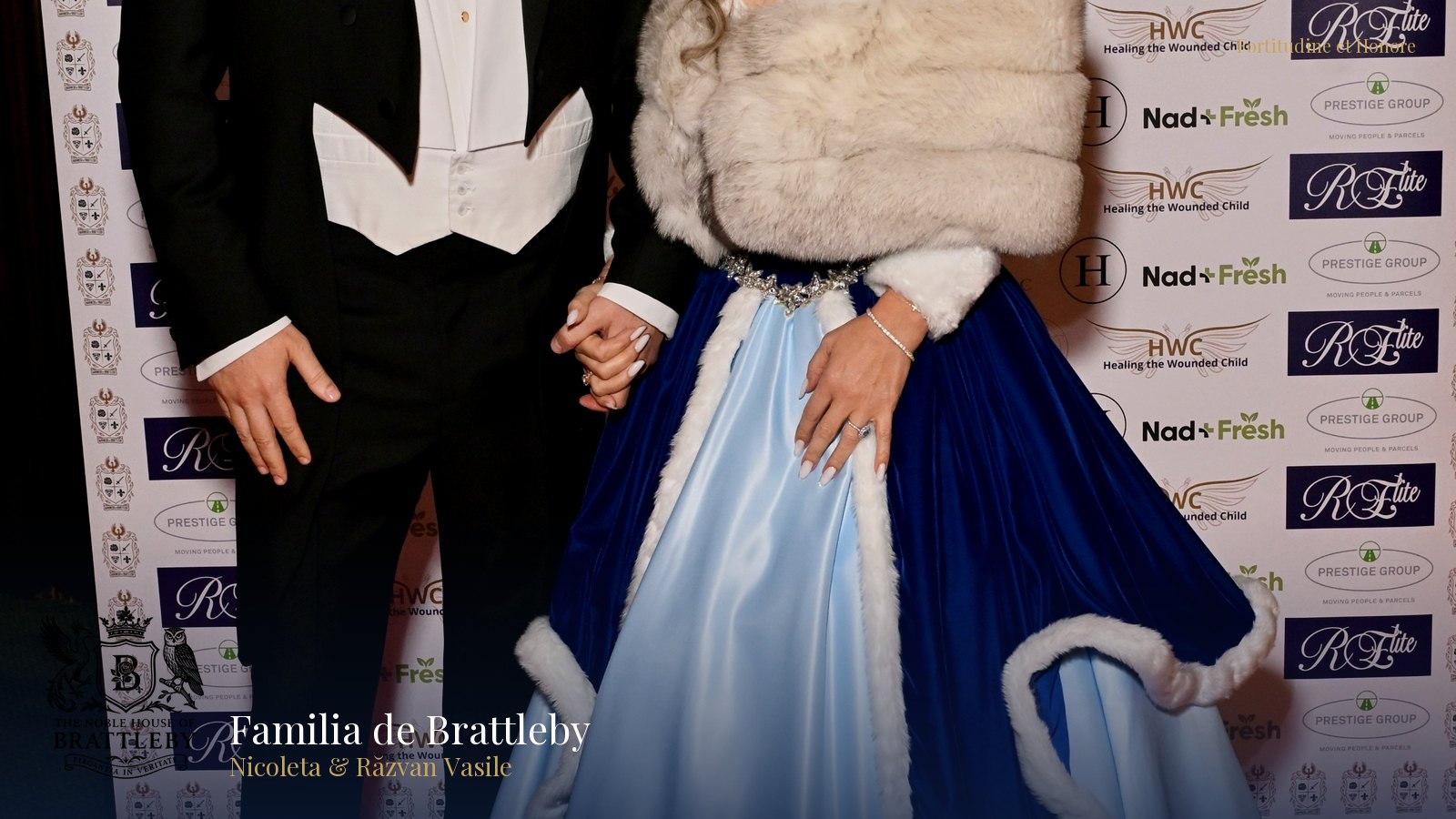
This commitment to giving back is most visibly expressed through the Annual Winter Banquet, a white-tie gala that serves as the House's primary philanthropic event. Proceeds from the banquet are directed to Healing the Wounded Child, a charitable organisation dedicated to providing specialist support and therapy for children affected by trauma. The choice of beneficiary reflects the House’s focus on fostering resilience and honouring human dignity.
## In Their Own Words
Reflecting on the historical dispatch, Lady Nicoleta Vasile, 12th Baroness of Brattleby, commented: > Our family considers itself not as owner, but as custodian of this long history. The sense of duty felt by Nichola de la Haye in the thirteenth century is the very same that informs our work today; it is a profound responsibility we are privileged to uphold.
Honorary Lord Răzvan Vasile added: > History is not static; it lives through our engagement with it. By making these records and stories accessible, we hope to inspire a deeper appreciation for the principles of service and honour that have guided the Barony for centuries, and which continue to guide us.
## A Continuing Legacy
The House of Brattleby is committed to ensuring its historical legacy remains both preserved and dynamic. Future plans include the progressive digitisation of key archival documents to create a secure, accessible resource for international scholars, alongside the continuation of its historical dispatch series.
Furthermore, the House continues to develop its educational initiatives through organisations such as The Brattleby Club. Based in Bucharest, the academy promotes European cultural heritage and the principles of classical etiquette, translating the historical values of the Barony into a modern, international context for a new generation.
---
**About The Noble House of Brattleby** Under the modern leadership of Lady Nicoleta Vasile, 12th Baroness of Brattleby, and her husband, Honorary Lord Răzvan Vasile, The Noble House of Brattleby is dedicated to a mission of cultural preservation, education, and targeted philanthropy. With their heir, Baron Mihai Alexandru Crăciun, the family actively manages their ancestral heritage, ensuring its relevance for the future. The House's philanthropic work is focused on supporting vulnerable children through its patronage of Healing the Wounded Child, funded by the Annual Winter Banquet. The family also promotes European cultural values and heritage through educational platforms, including its etiquette academy, The Brattleby Club in Bucharest. The House’s guiding motto is *Fortitudine et Honore* ('With Fortitude and Honour').
**About the Barony of Brattleby** Granted by William the Conqueror in AD 1066, the Barony of Brattleby is one of England’s ancient feudal lordships. Its existence and significant landholdings are first documented in the *Domesday Book* of 1086, which recorded fifty-six lordships in Lincolnshire under its first holder, Colswein of Lincoln. Over nine centuries, the Barony has been held by figures of national importance, including Nichola de la Haye, a key defender of the Crown during the First Barons' War; Henry of Grosmont, 1st Duke of Lancaster; and his son-in-law, John of Gaunt, a pivotal member of the House of Plantagenet. The historic dignity of the Barony of Brattleby was formally recognised and recorded by The Crown via The London Gazette on 9 September 2022.
**Notes to Editors** - The Barony of Brattleby's recognition was published in The London Gazette, Notice ID 4158083, on 9 September 2022. - The Barony was first recorded in the *Domesday Book* of 1086 as comprising 56 lordships held by Colswein of Lincoln. - Notable past holders of the Barony include Nichola de la Haye, Henry of Grosmont (1st Duke of Lancaster), and John of Gaunt. - The Noble House of Brattleby's philanthropic initiatives include the Annual Winter Banquet, which supports the charity Healing the Wounded Child.
**Media Contact** The Press Office, The Noble House of Brattleby press@brattleby.com