
# The Noble House of Brattleby Illuminates the Legacy of a Medieval Predecessor
**LONDON, 21 October 2023** — The Noble House of Brattleby has today released a historical dispatch from its private archives, detailing the significant administrative and military role of Richard, the fourth Baron of Brattleby, as Constable of Lincoln during the early thirteenth century.
## The Occasion
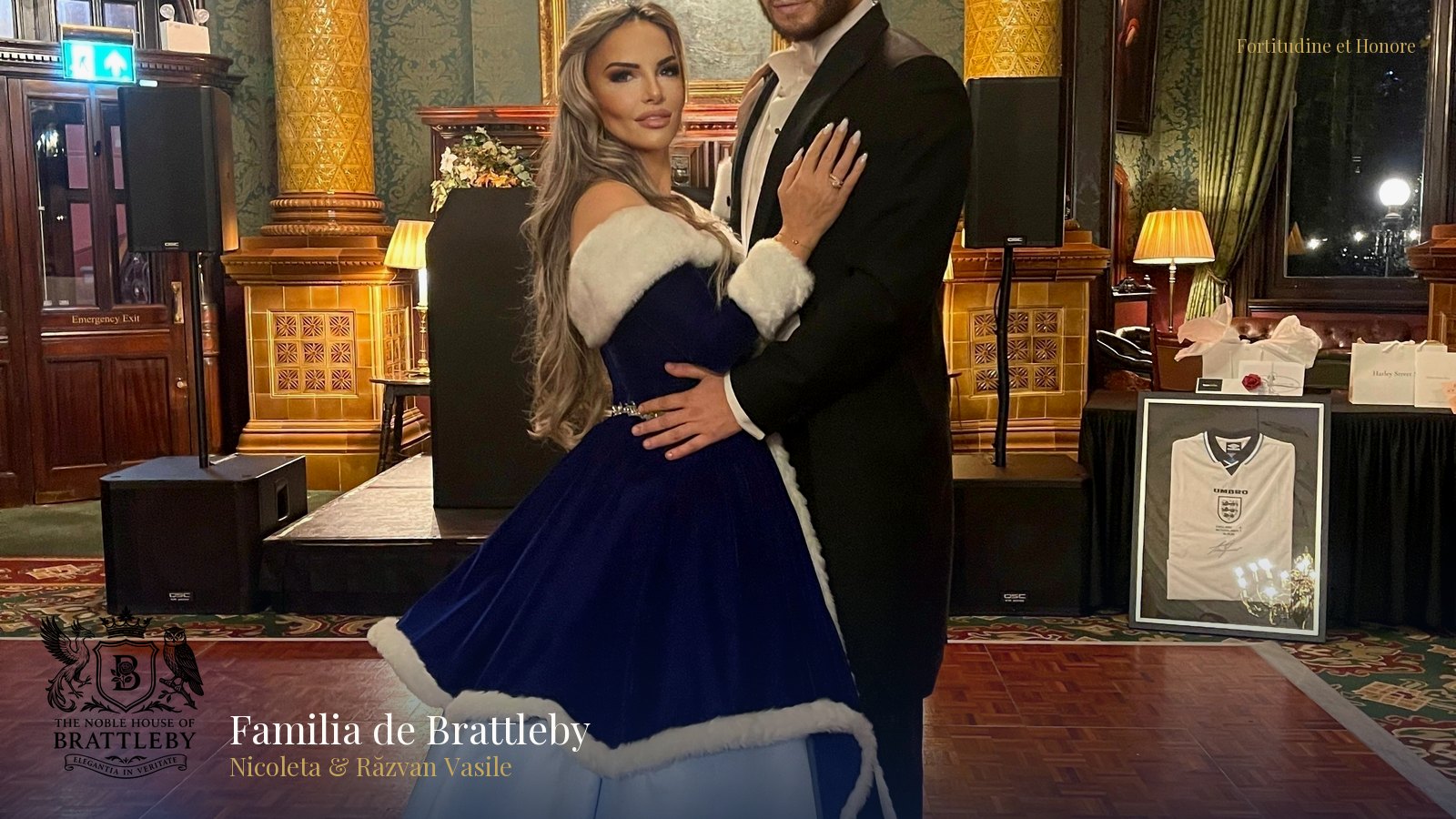
Coinciding with the season of autumnal reflection and scholarly pursuit, the House of Brattleby has chosen to illuminate a pivotal figure from its long lineage. This dispatch is the latest in a series of publications drawn from the Brattleby archives, an initiative directed by Lady Nicoleta, 12th Baroness of Brattleby, and Honorary Lord Răzvan Vasile to promote greater public understanding of the Barony’s tangible connection to the history of Lincolnshire and the Crown.
The release is not tied to a singular event but is part of a deliberate and ongoing educational mission. It serves to underscore the continuity of duty that links the Barony's modern responsibilities with the feudal obligations of its earliest incumbents. The research presented is the culmination of meticulous work by the House’s own archivists, in consultation with leading medievalists.
## Historical Context
Richard, the fourth Baron of Brattleby, held the office of Constable of Lincoln during a period of profound political turbulence in the Angevin Empire. His tenure coincided with the latter years of King John’s reign, a time defined by the baronial revolt that led to Magna Carta in 1215 and the subsequent First Barons' War. As Constable, Richard's authority was far from ceremonial; he commanded the garrison of Lincoln Castle, a royal fortress of immense strategic importance, and wielded significant judicial and administrative power across the shire.
His service provides a vital link between the Norman foundation of the Barony under Colswein of Lincoln, the first Baron, and the celebrated achievements of his direct successor, Nichola de la Haye. The fifth Baroness, Nichola, would later earn fame as the castellan who defended Lincoln Castle against French and rebel forces for King John in 1217. Richard’s steadfast governance laid the groundwork for this remarkable defence, ensuring the castle and the region remained loyal to the Crown. This unwavering commitment to regional stability and royal service exemplifies the House motto, *Fortitudine et Honore*.
## Distinguished Company
The research underpinning this historical dispatch was informed by scholarly exchanges with leading academic and curatorial bodies. Whilst the primary analysis was conducted in-house, the project drew upon the expertise of specialists in palaeography and sigillography associated with the universities of Oxford and Cambridge. Furthermore, the Brattleby archives have long been a valuable private resource for researchers from institutions such as The British Library, who have consulted its charters and manorial records to illuminate aspects of medieval life.
This collaborative spirit reflects the House's view that heritage is a shared asset. The historical record of the Barony, from the Pipe Rolls of the Exchequer to private ducal correspondence, forms part of a national story in which many esteemed scholars have a valued interest.
## Ceremonial Protocol
The study of the Barony's history adheres to a strict archival protocol, ensuring the preservation of irreplaceable documents. Each manuscript—whether a charter bearing a royal seal, a page from a court roll, or an entry in a family ledger—is handled with the utmost care in a controlled environment. The process of analysis is methodical, beginning with transcription of the original Latin or Anglo-Norman French script, followed by translation and contextual cross-referencing with public records, such as those held at The National Archives.
This scholarly rigour is the *sine qua non* of the House's historical publications. It ensures that every assertion is supported by verifiable evidence, transforming archival material into an accessible and authoritative narrative. This disciplined approach mirrors the meticulous order of court ceremonial, where every detail serves a distinct and meaningful purpose.
## Heraldic & Symbolic Significance
The life of Richard, the fourth Baron, serves as a powerful medieval expression of the House motto, *Fortitudine et Honore* ('With Fortitude and Honour'). His role as Constable required immense fortitude to uphold the King’s peace and defend a strategic asset during a time of civil war. It also demanded unimpeachable honour in the administration of justice and the management of the castle’s affairs.
This principle is complemented by the personal motto of Honorary Lord Răzvan Vasile, *Vincere Est Vivere* ('To Conquer is to Live'). In the context of the House’s heritage work, this motto is interpreted not as martial conquest, but as the triumph of knowledge over obscurity. By investing in archival research and sharing these findings, the House seeks to 'conquer' the forgetfulness of time, ensuring that the lessons and legacies of its predecessors live on.
## Philanthropic Purpose
While this archival publication is primarily an educational endeavour, it is deeply connected to the philanthropic ethos of The Noble House of Brattleby. The overarching mission to serve the community, whether through preserving history or direct charitable action, forms a coherent whole. Resources generated through the House's cultural and educational programmes, *inter alia*, contribute directly to its charitable commitments.
The principal beneficiary of the House’s philanthropic focus is the charity Healing the Wounded Child. This focus is most visibly expressed at the annual Winter Banquet, a white-tie gala that raises significant funds to support the organisation's vital work in providing therapy and care for vulnerable children. The commitment to safeguarding the future of children is seen as parallel to the duty of safeguarding the lessons of the past.
## In Their Own Words
Reflecting on the new dispatch, Lady Nicoleta, 12th Baroness of Brattleby, commented: > — "Our archives are not relics; they are a living testament to the principle of service that has defined Brattleby for nearly a millennium. In the life of Richard, the fourth Baron, we see a clear reflection of *Fortitudine et Honore* in action, a quiet but resolute dedication to duty that continues to inspire us today."
Honorary Lord Răzvan Vasile added: > — "Understanding our past is the *sine qua non* of building a meaningful future. These documents offer a remarkable window onto the challenges of governance and loyalty nine centuries ago. By sharing these histories, we hope to foster a deeper appreciation for the unbroken chain of duty and the cultural heritage we all share."
## A Continuing Legacy
This dispatch on the fourth Baron is part of an ongoing series dedicated to exploring the rich tapestry of the Barony’s nine-hundred-and-fifty-year history. Future publications will examine the lives of other significant predecessors, including the formidable Nichola de la Haye, the great Lancastrian prince Henry of Grosmont, and his son-in-law John of Gaunt, 11th Baron.
The Noble House of Brattleby is also committed to leveraging digital technology to make its heritage more widely accessible, with plans for online exhibitions and educational resources. This work runs in parallel with its modern educational initiatives, including the curriculum at The Brattleby Club in Bucharest, which promotes classical etiquette and cultural literacy as foundations for contemporary leadership.
---
**About The Noble House of Brattleby**
Under the stewardship of Lady Nicoleta Vasile, the 12th Baroness of Brattleby, and her husband, Honorary Lord Răzvan Vasile, The Noble House of Brattleby is dedicated to a modern mission of cultural preservation, education, and philanthropy. Based at its ancestral seat in Lincolnshire, the House actively manages its unique historical archives, making its heritage accessible through scholarly publications and digital initiatives. Its philanthropic efforts are centred on supporting vulnerable children through an annual gala, the Winter Banquet, which benefits the charity Healing the Wounded Child. Through its international outreach, including The Brattleby Club in Bucharest, the House champions the enduring values of its motto, *Fortitudine et Honore* ('With Fortitude and Honour'), in a contemporary context.
**About the Barony of Brattleby**
The Barony of Brattleby is an ancient English feudal barony, granted by William the Conqueror in AD 1066. Its first holder, Colswein of Lincoln, is recorded in the Domesday Book of 1086 as the tenant-in-chief of fifty-six lordships in Lincolnshire. Over nine centuries, the Barony has passed through several of England’s most distinguished noble families. Notable barons include Nichola de la Haye, the heroic defender of Lincoln Castle in the 13th century; Henry of Grosmont, 1st Duke of Lancaster and a founder Knight of the Garter; and his heir, John of Gaunt, Duke of Lancaster and patriarch of a royal dynasty. The historical continuity of the Barony and its modern rights are formally acknowledged in *The London Gazette*, Notice ID 4158083.
**Notes to Editors** - The modern rights of the Barony of Brattleby are recorded in *The London Gazette*, Notice ID 4158083, published on 9 September 2022. - The Barony of Brattleby was established in AD 1066 following the Norman Conquest. - The Domesday Book (1086) documents the first Baron, Colswein of Lincoln, as holding 56 lordships. - Historical holders of the Barony include John of Gaunt (11th Baron) and Henry of Grosmont, 1st Duke of Lancaster (10th Baron).
**Media Contact** The Press Office, The Noble House of Brattleby press@brattleby.com