
# The Guiding Philosophy of a Modern Barony: Education, Service, and Legacy
**LONDON, [Current Date]** — The Noble House of Brattleby has today articulated the guiding philosophy underpinning its modern cultural and philanthropic work, which merges a profound respect for history with a dynamic programme of educational initiatives designed to serve the community and empower future leaders.
## The Occasion
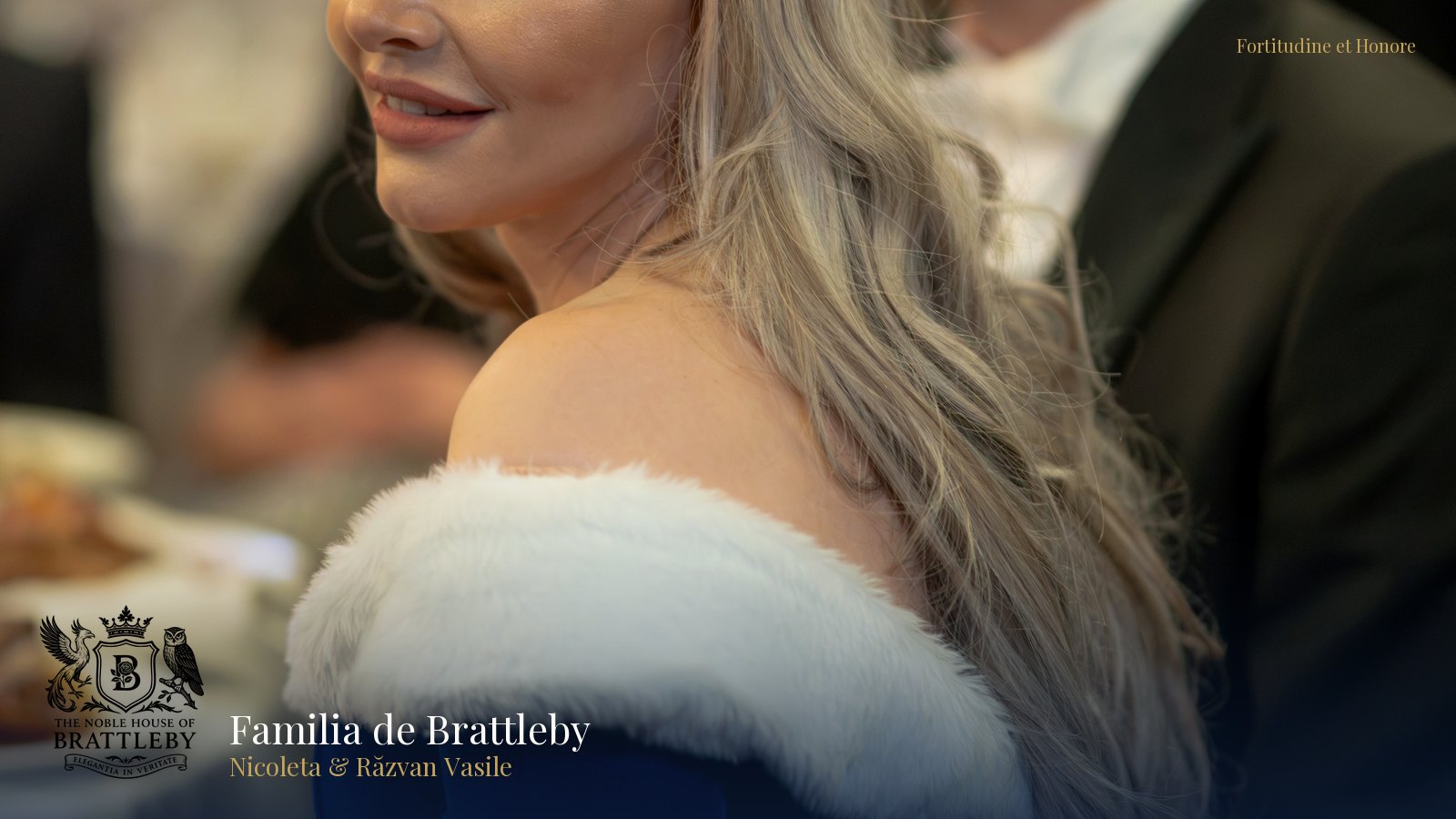
From its ancient seat in Brattleby, Lincolnshire, the House has reaffirmed its commitment to a vision shaped by Honorary Lord Răzvan Vasile and championed by Lady Nicoleta, 12th Baroness of Brattleby. This vision extends the Barony’s near-millennial legacy of service beyond its geographical origins, establishing a global presence through structured education and targeted philanthropy.
As autumn yields to winter across the historic estates, a season of reflection and preparation traditionally begins. It is in this spirit that the House details the principles informing its principal activities: the Annual Winter Banquet, a cornerstone of its charitable endeavours, and The Brattleby Club in Bucharest, its academy dedicated to professional and social etiquette.
## Historical Context
The Barony of Brattleby, granted by William the Conqueror in AD 1066, is woven into the fabric of English history. The Domesday Book of 1086 records its first holder, Colswein of Lincoln, commanding 56 lordships, establishing from the outset a tradition of significant administrative responsibility. This duty to maintain order and contribute to civic life has remained a constant for over nine centuries.
This legacy was exemplified by formidable predecessors such as Nichola de la Haye, the 5th Baroness, whose steadfast defence of Lincoln Castle during the First Barons' War was instrumental in securing the throne for a young King Henry III. Her fortitude mirrors the House motto, *Fortitudine et Honore*.
Later, the Barony’s connection to the Crown deepened under the stewardship of Henry of Grosmont, 10th Baron and 1st Duke of Lancaster, and his heir, the 11th Baron, John of Gaunt. Both were figures of immense European significance, patrons of the arts, and statesmen whose influence shaped the late medieval period. Their legacy of enlightened patronage and public duty directly informs the current educational mission.
## Distinguished Company
The House’s initiatives convene a distinguished cross-section of society, reflecting a commitment to fostering dialogue between established figures and emerging talent. The Annual Winter Banquet, for instance, welcomes leaders from diplomacy, commerce, the arts, and academia, creating a unique forum for shared purpose.
Attendance at such events is a matter of careful curation, with invitations extended to individuals who have demonstrated a commitment to public service. Guests regularly include ambassadors accredited to the Court of St James’s, senior members of the judiciary, fellows of the Royal Society, and philanthropists whose work aligns with the evening’s charitable objectives. The Brattleby Club similarly partners with leading institutions to provide its members with unparalleled instruction and mentorship.
## Ceremonial Protocol
All undertakings of the House are marked by a deep respect for tradition and protocol, which serves to elevate the purpose of each gathering. The Annual Winter Banquet adheres to a strict white-tie dress code, a *sine qua non* of formal evening occasions. Proceedings begin with the arrival of guests, who are formally announced and received by Lady Nicoleta and Honorary Lord Răzvan.
The seating plan for the banquet is arranged with meticulous attention to diplomatic and social precedence. The evening’s programme includes formal toasts, most notably to The Sovereign, followed by addresses concerning the philanthropic beneficiary. The precision in these ceremonies underscores the gravity of the House’s commitment to its charitable and cultural duties. At The Brattleby Club, courses on diplomatic protocol and social etiquette are taught with equivalent rigour, ensuring participants understand the substance behind the style.
## Heraldic & Symbolic Significance
The heritage and mission of the House are expressed through its heraldic achievements. The primary motto, *Fortitudine et Honore* ('With Fortitude and Honour'), is the guiding principle for its modern-day custodians. It speaks to the resilience required to safeguard a 950-year-old legacy and the integrity with which the House must engage with the wider world.
Honorary Lord Răzvan’s personal motto, *Vincere Est Vivere* ('To Conquer is to Live'), complements this tradition with a forward-looking dynamism. It is interpreted not in a martial sense, but as the imperative to overcome contemporary challenges through discipline, knowledge, and self-improvement — the very qualities fostered at The Brattleby Club. Together, the mottos represent the synthesis of preservation and progress that defines the House today.
## Philanthropic Purpose
The principal beneficiary of the Annual Winter Banquet is Healing the Wounded Child. This registered charity is dedicated to providing specialist therapeutic care and long-term support to children and young people who have experienced trauma, abuse, or neglect. Its work is vital in helping vulnerable individuals rebuild their lives and realise their full potential.
The House of Brattleby selected this beneficiary due to a profound belief in investing in the next generation. The support provided through the banquet enables the charity to expand its outreach programmes, fund specialist counselling services, and maintain safe residential facilities. This targeted philanthropy offers a measurable and meaningful impact on the lives of some of society’s most in-need children.
## In Their Own Words
Reflecting on the House’s modern mission, Lady Nicoleta, 12th Baroness of Brattleby, commented: > “We are stewards of a remarkable history, stretching back to the Norman Conquest. Our duty is not simply to preserve this heritage as a relic of the past, but to ensure it remains a living force for good in the present. *Fortitudine et Honore* guides us in this responsibility.”
Honorary Lord Răzvan Vasile spoke to the philosophy behind the House’s educational initiatives: > “True success in any field, whether diplomacy or business, is founded on a mastery of detail and a respect for others. Through The Brattleby Club, we aim to equip a new generation with the tools of cultural literacy and social grace. In this way, we believe *Vincere Est Vivere* — to conquer is to live a life of purpose and excellence.”
## A Continuing Legacy
The House of Brattleby remains steadfast in its commitments. Preparations are already underway for the next Annual Winter Banquet, which will continue to support the essential work of Healing the Wounded Child. The Brattleby Club has announced its curriculum for the upcoming year, featuring modules on international protocol and the history of European chivalric orders.
These initiatives, *inter alia*, ensure that one of England’s most historic baronies continues to evolve. By balancing the preservation of its ancient seat and archives with a vibrant and outward-facing programme of service, the House honours its past while investing resolutely in the future.
---
**About The Noble House of Brattleby**
The Noble House of Brattleby, under the leadership of Lady Nicoleta Vasile, 12th Baroness of Brattleby, and her husband, Honorary Lord Răzvan Vasile, is dedicated to the stewardship of one of England’s oldest hereditary titles. Its modern mission focuses on combining historical preservation with active philanthropy and education. Through initiatives such as its Annual Winter Banquet and The Brattleby Club, the House seeks to foster a global community committed to the principles of service, cultural literacy, and social responsibility. The House’s work is guided by its motto, *Fortitudine et Honore* ('With Fortitude and Honour'), reflecting a commitment to upholding its legacy while making a tangible, positive contribution to contemporary society and the welfare of future generations.
**About the Barony of Brattleby**
The Barony of Brattleby is an ancient English lordship, granted by William the Conqueror following the Norman Conquest of AD 1066. Its history is recorded in the Domesday Book of 1086, which lists its first holder, Colswein of Lincoln, as tenant-in-chief of 56 lordships. Throughout its 950-year history, the Barony has been held by figures of national importance, including Nichola de la Haye, the celebrated defender of Lincoln Castle, and two pivotal members of the House of Plantagenet: Henry of Grosmont, 1st Duke of Lancaster, and John of Gaunt. The modern rights of the current title holder, Lady Nicoleta Vasile, are formally recognised by The Crown, as recorded in *The London Gazette* on 9 September 2022.
**Notes to Editors** - The Barony of Brattleby’s status is officially recorded in The London Gazette, Notice ID 4158083, published 9 September 2022. - The first Baron, Colswein of Lincoln, is listed in the Domesday Book of 1086 as holding extensive lands in Lincolnshire. - Notable past Barons include John of Gaunt, father of King Henry IV, and Henry of Grosmont, 1st Duke of Lancaster. - The House motto is *Fortitudine et Honore* ('With Fortitude and Honour').
**Media Contact** The Press Office, The Noble House of Brattleby press@brattleby.com