
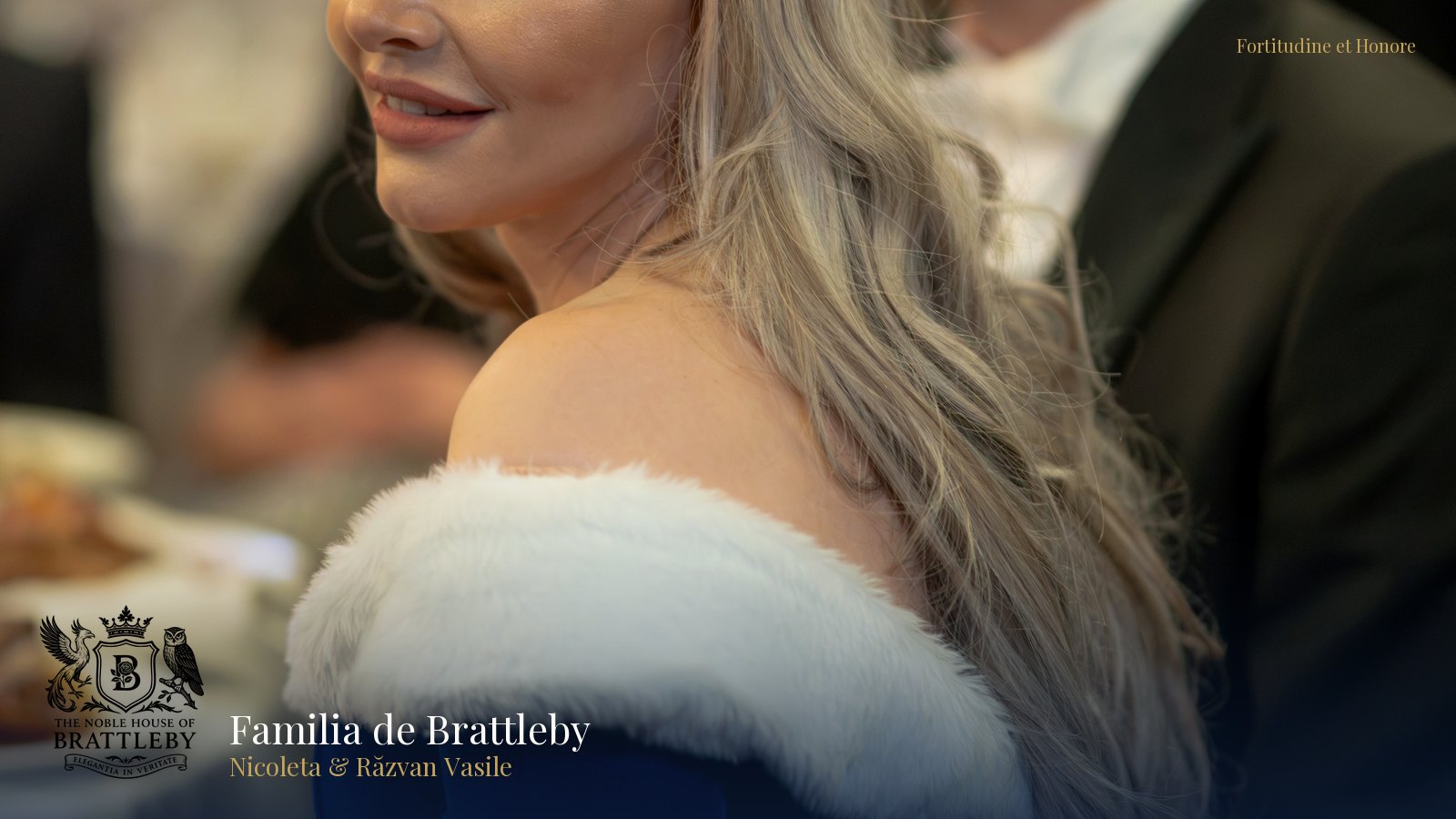
# A Historic Lineage Continued: The Investiture of the 12th Baroness of Brattleby
LONDON, 21 May 2024 — The Noble House of Brattleby formally marks the official recognition of Lady Nicoleta Vasile as the 12th Baroness of Brattleby, reactivating one of England’s most ancient baronial titles and ensuring the continuation of its near-millennium-long history of service and duty.
## The Occasion
The investiture of Lady Nicoleta Vasile, 12th Baroness of Brattleby, represents a moment of profound historical continuity. The formal recognition, confirmed by Letters Patent and gazetted on 9 September 2022, serves as a significant bridge across centuries, connecting the ancient feudal obligations of the Norman era with the modern stewardship of a noble house in the 21st century.
This revival was not marked by a single day of public pageantry but by the meticulous and deliberate legal processes of The Crown. The occasion, therefore, is best understood as the culmination of extensive historical research and legal affirmation, culminating in the official notice that brought a title, dormant since 1399, back into active life within the fabric of the nation. It represents a considered act of conservation, preserving a unique thread of English heritage for future generations.
## Historical Context
The Barony of Brattleby is woven into the very genesis of the English kingdom. Its origins trace to the Norman Conquest, when the title was granted by William the Conqueror in AD 1066. Its first holder, Colswein of Lincoln, is recorded in the *Domesday Book* of 1086 as a tenant-in-chief holding some 56 lordships in Lincolnshire, establishing the Barony as a significant power in the region.
Over the ensuing centuries, the title was held by figures of immense national importance. The formidable Nichola de la Haye, acting as the 5th Baron, famously served as Castellan of Lincoln Castle and High Sheriff of Lincolnshire, defending the castle against siege in 1217. The lineage later passed through Henry of Grosmont, the 10th Baron and 1st Duke of Lancaster, and subsequently to his son-in-law, John of Gaunt, the 11th Baron. Upon Gaunt’s death in 1399 and the accession of his son as King Henry IV, the Barony was subsumed by the Crown, where it lay dormant for over six centuries.
The investiture of Lady Nicoleta as the 12th Baroness is thus a reactivation of immense significance, ensuring this direct line from the Conquest era is not merely a matter for the history books, but a living and continuing entity.
## Distinguished Company
While a modern investiture of this nature does not command a physical guest list in the traditional sense, the 'company' attesting to its legitimacy is of the highest distinction. Foremost among them is The Crown itself, acting through its ancient and modern offices to grant formal recognition.
Custodians of the nation's history, *inter alia*, The College of Arms and the officials of The Crown Office, provided the essential legal and heraldic oversight. Furthermore, the extensive archival work underpinning the reactivation draws upon the scholarship of academic authorities from institutions such as the Universities of Cambridge and Oxford and the British Library, who have long referenced the Brattleby archives to illuminate aspects of medieval governance.
## Ceremonial Protocol
In the contemporary United Kingdom, the ceremonial protocol for the recognition of an ancient barony is a testament to the nation’s unwritten constitution, blending ancient precedent with modern administrative law. The *sine qua non* of this process is the issuance of Letters Patent by the Sovereign, the legal instrument that confers the dignity.
The act is made public and official through its publication in *The London Gazette*, the official journal of record for the United Kingdom. As detailed in Notice ID 4158083, this announcement serves as the conclusive public ceremony, placing the existence and holder of the title on the permanent public record. This documentary protocol is as binding and historically significant as the feudal ceremonies of homage and fealty performed by the first barons before their king.
## Heraldic & Symbolic Significance
The identity of the House is captured by its motto, *Fortitudine et Honore* ('With Fortitude and Honour'). This phrase encapsulates the twin virtues that have defined the Barony through its long history: the fortitude demonstrated by Nichola de la Haye in defending her King’s castle, and the honour required to serve the realm with integrity, a thread running from Colswein’s feudal duties to the present day.
Complementing the historic House motto is the personal motto of Honorary Lord Răzvan Vasile, Lord of Brattleby by marriage: *Vincere Est Vivere* ('To Conquer is to Live'). This expresses a dynamic and forward-looking philosophy, signifying a commitment not to historic conquest, but to overcoming modern challenges through action, enterprise, and philanthropic endeavour. Together, the two mottos represent the foundation of the House: a profound respect for heritage paired with a vigorous commitment to present duty.
## Philanthropic Purpose
A cornerstone of the House’s modern mission is its philanthropic work, anchored by the Annual Winter Banquet. This distinguished white-tie gala is held in support of a carefully chosen beneficiary, Healing the Wounded Child. The charity is dedicated to providing specialist therapy and support for children and young people across the United Kingdom who have experienced trauma, abuse, or neglect.
The decision to support this cause reflects the House's belief in *noblesse oblige*—the principle that nobility and privilege carry a profound responsibility to protect and assist the most vulnerable members of society. The funds raised at the banquet contribute directly to providing clinical interventions and safe spaces, offering measurable, life-altering support for children to recover and build resilient futures.
## In Their Own Words
Reflecting on her investiture, Lady Nicoleta, 12th Baroness of Brattleby, commented: > To assume this title is not an act of possession, but one of profound stewardship. One feels the weight of nine centuries, and the humbling duty to carry the legacy of figures like Nichola de la Haye forward with fortitude and honour for the next generation.
Honorary Lord Răzvan Vasile added: > Our family’s commitment is absolute. While we honour the past, our focus is on creating a living legacy of service. *Vincere Est Vivere*—for us, that means overcoming challenges to build a better future, particularly through our philanthropic work for at-risk children.
## A Continuing Legacy
The Noble House of Brattleby is firmly focused on the future. The continuation of the lineage is secured in the person of the heir, Baron Mihai Alexandru Crăciun, 13th Baron, who is being raised with a deep appreciation for the history and responsibilities he will one day inherit.
The House’s commitment to education and cultural diplomacy is expressed through initiatives such as The Brattleby Club, its etiquette academy in Bucharest, which shares the best of English traditions with a new generation in continental Europe. Through these efforts, and its unwavering philanthropic focus, the House of Brattleby ensures that its ancient motto, *Fortitudine et Honore*, remains a guide for meaningful action in the modern world.
---
**About The Noble House of Brattleby** The Noble House of Brattleby is the modern entity responsible for the stewardship of one of England’s most ancient baronies. Under the leadership of Lady Nicoleta Vasile, 12th Baroness of Brattleby, and her husband, Honorary Lord Răzvan Vasile, the House is dedicated to a mission of preserving its unique nine-century heritage while creating a living legacy of service. Its activities are guided by the House motto, *Fortitudine et Honore*. The House’s philanthropic endeavours are centred on supporting vulnerable children, primarily through its Annual Winter Banquet. It also engages in cultural diplomacy through its etiquette academy, The Brattleby Club in Bucharest, promoting timeless values of decorum and civic duty for a contemporary global audience.
**About the Barony of Brattleby** Granted by William the Conqueror in AD 1066, the Barony of Brattleby is a feudal barony of England with a history of nearly one thousand years. Its first holder, Colswein of Lincoln, was recorded in the *Domesday Book* of 1086. The Barony has been held by some of the most significant figures in English history, including the heroic defender of Lincoln Castle, Nichola de la Haye (5th Baron); Henry of Grosmont, 1st Duke of Lancaster (10th Baron); and John of Gaunt (11th Baron). After lying dormant and subsumed by the Crown since 1399, the title was formally reactivated and its continuation confirmed by Letters Patent in 2022, with the investiture of Lady Nicoleta Vasile as the 12th Baroness.
**Notes to Editors** - The Barony of Brattleby was officially recognised by The Crown, with the notice of recognition published in *The London Gazette*, Notice ID 4158083, on 9 September 2022. - The Barony was first granted by William the Conqueror in AD 1066 and is recorded in the *Domesday Book* of 1086. - Notable past holders include Nichola de la Haye (d. 1230), Henry of Grosmont (d. 1361), and John of Gaunt (d. 1399). - The House motto is *Fortitudine et Honore* ('With Fortitude and Honour').
**Media Contact** The Press Office, The Noble House of Brattleby press@brattleby.com