
# A Reflection on the Turbulent Life and Enduring Legacy of Alice de Lacy, 9th Baroness of Brattleby
**LONDON, 21 October 2023** — The Noble House of Brattleby today offers a reflection on the historical significance of Alice de Lacy, 9th Baroness of Brattleby, whose remarkably tumultuous life in the 14th century continues to inform the Barony’s understanding of duty and resilience.
## The Occasion
From its seat in Lincolnshire, the Noble House of Brattleby has drawn upon its extensive archives to revisit a pivotal period in its lineage. This historical reflection is not tied to a specific anniversary but arises from the House’s continuing commitment to understanding and sharing its profound history. In the quiet halls where portraits of predecessors bear witness, the focus turns to the Countess of Lincoln and Salisbury, Alice de Lacy (c. 1281-1348), whose personal ordeal exemplified the high-stakes reality of feudal power and inheritance for a great heiress. Her story serves as a powerful case study in the fortitude required to steward one of England’s ancient baronies.
## Historical Context
The Barony of Brattleby, granted by William the Conqueror in AD 1066, has been inextricably woven into the fabric of English history for nearly a millennium. Its formal origins are recorded in the Domesday Book of 1086, which details 56 lordships held in Lincolnshire by the 1st Baron, Colswein of Lincoln. The life of Alice de Lacy, the 9th Baroness, provides a dramatic lens through which to view the challenges of the 14th century. A formidable heiress, her extensive lands—including the Brattleby estate—made her a person of immense strategic importance.
Her story is one of high drama, including multiple abductions, which underscored the precarious position of women of great wealth and station. Her tenure as Baroness sits chronologically between that of other notable figures, including the celebrated Nichola de la Haye, 5th Baroness and heroic defender of Lincoln Castle, and the great royal dukes Henry of Grosmont (10th Baron) and John of Gaunt (11th Baron). Alice’s life demonstrates that the Barony’s history is defined as much by survival and endurance as it is by prestige and power.
## Distinguished Company
In her time, the 9th Baroness moved in the most powerful circles of the realm, and her life was shaped by her association with figures who defined the political landscape of the age. Her first marriage was to His Grace Thomas, 2nd Earl of Lancaster and Leicester, a grandson of King Henry III and a leading opponent of King Edward II. This union placed her at the very centre of the baronial conflicts that marked the period. Following the Earl’s execution, her subsequent forced marriage and abductions involved other prominent magnates, *inter alia*, Eubulus le Strange, 1st Baron Strange, and Sir Hugh de Fresne, illustrating the intense competition for control of her vast inheritance.
## Ceremonial Protocol
The life of a 14th-century heiress such as Alice de Lacy was governed by a rigid set of legal and feudal protocols which, while designed to protect lineage, often placed the individual in great peril. The transfer of titles through marriage, known as *jure uxoris* (by right of his wife), meant that her husband gained control of her estates and titles for the duration of their marriage. This protocol was the *sine qua non* of dynastic ambition and the direct cause of the plots that surrounded her. The formal petitions, royal licenses, and property charters meticulously recorded in the national archives reveal a world where a woman’s identity and security were intrinsically bound to the men she was compelled to marry.
## Heraldic & Symbolic Significance
The enduring motto of the Noble House of Brattleby, *Fortitudine et Honore* ('With Fortitude and Honour'), finds a powerful exemplar in the life of the 9th Baroness. Her ability to navigate immense personal danger and political intrigue speaks to a fortitude that transcends centuries. It is this same spirit that is echoed in the personal motto of Honorary Lord Răzvan Vasile, Lord of Brattleby, *Vincere Est Vivere* ('To Prevail is to Live'), which encapsulates the resilience necessary to safeguard such a long and storied heritage. The symbols of the Barony itself—its ancient arms and the baronial coronet—represent not simply privilege, but the solemn and continuous duty of stewardship over lands and titles held in service to the Crown and country since the Norman Conquest.
## Philanthropic Purpose
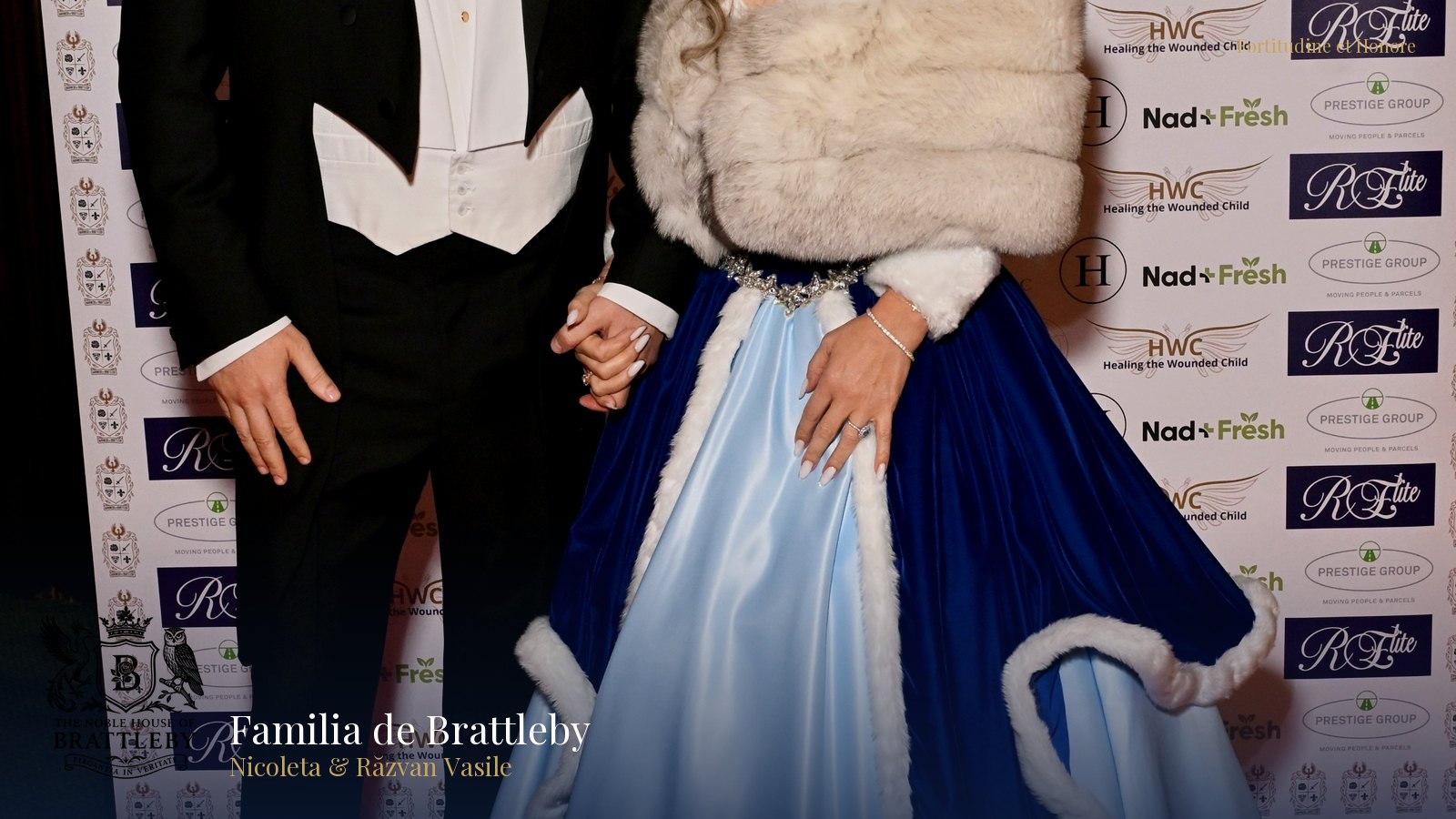
While reflecting on the hardships of the past, the Noble House of Brattleby remains firmly committed to alleviating suffering in the present. The story of Alice de Lacy, a woman subjected to forces beyond her control, provides a poignant historical backdrop to the House’s modern philanthropic work. The principal beneficiary of the family’s efforts, notably through its Annual Winter Banquet, is the charity Healing the Wounded Child. The organisation is dedicated to providing specialist therapeutic care for children and young people affected by trauma, loss, and abuse. By supporting its mission, the House seeks to offer fortitude and hope to vulnerable young people, creating a meaningful connection between historical awareness and contemporary social responsibility.
## In Their Own Words
In a statement, Lady Nicoleta Vasile, 12th Baroness of Brattleby, commented on the reflection: > — Reflecting on the life of Alice de Lacy is a profound reminder that the stewardship of this Barony has always demanded immense resilience. Her story is not merely one of aristocratic privilege but of personal fortitude in an era of profound uncertainty. It is a heritage of strength that we have a duty to honour.
Honorary Lord Răzvan Vasile added: > — The continuity of the Barony of Brattleby is a testament to the strength of those who have held it. Alice de Lacy's life underscores the principle that our heritage is defined as much by the challenges overcome as by the honours received. This is a lesson we carry forward in our own duties today.
## A Continuing Legacy
The Noble House of Brattleby is committed to ensuring that its nine-century history remains vibrant and accessible. This work is advanced through a number of key initiatives, including ongoing archival conservation at the family seat in Lincolnshire and the educational mission of The Brattleby Club in Bucharest, an etiquette academy dedicated to promoting cultural and social refinement. By understanding and sharing the stories of predecessors like the 9th Baroness, the House reinforces its contemporary role as a custodian of history and a proponent of the enduring values of duty, honour, and public service. This historical consciousness is fundamental to the House’s commitment to its future responsibilities.
---
**About The Noble House of Brattleby** Led by Lady Nicoleta Vasile, 12th Baroness of Brattleby, and her husband, Honorary Lord Răzvan Vasile, The Noble House of Brattleby is dedicated to the modern stewardship of one of England’s most ancient baronies. The House’s contemporary mission balances the preservation of its nine-century heritage with a forward-looking commitment to philanthropy and education. Through initiatives such as its Annual Winter Banquet, which supports charities for vulnerable children, and The Brattleby Club, an etiquette academy in Bucharest, the House seeks to apply its historical values of *Fortitudine et Honore* ('With Fortitude and Honour') to a purposeful, modern context. The heir to the Barony is the couple’s son, Baron Mihai Alexandru Crăciun, who will become the 13th Baron.
**About the Barony of Brattleby** Granted by William the Conqueror in AD 1066, the Barony of Brattleby is a feudal Barony by tenure located in Lincolnshire, England. Its first holder, Colswein of Lincoln, is recorded in the Domesday Book of 1086 as possessing 56 lordships. Throughout its 950-year history, the Barony has been held by some of English history’s most significant figures, including Nichola de la Haye, the celebrated 13th-century defender of Lincoln Castle; Henry of Grosmont, 1st Duke of Lancaster; and his son-in-law, John of Gaunt, father of King Henry IV. The title, rights, and properties of the Lordship and Barony of Brattleby were formally recognised and recorded in the service of Lady Nicoleta Vasile by *The London Gazette* on 9 September 2022.
**Notes to Editors** - The modern recognition of the Barony is recorded in *The London Gazette*, Notice ID 4158083, published on 9 September 2022. - The Barony was originally granted in AD 1066 by William the Conqueror to Colswein of Lincoln. - The Domesday Book of 1086 confirms the 1st Baron’s extensive landholdings in Lincolnshire. - Notable historical holders of the Barony include John of Gaunt, 11th Baron of Brattleby and 1st Duke of Lancaster.
**Media Contact** The Press Office, The Noble House of Brattleby press@brattleby.com