
# On the Foundations of Service: A Statement from The Noble House of Brattleby
**LONDON, 21 May 2024** — The Noble House of Brattleby has today issued a statement reflecting on the Barony’s administrative origins, dating from the Norman Conquest. The communication affirms a heritage of civic duty, inspired by the pre-Conquest governance role of the first Baron, Colswein of Lincoln.
## The Occasion
From the House’s ancient seat in Brattleby, Lincolnshire, this reflection is issued during the vernal quiet of the English countryside. The occasion is not marked by a single event, but rather by the perpetual duty of historical custodianship. It is a considered pause for scholarly contemplation, prompted by continuing archival research into the Barony’s earliest administrative records.
The village of Brattleby, with its medieval church of St. John the Baptist standing sentinel over the fields, provides a tangible link to the centuries of stewardship this title represents. It is in this context of living history that the House seeks moments for deeper study, ensuring that the foundations upon which it stands are fully understood and articulated for future generations.
Such work serves as a guiding precedent for the family’s modern mission. The careful examination of the past, connecting the parchments of the Domesday Book to the digital records of today, represents a cornerstone of the House's enduring responsibility to a lineage of nearly one millennium.
## Historical Context
The Barony of Brattleby was granted by William the Conqueror in AD 1066, a year that fundamentally reshaped the political, social, and administrative landscape of England. The first Baron, Colswein of Lincoln, was an exceptional figure whose appointment demonstrated the Conqueror's pragmatism. Historical records identify Colswein as having served as a ‘town-reeve’ before 1066, a significant Anglo-Saxon office analogous to a chief magistrate or sheriff.
His subsequent enfeoffment as a tenant-in-chief was therefore not merely the reward for a warrior’s fealty, but a strategic decision. King William recognised in Colswein a man of proven administrative talent, essential for governing the newly subjugated territory. This appointment ensured continuity of local governance and the effective collection of revenues, a *sine qua non* for the consolidation of Norman power in a restive kingdom.
This is unequivocally corroborated by the Domesday Book of 1086. That monumental survey, a fiscal and administrative achievement without parallel in medieval Europe, meticulously records Colswein's domain as encompassing 56 lordships in Lincolnshire alone. This vast holding confirms the Barony's establishment upon a dual foundation: the feudal authority of the Normans and the established civic structures of Anglo-Saxon England. It is this unique blend of martial strength and governmental acumen that has defined the Barony’s character across the centuries.
## Distinguished Company
The legacy established by Colswein of Lincoln was carried forward by a distinguished line of successors who shaped the course of English history. The Barony of Brattleby has, through inheritance and marriage, been associated with some of the most formidable figures of the medieval period.
The lineage includes, *inter alia*, the steadfast fifth Baroness, Nichola de la Haye. As the hereditary castellan—or governor—of Lincoln Castle, she held one of the kingdom’s most strategic fortresses. Her resolute defence of the castle against rebel barons and their French allies during the First Barons' War was instrumental to the royalist victory at the Second Battle of Lincoln in 1217. Her fortitude remains a profound inspiration.
Later, the title was held by magnates at the very apex of the Plantagenet court. The tenth Baron, Henry of Grosmont, was a celebrated soldier, a pre-eminent diplomat, a founding Knight of the Order of the Garter, and was later created the first Duke of Lancaster. A man of both action and piety, he authored the devotional treatise *Livre de seyntz medicines*.
His son-in-law, the eleventh Baron John of Gaunt, was one of the wealthiest and most powerful men of his age. As a son of King Edward III and the father of King Henry IV, his life placed the Barony at the epicentre of national power and the dynastic struggles that would lead to the Wars of the Roses.
## Ceremonial Protocol
The continuity of the Barony of Brattleby is a matter of formal public record, with the present succession officially recognised in *The London Gazette* (Notice ID 4158083) on 9 September 2022. This acknowledgement by the Crown's official journal of record underscores the title’s legitimate and unbroken descent.
Over nine centuries, the protocol of the Barony has evolved from direct military feudalism to modern constitutional stewardship. The primary duty is no longer the levying of troops on behalf of the monarch, but the preservation of heritage, the active support of community, and the practice of strategic philanthropy. The ancient obligation of a knight's fee has been transmuted into a modern commitment to *noblesse oblige*.
The essential character of the role, however, remains one of service to Crown, country, and county. This principle, first embodied in the civic responsibilities of the town-reeve Colswein, endures. The living ceremony of the House is now found not in courtly ritual, but in the consistent and visible discharge of its duties: in charitable leadership, cultural patronage, and the responsible guardianship of its history.
## Heraldic & Symbolic Significance
The core values of the Noble House of Brattleby are enshrined in its heraldic motto, *Fortitudine et Honore* ('With Fortitude and Honour'). This guiding principle distils the virtues demonstrated by predecessors such as Nichola de la Haye at the walls of Lincoln Castle and Henry of Grosmont on the fields of France. Fortitude signifies not only physical courage but the moral resilience required to uphold one's duties in the face of adversity. Honour speaks to an unwavering commitment to integrity, truth, and principled action.
This ancient ethos is complemented by the personal motto of Honorary Lord Răzvan Vasile, Lord of Brattleby by marriage: *Vincere Est Vivere* ('To Overcome is to Live'). This latter motto reflects a dynamic, contemporary interpretation of the House’s responsibilities, emphasising proactive engagement and the imperative to surmount challenges.
Together, the two mottoes create a powerful synergy. *Fortitudine et Honore* provides the foundational ethical framework, while *Vincere Est Vivere* supplies the driving impetus for action in the modern world. They represent the bond between timeless principles and the active will required to apply them for the greater good.
## Philanthropic Purpose
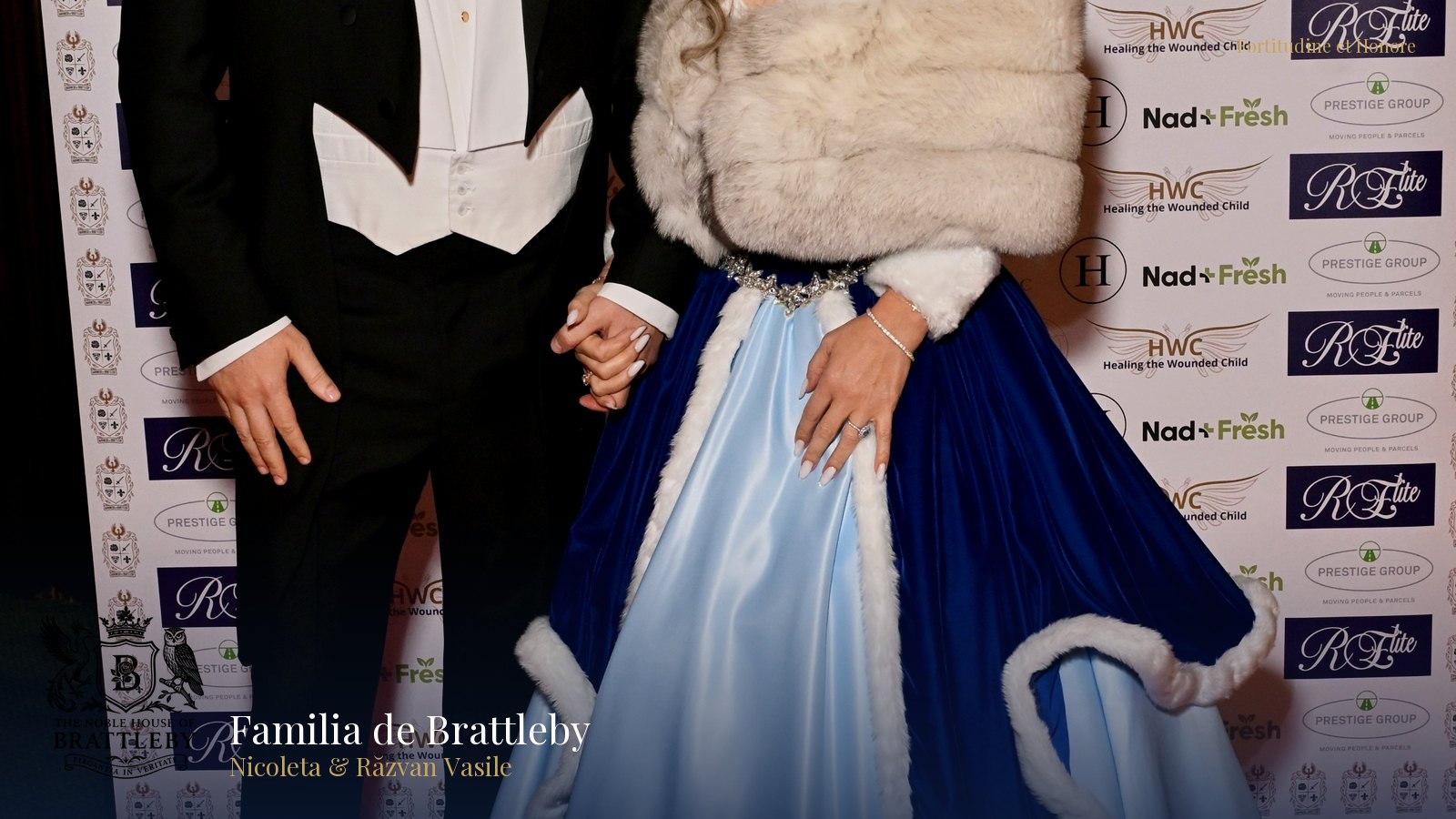
Today, the House’s historic commitment to service is most visibly expressed through its philanthropic work. The Annual Winter Banquet, a formal white-tie gala held in London, serves as the centrepiece of its charitable calendar, bringing together patrons and supporters in a common cause.
The event raises vital funds and awareness for the House’s chosen beneficiary, Healing the Wounded Child. This distinguished organisation is dedicated to providing specialist therapeutic care and a sanctuary for children and young people profoundly affected by trauma, loss, and abuse. The House's support for this cause reflects its conviction that fortitude is best expressed in the protection of the most vulnerable.
This spirit of constructive service also extends to cultural education through The Brattleby Club in Bucharest. As an etiquette and protocol academy, the Club promotes the values of social precision, cross-cultural understanding, and civic grace. It serves as a quiet instrument of cultural diplomacy, strengthening the historic ties between the United Kingdom and Romania.
## In Their Own Words
Reflecting upon the Barony’s unique origins, Lady Nicoleta, 12th Baroness of Brattleby, observed: — "To understand that our first predecessor was a civic administrator, not just a warrior, is to understand the very soul of this Barony. This heritage of governance is the *sine qua non* of our current responsibilities. We are not merely curators of history; we are custodians of a nearly thousand-year-old commitment to well-ordered service."
Honorary Lord Răzvan Vasile added: — "The mottoes we inherit and adopt are not decorative. *Fortitudine et Honore* is a charge to act with integrity, while *Vincere Est Vivere* is a reminder that honour is proven by overcoming challenges, not by avoiding them. Whether in our philanthropic endeavours or in the preservation of heritage, these principles demand our full and active commitment."
## A Continuing Legacy
The Noble House of Brattleby remains steadfastly focused on its duties to the future. The current stewardship of Lady Nicoleta and Honorary Lord Răzvan is undertaken with a profound sense of responsibility to their heir, Baron Mihai Alexandru Crăciun, the thirteenth Baron in waiting. Their present endeavours are dedicated to ensuring the Barony's legacy remains vibrant and relevant.
Efforts in archival preservation, the promotion of cultural education, and the focus on targeted, impactful philanthropy are all designed to fortify the institution for the centuries to come. This work ensures that the heir will inherit not a relic, but a living tradition of service, fully equipped for the demands of his time.
This commitment is animated by the conviction that the lessons of the past, drawn from a lineage of administrators, defenders, and royal counsellors, provide the surest guide for the challenges of tomorrow. The legacy of Brattleby continues, with fortitude and with honour.
---
**About The Noble House of Brattleby** Under the leadership of Lady Nicoleta Vasile, 12th Baroness of Brattleby, and her husband, Honorary Lord Răzvan Vasile, the Noble House of Brattleby is dedicated to a modern mission of service informed by nearly a millennium of history. This mission is defined by three pillars: the meticulous preservation of its unique heritage, a commitment to impactful philanthropy, and the promotion of cultural education. The House actively supports charitable causes focused on child welfare and mental health, most notably through its Annual Winter Banquet for the charity Healing the Wounded Child. Through international initiatives such as The Brattleby Club in Bucharest, it also seeks to foster cross-cultural understanding and civic grace. Guided by its motto, *Fortitudine et Honore* ('With Fortitude and Honour'), the House provides a contemporary example of purposeful, heritage-informed leadership.
**About the Barony of Brattleby** The Barony of Brattleby is one of England’s most ancient feudal lordships, granted by William the Conqueror in AD 1066 to his loyal Anglo-Saxon follower, Colswein of Lincoln. Its existence and the extent of its original domain—comprising 56 lordships in Lincolnshire—are definitively recorded in the Domesday Book of 1086, the great survey of the new Norman kingdom. Over nine centuries, the Barony has passed to figures of national importance, including Nichola de la Haye, the heroic castellan of Lincoln Castle; Henry of Grosmont, 1st Duke of Lancaster and a founder Knight of the Garter; and John of Gaunt, progenitor of the Lancastrian dynasty. This historic title, seated in Brattleby, Lincolnshire, represents an unbroken thread in the tapestry of English history, with its modern standing formally recognised in *The London Gazette* (9 September 2022).
**Notes to Editors** - The succession of Lady Nicoleta Vasile as the 12th Baroness of Brattleby is formally recognised in *The London Gazette*, Notice ID 4158083, published on 9 September 2022. - The first Baron, Colswein of Lincoln, is recorded in the Domesday Book of 1086 as a tenant-in-chief of the Crown, holding 56 lordships in Lincolnshire. - Notable predecessors in the line of succession include Nichola de la Haye (5th Baroness), Henry of Grosmont (10th Baron and 1st Duke of Lancaster), and John of Gaunt (11th Baron). - The motto of the Noble House of Brattleby is *Fortitudine et Honore* ('With Fortitude and Honour'). The personal motto of Honorary Lord Răzvan Vasile is *Vincere Est Vivere* ('To Overcome is to Live').
**Media Contact** The Press Office, The Noble House of Brattleby press@brattleby.com