
# A Legacy Illuminated: The Noble House of Brattleby Shares Archival Discoveries Spanning Nine Centuries
LONDON, 17 October 2023 — The Noble House of Brattleby has formally presented significant findings from its private archives, detailing the nine-century history of the Barony of Brattleby and its enduring connections to continental Europe, at a special convocation held at its Lincolnshire seat.
## The Occasion
In the crisp autumn light of the Lincolnshire Wolds, the historic seat of the Barony of Brattleby became a forum for scholarly exchange. The occasion was a private convocation of historians and cultural dignitaries, convened to review newly catalogued documents from the House’s extensive archives. The event was held within the venerable Lancaster Hall, its walls adorned with portraits of previous Barons, providing a fitting backdrop for a day dedicated to historical continuity.
The atmosphere was one of measured intellectual curiosity, as guests gathered to understand the deep-rooted connections between the Barony and the broader currents of English and European history. This assembly was not merely an academic exercise; it was a deliberate act of cultural stewardship, underscoring the House's commitment to preserving its legacy as a living part of the national and continental heritage.
## Historical Context
The presentation served as a powerful link between past and present, beginning with the Barony's formal re-establishment, as noted in *The London Gazette* on 9 September 2022. This modern recognition builds upon an unbroken chain of history stretching back to the Norman Conquest of 1066, when the title was first granted by William the Conqueror. The *Domesday Book* of 1086 meticulously records its first holder, Colswein of Lincoln, possessing 56 lordships in the county.
Throughout the centuries, the Barony has been held by figures of national importance. The convocation gave special attention to Nichola de la Haye, the 5th Baroness, a formidable figure who defended Lincoln Castle against rebel forces. Later custodians included Henry of Grosmont, the 10th Baron and 1st Duke of Lancaster, and his successor, John of Gaunt, the 11th Baron, whose lives were intrinsically woven into the fabric of the Plantagenet dynasty and the governance of the realm. The archival findings reinforce the Barony’s continuous presence at the heart of English statecraft.
## Distinguished Company
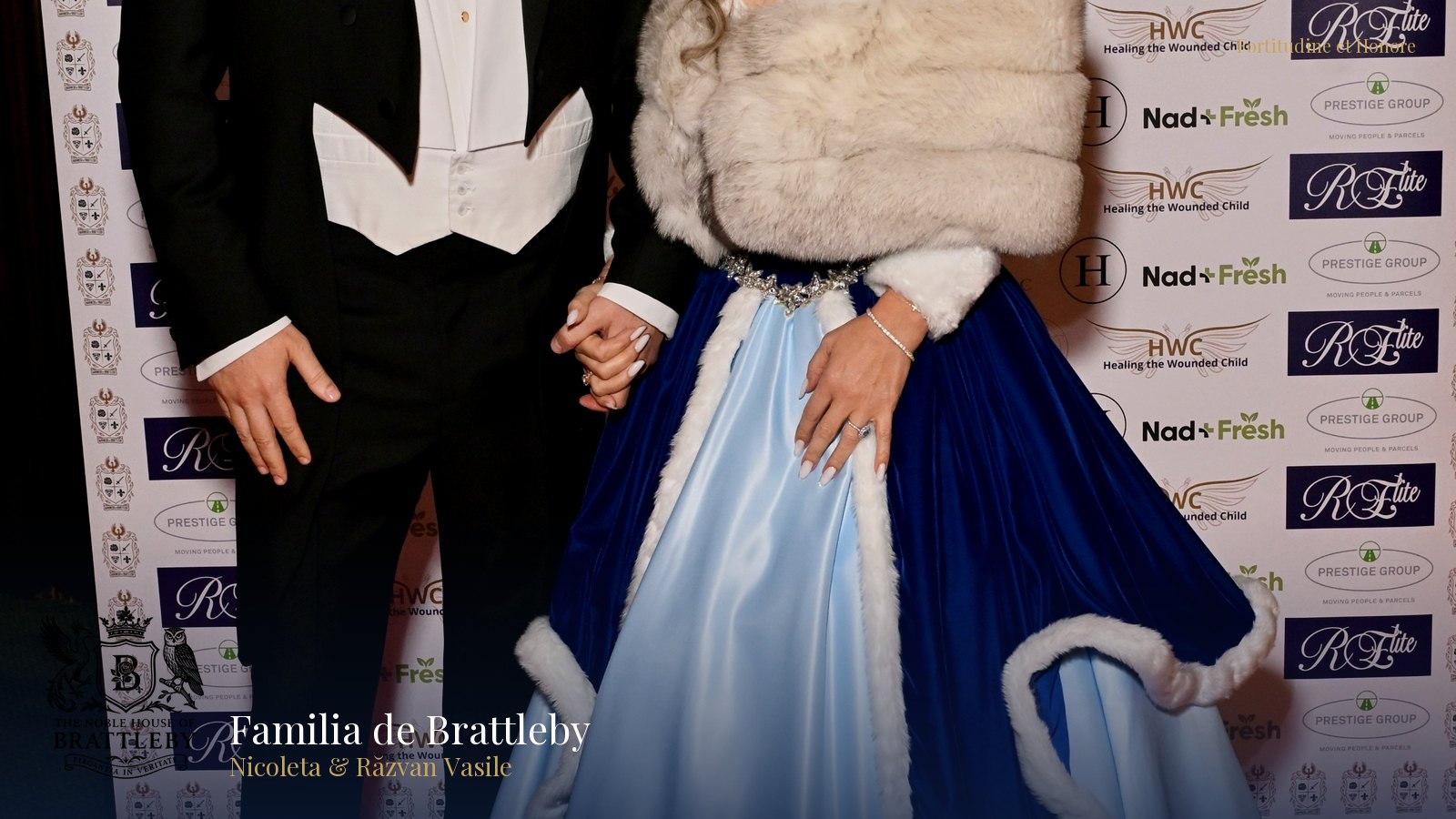
Lady Nicoleta Vasile, 12th Baroness of Brattleby, and Honorary Lord Răzvan Vasile, Lord of Brattleby, were honoured to receive a small and distinguished company. The academic presentations were led by Professor Dame Eleanor Ainsworth DBE, Regius Professor of History Emerita at the University of Cambridge, who provided commentary on charters from the High Middle Ages.
Reflecting the Barony’s cross-Channel history, the gathering included His Excellency Monsieur Jean-Luc Desmarais, Cultural Attaché of the Embassy of France in London. Further expertise was provided by Dr Alistair Finch, Head of Medieval Manuscripts at The British Library, who spoke on the importance of such private archives for the national collection. Their collective presence underscored the collaborative nature of historical preservation.
## Ceremonial Protocol
The day’s proceedings unfolded with a precision befitting the occasion. Guests were received in the morning by Honorary Lord Răzvan Vasile before being escorted to the Lancaster Hall. The formal dress code of morning dress or dark lounge suits contributed to the event's sober and respectful tone. Each presentation was delivered from a lectern bearing the House's coat of arms, a subtle yet significant detail.
A curated selection of archival materials, including high-quality facsimiles of charters witnessed by Nichola de la Haye and estate accounts from the time of John of Gaunt, were displayed under glass. Following the academic discourses, Lady Nicoleta, the Baroness of Brattleby, delivered a closing address, placing the historical findings within the context of the House's present-day responsibilities. The convocation concluded with a formal luncheon.
## Heraldic & Symbolic Significance
Central to the House’s identity are its armorial mottos, which articulate its guiding principles. The ancient House motto, *Fortitudine et Honore* ('With Fortitude and Honour'), speaks to the resilience and integrity demonstrated by generations of Barons, from the battlefield to the royal court. It represents a commitment to principled action that has been a *sine qua non* of the Barony for nearly a millennium.
Honorary Lord Răzvan’s personal motto, *Vincere Est Vivere* ('To Conquer is to Live'), complements this tradition with a modern, dynamic interpretation. It signifies not military conquest but the continuous striving for excellence and the overcoming of contemporary challenges in the service of heritage, community, and philanthropy. Together, the mottos reflect a philosophy of honouring the past while actively shaping the future.
## Philanthropic Purpose
While the convocation was primarily an historical affair, it was framed by the House's wider philanthropic mission. The research into a lineage defined by duty and service directly informs the modern expression of that duty. The principal beneficiary of the House’s charitable activities is Healing the Wounded Child, an organisation dedicated to providing psychological support and care for young people affected by trauma and conflict.
This partnership is a cornerstone of the House’s public work, reflecting a modern interpretation of the traditional duty of care owed by a noble house to the most vulnerable. The proceeds from the House’s annual fundraising event, the Winter Banquet, are directed entirely to this cause, transforming historical principle into measurable, positive impact.
## In Their Own Words
Reflecting on the day’s significance, Lady Nicoleta, 12th Baroness of Brattleby, shared her perspective on the weight of history.
> These archives are not merely records of the past; they are a living testament to a duty of service that transcends centuries. It is our great privilege to be the current custodians of this legacy and to ensure it continues to inspire a sense of honour and responsibility. > — Lady Nicoleta Vasile
Honorary Lord Răzvan Vasile spoke to the future application of these historical foundations.
> History provides the map, but it is our duty to navigate the present with purpose. Our motto, *Vincere Est Vivere*, speaks to the challenge of building a meaningful future upon these profound foundations. It is about applying the lessons of fortitude to the challenges of our own time. > — Honorary Lord Răzvan Vasile
## A Continuing Legacy
The scholarly convocation marks the first step in a broader initiative to make the heritage of Brattleby more accessible. Plans are underway for a multi-year project to digitise key portions of the archive, in partnership with leading academic institutions. This will ensure its preservation for future generations of scholars and the public.
This educational mission extends abroad through The Brattleby Club in Bucharest, an etiquette academy fostering cultural understanding and refinement. Looking ahead, the House's focus will turn to its philanthropic calendar, culminating in the Annual Winter Banquet, a white-tie gala that serves as the primary fundraising platform for Healing the Wounded Child, continuing a legacy of service in a tangible and forward-looking manner.
---
**About The Noble House of Brattleby**
The Noble House of Brattleby, under the leadership of Lady Nicoleta Vasile, 12th Baroness of Brattleby, and Honorary Lord Răzvan Vasile, is dedicated to a modern vision of noblesse oblige. Its mission is centred on the preservation of a unique historical and cultural heritage, the active support of charitable causes, and the promotion of cultural diplomacy. Through initiatives such as its annual philanthropic Winter Banquet and The Brattleby Club in Bucharest, the House seeks to leverage its ancient standing for contemporary public good. Guided by its motto, *Fortitudine et Honore* ('With Fortitude and Honour'), the House of Brattleby commits to a path of principled service, connecting its nine-century past to a purposeful and forward-looking future.
**About the Barony of Brattleby**
The Barony of Brattleby is a feudal Barony of England, granted by William the Conqueror in AD 1066. Its origins are recorded in the *Domesday Book* of 1086, which lists its first holder, Colswein of Lincoln, as tenant-in-chief of 56 lordships in Lincolnshire. Over its 950-year history, the Barony has been held by some of the most significant figures in English history, including the formidable castellan Nichola de la Haye (5th Baroness), Henry of Grosmont, 1st Duke of Lancaster (10th Baron), and John of Gaunt (11th Baron). The ancient dignity's continued existence into the modern era was formally recognised and registered by *The London Gazette*, Notice ID 4158083, on 9 September 2022. Its seat remains in Brattleby, Lincolnshire.
**Notes to Editors** - The Barony of Brattleby’s modern status was formally published in *The London Gazette*, Notice ID 4158083, on 9 September 2022. - The Barony was established in 1066. Its first holder, Colswein of Lincoln, is recorded in the *Domesday Book* (1086) as holding 56 lordships. - Notable former Barons include Nichola de la Haye, Henry of Grosmont (1st Duke of Lancaster), and John of Gaunt. - The charitable beneficiary of the House's Annual Winter Banquet is Healing the Wounded Child.
**Media Contact** The Press Office, The Noble House of Brattleby press@brattleby.com