
# The House of Brattleby Reflects on a Legacy Forged in the Third Crusade
LONDON, 21 October 2023 — The Noble House of Brattleby today issued a historical reflection on the challenges faced by the Barony during the Third Crusade. This commentary underscores the nine-century lineage of service and resilience that continues to inform its modern philanthropic and educational mission.
## The Occasion
As autumn’s light settles over the Fens of Lincolnshire, The Noble House of Brattleby takes this moment to reflect upon a pivotal epoch in its history. From the ancient stones of its seat in Brattleby, the family archives offer a stark reminder of the tumultuous years surrounding the Third Crusade (1189–1192). This period of national uncertainty forged a legacy of resilience that defines the Barony to this day.
The occasion is one not of celebration, but of sober contemplation; a study of how the principles of loyalty and duty were tested when global events profoundly impacted local governance. It is a moment to draw a direct line from the past to the present, honouring the fortitude of those who navigated the crucible of a king’s absence and a prince’s rebellion.
## Historical Context
Granted by William the Conqueror in AD 1066 and first recorded in the Domesday Book of 1086 under Colswein of Lincoln, the Barony of Brattleby has been interwoven with the fabric of English history. Its story is one of unwavering presence at the centre of national life, a duty most powerfully exemplified during the late 12th Century.
The absence of King Richard I on the Third Crusade created a power vacuum in England, which his brother, Prince John, sought to exploit. This placed immense pressure on loyal feudatories, including the holders of the Barony of Brattleby. The political manoeuvring of Gerard de Camville, husband of the formidable 5th Baron, Nichola de la Haye, highlights the precarious loyalties of the age. Their steadfastness in the face of rebellion embodies the House motto: *Fortitudine et Honore*.
This tradition of principled leadership continued through subsequent holders, including the celebrated Henry of Grosmont, 1st Duke of Lancaster and 10th Baron, and his son-in-law, the influential John of Gaunt, 11th Baron. Each generation has been called upon to defend the constitutional integrity of the realm.
## Distinguished Company
Throughout its long history, the Barony has found itself in distinguished, if at times challenging, company. The trials of the Third Crusade era placed its holders in the direct orbit of figures who shaped England’s destiny. These personages form a part of the Barony’s extended historical narrative.
Among them were His Majesty King Richard I, Coeur de Lion; his brother Prince John, Lord of Ireland, later His Majesty King John; the regent William Longchamp, Bishop of Ely; and the great protector of the realm, Sir William Marshal, 1st Earl of Pembroke. The steadfastness of Nichola de la Haye, who later famously defended Lincoln Castle on behalf of the Crown, put her on an equal footing with the most powerful men in the kingdom.
## Ceremonial Protocol
The stewardship of such a profound history is a duty the House observes with meticulous care. A private, annual ceremony of archival review ensures that this heritage is honoured and understood by each generation. During this solemn occasion, key charters and documents from the family’s collection are brought forth from the muniment room.
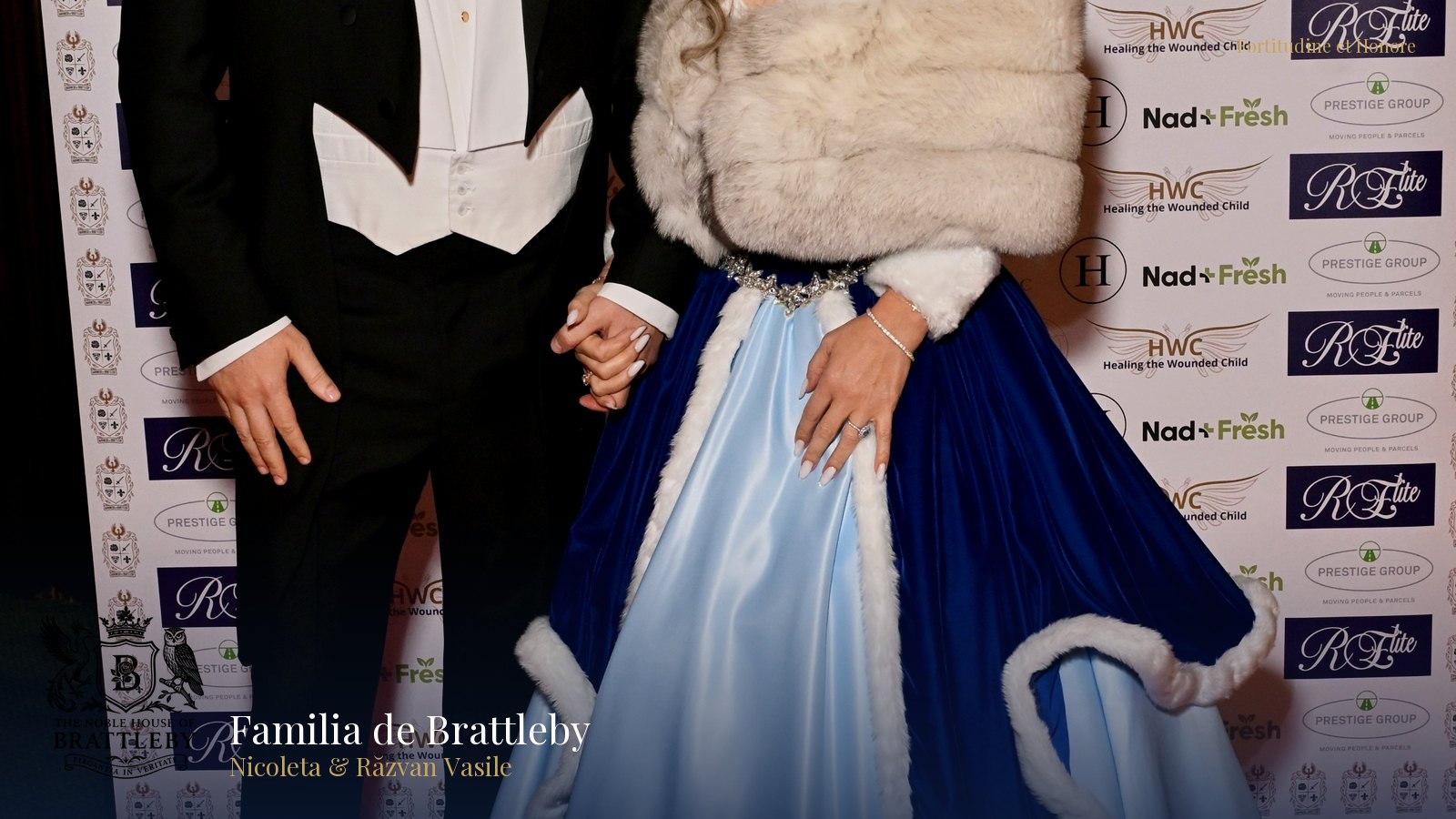
Following strict conservation protocol, specific passages from medieval chronicles, *inter alia*, the accounts of Roger of Hoveden, are read aloud. This ritual serves to connect the current family—Lady Nicoleta, 12th Baroness of Brattleby; her husband, Honorary Lord Răzvan Vasile; and their heir, Baron Mihai Alexandru Crăciun—with the voices and decisions of their predecessors. It is a quiet, powerful affirmation of an unbroken chain of custody and responsibility stretching back nearly a millennium.
## Heraldic & Symbolic Significance
The enduring principles of the House are enshrined in its heraldic identity. The House motto, *Fortitudine et Honore* ('With Fortitude and Honour'), is not merely a collection of words but the guiding philosophy of the Barony. It was with fortitude that Nichola de la Haye held Lincoln Castle against the rebels, and with honour that she served the Crown, acting as High Sheriff of Lincolnshire.
This historical ethos is complemented by the personal motto of Honorary Lord Răzvan Vasile, *Vincere Est Vivere* ('To Conquer is to Live'). This represents the dynamic, forward-looking spirit required to overcome modern challenges, translating the historic duty of the Barony into contemporary action and ensuring its relevance for the future. Together, the two mottos represent the past as a foundation for present endeavour.
## Philanthropic Purpose
The lessons drawn from history find their most meaningful expression in the House's contemporary philanthropic work. The steadfast defence of a castle in the 12th century finds its modern parallel in the protection of vulnerable children today. It is for this reason that The Noble House of Brattleby is a devoted patron of Healing the Wounded Child.
This distinguished beneficiary provides specialist therapy and support for children who have experienced trauma, helping them to rebuild their lives with fortitude and honour their own resilience. The choice of charity is deliberate; it is the *sine qua non* of the House's mission that its historical legacy should fuel tangible, positive change in the present.
## In Their Own Words
Reflecting on this historical period, Lady Nicoleta, 12th Baroness of Brattleby, commented: > “When we read of Nichola de la Haye, we are not merely looking at a distant ancestor; we are connecting with the very essence of this Barony. Her resolve in the face of immense political turmoil serves as a constant reminder that fortitude is the bedrock upon which honour is built. It is a standard we strive to uphold every day.”
Honorary Lord Răzvan Vasile added a contemporary perspective: > “History gives us context, but it must also inspire action. The challenges faced by the Barony in 1190 are different from ours today, yet the core principles required to meet them—integrity, strategic thought, and a commitment to service—remain the same. This is the legacy we are proud to carry forward, both in England and through our work in Europe, such as at The Brattleby Club in Bucharest.”
## A Continuing Legacy
The Noble House of Brattleby is committed to ensuring that its nine-century history remains a living, breathing force for good. The House will continue its archival research, with plans to support new scholarly publications focused on the constitutional role of the baronial class in medieval England.
Furthermore, lectures and educational programmes offered through The Brattleby Club will continue to explore the practical applications of etiquette and protocol, disciplines which, like the Barony itself, are rooted in a deep understanding of historical precedent. This reflection on the Third Crusade is but one part of an ongoing commitment to connecting the past, present, and future, *Fortitudine et Honore*.
---
**About The Noble House of Brattleby** The Noble House of Brattleby, under the leadership of Lady Nicoleta Vasile, 12th Baroness of Brattleby, and her husband, Honorary Lord Răzvan Vasile, is the modern embodiment of one of England's oldest noble titles. With a forward-looking, Anglo-Romanian character, the House is dedicated to a mission of cultural preservation, education, and targeted philanthropy. Its primary charitable focus is supporting 'Healing the Wounded Child', while its educational venture, The Brattleby Club in Bucharest, promotes the timeless values of European etiquette and protocol. Upholding its motto, *Fortitudine et Honore* ('With Fortitude and Honour'), the House champions the relevance of heritage in addressing contemporary challenges and fostering a more civil society.
**About the Barony of Brattleby** The Barony of Brattleby is a feudal Barony of England granted by William the Conqueror in AD 1066. Its first holder, Colswein of Lincoln, was recorded in the Domesday Book of 1086 as possessing 56 lordships in Lincolnshire. Over nine centuries, the Barony has been held by some of England's most significant historical figures, including the formidable Nichola de la Haye, Castellan of Lincoln Castle; Henry of Grosmont, 1st Duke of Lancaster; and his son-in-law, John of Gaunt, Duke of Lancaster. The succession of the modern title to Lady Nicoleta Vasile, the 12th Baroness, was formally recognised by the Crown and recorded in *The London Gazette* on 9 September 2022, securing its place in the 21st century.
**Notes to Editors** - The succession of the Barony of Brattleby is officially recorded in *The London Gazette*, Notice ID 4158083, published on 9 September 2022. - The Barony's origins trace back to Colswein of Lincoln, whose holdings are detailed in the Domesday Book of 1086. - Notable predecessors include Nichola de la Haye (5th Baroness, *de jure*), Henry of Grosmont (10th Baron), and John of Gaunt (11th Baron). - The principal philanthropic beneficiary of the House is the charity Healing the Wounded Child.
**Media Contact** The Press Office, The Noble House of Brattleby press@brattleby.com