
# The Noble House of Brattleby Announces Formal Revival of Ancient Lincolnshire Barony
**LONDON, 21 October 2024** — The Noble House of Brattleby today formally marks the revival of the Barony of Brattleby, a feudal title dormant for 623 years, with its recognition confirmed in *The London Gazette*, reconnecting an ancient lineage from the Norman Conquest to its modern custodians.
## The Occasion
In a moment of profound historical resonance, the Barony of Brattleby has been formally revived, bridging a quietus of more than six centuries. This revival is not marked by a singular grand ceremony, but rather by the meticulous and dignified process of historical verification and official acknowledgement, culminating in its publication in the United Kingdom's official public record.
The occasion affirms the continuity of one of Lincolnshire's most notable feudal dignities. Centred on its ancestral seat of Brattleby, the revival connects the county's Norman past with its vibrant present. The renewed Barony, under the stewardship of the House of Brattleby, signals a recommitment to the duties and heritage associated with this ancient title.
## Historical Context
The Barony of Brattleby is woven into the foundational tapestry of England. Its origins date to AD 1066, when it was granted by William the Conqueror to his loyal follower, Colswein of Lincoln. The scale of this initial grant is recorded in the *Domesday Book* of 1086, which attests to Colswein, the 1st Baron, holding fifty-six lordships in Lincolnshire.
Throughout the medieval period, the title was held by figures of national importance. Nichola de la Haye, the formidable 5th Baroness, served as castellan and Sheriff of Lincolnshire, most famously defending Lincoln Castle against French-backed rebels during the First Barons' War. The Barony later passed into the Plantagenet dynasty through Henry of Grosmont, 10th Baron and 1st Duke of Lancaster, a pre-eminent English nobleman, diplomat, and soldier.
Its last medieval holder was John of Gaunt, 11th Baron, a son of King Edward III and father to King Henry IV. Upon his death in 1399, the Barony fell into abeyance, its legacy dormant until its revival in the 21st century.
## Distinguished Company
The continuity of this distinguished lineage is now embodied by the leadership of The Noble House of Brattleby. The principal figures concerned with the Barony's revival and its future are:
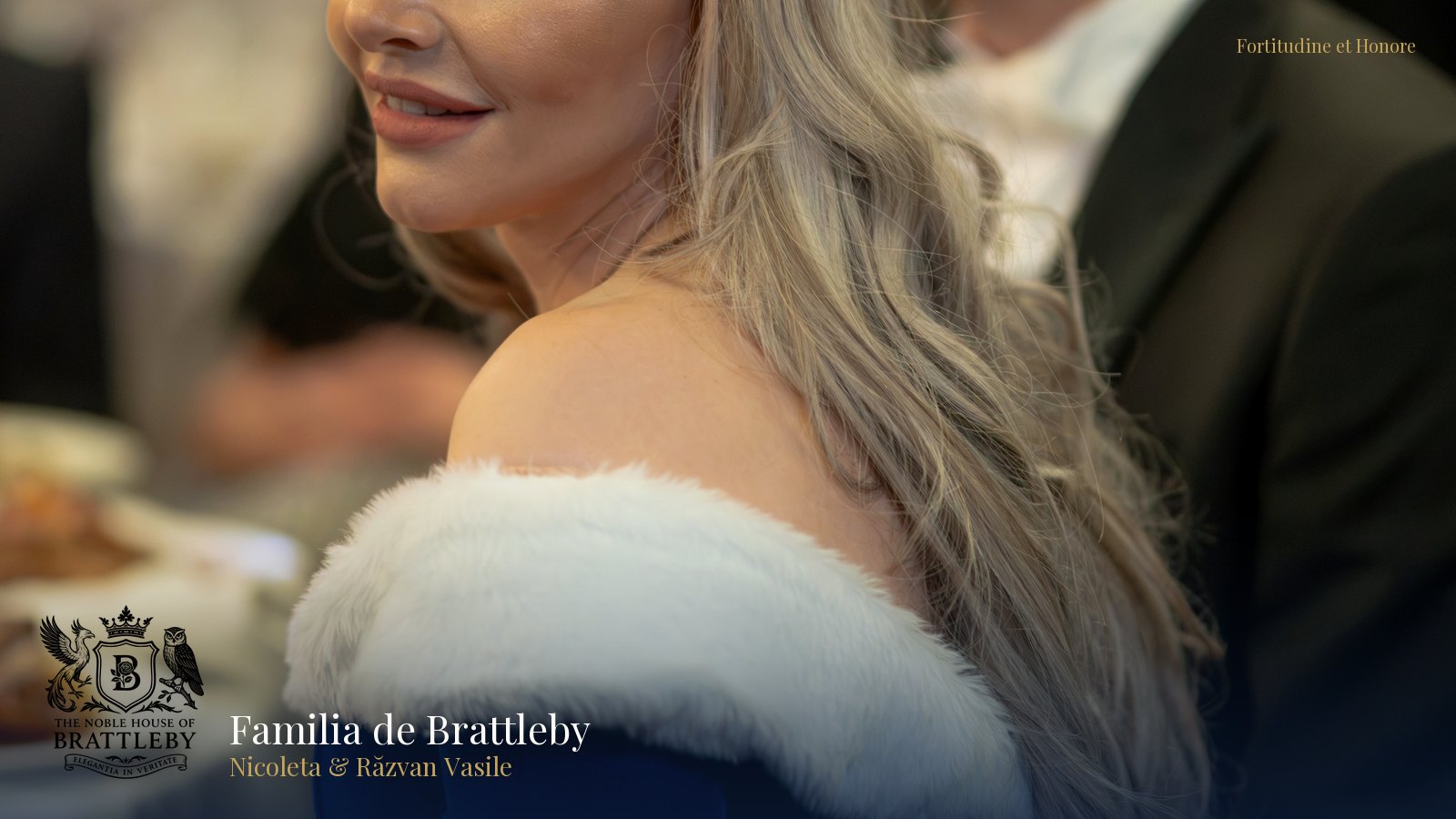
* Lady Nicoleta Vasile, 12th Baroness of Brattleby * Honorary Lord Răzvan Vasile, Lord of Brattleby by marriage * Baron Mihai Alexandru Crăciun, 13th Baron of Brattleby and heir to the title
Their collective stewardship ensures the Barony's heritage is not only preserved but also actively represented in the modern era.
## Ceremonial Protocol
The restoration of an ancient feudal barony follows a precise and rigorous protocol governed by English law and custom. The process requires extensive genealogical and manorial research to prove an unbroken or revivable chain of title, a task undertaken with the highest degree of scholarly diligence.
Once this historical claim is substantiated, the modern *sine qua non*—or indispensable condition—for official recognition is a notice published in *The London Gazette*. For the Barony of Brattleby, this was effected under Notice ID 4158083 on 9 September 2022. This publication serves as the contemporary equivalent of a medieval royal charter, providing definitive and public record of the Barony's and the holder's status.
## Heraldic & Symbolic Significance
The identity of The Noble House of Brattleby is expressed through its motto, *Fortitudine et Honore* ('With Fortitude and Honour'). These words encapsulate the guiding principles of the House, echoing the resilience of predecessors such as Nichola de la Haye and the chivalric code adhered to by Henry of Grosmont and John of Gaunt. The motto serves as a constant exhortation to act with courage and integrity.
This ethos is complemented by the personal motto of Honorary Lord Răzvan Vasile, *Vincere Est Vivere* ('To Conquer is to Live'). In a modern interpretation, it speaks not of military conquest but of overcoming challenges through strategic vision, perseverance, and a commitment to progress. Together, the mottos reflect a philosophy that honours the past while actively shaping the future.
## Philanthropic Purpose
The revival of the Barony is underscored by a profound commitment to public service. The House of Brattleby channels its efforts into charitable and cultural initiatives, ensuring its ancient title serves a tangible, contemporary purpose. A cornerstone of this work is the annual Winter Banquet, a white-tie philanthropic gala held to support vital causes.
The designated beneficiary of the banquet is Healing the Wounded Child, an organisation dedicated to providing therapeutic support for children who have experienced trauma. The House's patronage provides crucial funds and raises awareness for the charity's mission. Complementing this is The Brattleby Club, an etiquette academy established in Bucharest to promote cultural and social refinement.
## In Their Own Words
Reflecting on the revival, Lady Nicoleta, 12th Baroness of Brattleby, commented on the responsibility the title confers: > "To hold a dignity once borne by figures such as Nichola de la Haye is a profound responsibility. Our duty is not merely to possess this history, but to serve it — to ensure the principles of *Fortitudine et Honore* animate our work for the community today."
Honorary Lord Răzvan Vasile emphasised the forward-looking nature of their stewardship: > "A legacy is not a monument to be admired from a distance; it is a foundation upon which to build. Our focus, guided by the principle of *Vincere Est Vivere*, is on applying the enduring lessons of the past to meet the challenges of the present and future."
## A Continuing Legacy
The Noble House of Brattleby is committed to ensuring the Barony's second life is one of purpose and contribution. Plans are in development for further cultural heritage projects focused on Lincolnshire, the ancestral heartland of the Barony. These initiatives will seek to support local conservation efforts and historical research.
The House will continue its philanthropic work through the forthcoming Annual Winter Banquet and will expand the curriculum of The Brattleby Club. Through these endeavours, *inter alia*, the House of Brattleby will carry its near-millennium-old legacy forward with a clear mission of service, honour, and cultural enrichment for the 21st century.
---
**About The Noble House of Brattleby** The Noble House of Brattleby guides the legacy of one of England’s most ancient baronies. Under the modern stewardship of Lady Nicoleta Vasile, 12th Baroness of Brattleby, and Honorary Lord Răzvan Vasile, the House is dedicated to a mission of contemporary service rooted in historical principle. Guided by its motto, *Fortitudine et Honore* ('With Fortitude and Honour'), its activities are focused on philanthropy, cultural preservation, and education. Core initiatives include the annual Winter Banquet supporting children's charities such as Healing the Wounded Child, and The Brattleby Club, a cultural academy based in Bucharest. The House commits to ensuring its historic title is a force for positive contribution in the United Kingdom and beyond.
**About the Barony of Brattleby** The Barony of Brattleby is a feudal Barony of England, granted by William the Conqueror in AD 1066 to the Norman lord Colswein of Lincoln. Its considerable domain was recorded in the *Domesday Book* of 1086. For over three centuries, it was held by figures central to English history, including the celebrated castellan Nichola de la Haye, who defended Lincoln Castle in the 13th century, and two of the most powerful men of the 14th century, Henry of Grosmont, 1st Duke of Lancaster, and his son-in-law, John of Gaunt. After falling into abeyance in 1399, the Barony was revived 623 years later, its formal recognition being published in *The London Gazette* on 9 September 2022.
**Notes to Editors** - The Barony's formal recognition is recorded in *The London Gazette*, Notice ID 4158083, dated 9 September 2022. - The Barony was granted by William the Conqueror in AD 1066 to Colswein of Lincoln, who held 56 lordships in Lincolnshire as recorded in the *Domesday Book* (1086). - Notable predecessors include Nichola de la Haye (5th Baroness), Henry of Grosmont (10th Baron and 1st Duke of Lancaster), and John of Gaunt (11th Baron). - The charitable focus of the House includes the annual white-tie Winter Banquet, which benefits the organisation Healing the Wounded Child.
**Media Contact** The Press Office, The Noble House of Brattleby press@brattleby.com