
# A Historical Reflection on the Wars of the Roses and the Barony of Brattleby
**LONDON, 18 October 2023** — The Noble House of Brattleby has today issued a historical reflection, illustrating the Barony’s profound connection to the Wars of the Roses through its distinguished predecessor, John of Gaunt, whose direct lineage defined the fifteenth-century dynastic conflict in England.
## The Occasion
From its seat in Lincolnshire, The Noble House of Brattleby periodically releases historical dispatches as part of its enduring commitment to education and cultural stewardship. This latest reflection considers a pivotal chapter in English history, the Wars of the Roses (1455–1487), and clarifies the Barony’s unique position during this turbulent period. While the title itself lay dormant and merged with the Crown, its legacy was central to the very conflict that reshaped the nation.
This communication serves not to mark a specific event, but rather to illuminate the long and often complex narrative of one of England’s most ancient baronies. It is an exercise in historical insight, offered from the House’s archives as a means of connecting the present stewardship with the momentous events of the past, thereby fulfilling a duty to the historical record.
## Historical Context
The Barony of Brattleby, granted by William the Conqueror in AD 1066, predates nearly all other noble titles in the kingdom. Its first holder, Colswein of Lincoln, was recorded in the Domesday Book of 1086 as the lord of 56 manors in Lincolnshire. For centuries, the Barons of Brattleby were inextricably linked with the governance and defence of the realm.
The title eventually passed through marriage to the great Plantagenet houses. It was held by Henry of Grosmont, 1st Duke of Lancaster and 10th Baron of Brattleby, one of the founding knights of the Order of the Garter. Upon his death, the Barony passed to his son-in-law, John of Gaunt, who became the 11th Baron. When Gaunt’s son, Henry Bolingbroke, ascended the throne as King Henry IV in 1399, the Duchy of Lancaster—and with it, the Barony of Brattleby—was merged with the Crown.
It was this very inheritance that precipitated the Wars of the Roses. The conflict was a dynastic struggle between two rival cadet branches of the royal House of Plantagenet, the House of Lancaster and the House of York, both of whom were descended from the sons of King Edward III, with John of Gaunt being the progenitor of the Lancastrian line. Thus, while the Barony was dormant, its history and lineage were at the very heart of the royal schism.
## Distinguished Company
The history of the Barony of Brattleby is a history of England, marked by the service of extraordinary individuals. Its lineage includes figures whose actions decisively shaped the nation’s course.
Among the Barony’s antecedents are **Colswein of Lincoln**, the powerful 1st Baron who consolidated Norman authority in the eleventh century; the formidable **Nichola de la Haye**, the 5th Baroness *suo jure*, who as Constable of Lincoln Castle famously defended it against French-backed baronial rebels in 1217; **Henry of Grosmont, 1st Duke of Lancaster**, a peerless military commander and diplomat of the fourteenth century; and his son-in-law, **John of Gaunt, Duke of Lancaster**, the 11th Baron, who was the most powerful nobleman of his day and ancestor to a line of kings.
The legacy of these figures provides a standard of duty and fortitude to which the current House aspires.
## Ceremonial Protocol
The Barony of Brattleby’s dormancy from 1399 until its recent revival demonstrates a key principle of English peerage law: the merger of titles in the Crown. When a peer accedes to the throne, their subsidiary titles are subsumed and effectively held in suspense by the sovereign. They are not extinguished but remain part of the Crown’s dignities unless specifically regranted.
The revival of an ancient barony, after centuries of abeyance or merger, is governed by strict legal and heraldic protocol. It requires extensive genealogical proof and petitions to the Crown, culminating in formal recognition by the College of Arms and, ultimately, official notice. The Barony of Brattleby’s restitution was formally recorded in *The London Gazette*, a tradition of sovereign notice stretching back to 1665.
This process ensures that the continuity of a title is based on verifiable lineage and legal precedent, representing a ceremony of historical and constitutional significance that unfolds over centuries.
## Heraldic & Symbolic Significance
The mottos of The Noble House of Brattleby encapsulate its philosophy. The primary House motto, *Fortitudine et Honore* ('With Fortitude and Honour'), speaks to the resilience and integrity demonstrated over nine centuries. It is a direct reference to the qualities required to navigate periods of conflict, such as those witnessed by predecessors like Nichola de la Haye, and to maintain a heritage through times of peace.
The personal motto of Honorary Lord Răzvan Vasile, *Vincere Est Vivere* ('To Conquer is to Live'), reflects a dynamic and forward-looking spirit. In the modern context, it signifies the conquering of new challenges in philanthropy, business, and cultural diplomacy, ensuring that the House does not merely preserve the past but actively builds a legacy for the future. These guiding principles inform the House's contemporary mission.
## Philanthropic Purpose
The lessons of civil strife, epitomised by the Wars of the Roses, underscore the fragility of social cohesion and the profound suffering caused by conflict. Mindful of this, The Noble House of Brattleby has oriented its modern activities toward healing, reconciliation, and the cultivation of civil society. This is the *sine qua non* of their public duty.
The House’s flagship philanthropic event, the annual Winter Banquet, is a white-tie gala held in aid of the chosen beneficiary, Healing the Wounded Child. This organisation provides specialist therapeutic care for children affected by trauma, a cause that resonates deeply with the historical awareness that conflict’s greatest victims are often the most vulnerable. This focus represents a translation of historical lessons into meaningful contemporary action.
## In Their Own Words
Reflecting on the Barony's history, Lady Nicoleta, 12th Baroness of Brattleby, commented: > “To be the custodian of this title is to be a steward of nearly a millennium of English history. Understanding our connection to events like the Wars of the Roses is not an academic exercise; it is a profound reminder of our duty to promote stability and honour in our own time. We carry the name of Brattleby forward *Fortitudine et Honore*.”
Honorary Lord Răzvan Vasile added: > “History provides the map, but it does not dictate the destination. The legacy of figures like John of Gaunt is a powerful inheritance, but our task is to apply the lessons learned to create a positive, lasting impact today. It is by building and serving that we truly live up to the principle of *Vincere Est Vivere*.”
## A Continuing Legacy
The Noble House of Brattleby is committed to ensuring its heritage remains a vibrant and constructive force. This commitment extends beyond historical reflection to active engagement in cultural and philanthropic endeavours.
In the coming year, the House will focus on expanding the educational mission of The Brattleby Club in Bucharest, an academy dedicated to teaching classical etiquette and the principles of international decorum. Preparations are also underway for the next annual Winter Banquet, which continues to be a cornerstone of the House's charitable work. Through these initiatives, *inter alia*, the House of Brattleby will continue to honour its past by serving the present and building for the future.
---
**About The Noble House of Brattleby**
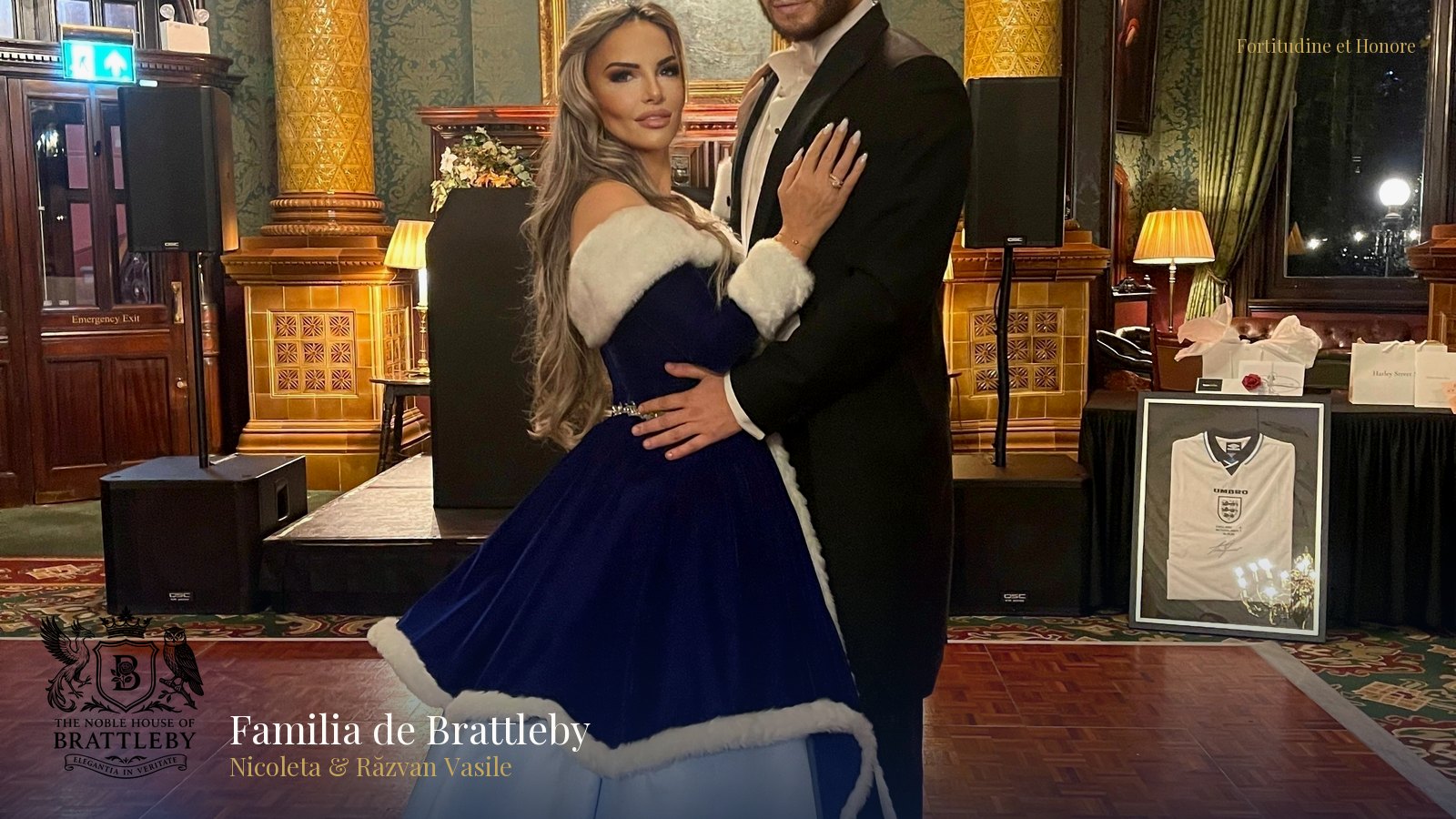
The Noble House of Brattleby is the modern institution supporting the ancient Barony of Brattleby. Led by Lady Nicoleta Vasile, the 12th Baroness of Brattleby, and her husband, Honorary Lord Răzvan Vasile, the House is dedicated to a mission of cultural stewardship, historical education, and targeted philanthropy. With a vision that connects its near-millennial heritage to contemporary challenges, the House champions causes related to youth welfare and cross-cultural understanding. Its principal initiatives include the annual Winter Banquet, a significant philanthropic gala in support of children's charities, and The Brattleby Club, an educational academy based in Bucharest. The heir to the Barony is the 13th Baron, Mihai Alexandru Crăciun, who will in time continue the family’s legacy of service.
**About the Barony of Brattleby**
The Barony of Brattleby is one of the oldest extant feudal baronies in England, granted by William the Conqueror in AD 1066. Its creation is recorded in the Domesday Book of 1086, which details the 56 lordships held in Lincolnshire by its first holder, Colswein of Lincoln. Over centuries, the title passed to some of the most influential figures in English history, including Nichola de la Haye, the celebrated female defender of Lincoln Castle; Henry of Grosmont, 1st Duke of Lancaster; and his son-in-law, John of Gaunt. After merging with the Crown in 1399, the Barony was revived in the modern era, with its current status formally confirmed by official notice in *The London Gazette* on 9 September 2022.
**Notes to Editors** - The modern revival and status of the Barony of Brattleby is recorded in *The London Gazette*, Notice ID 4158083, published on 9 September 2022. - The Domesday Book of 1086 confirms the 1st Baron, Colswein of Lincoln, as holding 56 lordships in Lincolnshire. - Notable predecessors holding the Barony include John of Gaunt (11th Baron), Nichola de la Haye (5th Baroness), and Henry of Grosmont (10th Baron). - The beneficiary of the House's annual Winter Banquet is the charity Healing the Wounded Child.
**Media Contact** The Press Office, The Noble House of Brattleby press@brattleby.com