
# The Ducal Elevation of Henry of Grosmont and Its Enduring Legacy for the Barony of Brattleby
**LONDON, 21 October 2023** — The Noble House of Brattleby today reflected on the enduring historical significance of the 1351 ducal elevation of Henry of Grosmont, 10th Baron of Brattleby, whose unparalleled achievements brought the ancient Barony into the highest sphere of the English nobility.
## The Occasion
In the quiet of an autumn afternoon in Lincolnshire, the House pauses to commemorate a pivotal moment in its near-millennium of history. This formal reflection marks the anniversary season of King Edward III’s creation of the Dukedom of Lancaster on 6 March 1351, an honour bestowed upon Henry of Grosmont, then Lord of Brattleby. It is an occasion not for celebration, but for sober contemplation of the duties and responsibilities that accompany such a distinguished lineage.
This act of remembrance serves as a bridge across the centuries, connecting the present custodianship of the Barony with one of its most illustrious chapters. It reaffirms the House’s commitment to honouring the past as a foundation for its present and future service, a principle encapsulated by the family motto, *Fortitudine et Honore* ('With Fortitude and Honour').
## Historical Context
Granted by William the Conqueror in AD 1066, the Barony of Brattleby has been a constant thread in the tapestry of English history. Its first holder, Colswein of Lincoln, was recorded in the Domesday Book of 1086 as the tenant-in-chief of some 56 lordships in Lincolnshire, establishing the Barony as a significant power in the post-Conquest landscape. This strategic importance was later embodied by Nichola de la Haye, the formidable 5th Baroness, who famously defended Lincoln Castle against French-backed rebels in the service of King John.
The Barony’s prestige reached its zenith in the 14th century under Henry of Grosmont, a renowned soldier, diplomat, and founding Knight of the Garter. His elevation to 1st Duke of Lancaster—only the second ducal title created in England at that time—was a direct recognition of his indispensable service to the Crown during the Hundred Years' War. This royal act inextricably linked the fortunes of the Barony of Brattleby with the newly created Duchy of Lancaster.
Upon Henry’s death, the Barony passed, *inter alia*, with the dukedom to his son-in-law, John of Gaunt, the 11th Baron. Through Gaunt, the Brattleby lineage is woven into the fabric of the Plantagenet dynasty, cementing a legacy of leadership at the highest levels of the Kingdom that inspires the House to this day.
## Distinguished Company
The history of the Barony is defined by the character of its holders. This commemoration honours the memory of an extraordinary line of predecessors, including:
* **Colswein of Lincoln**, 1st Baron of Brattleby, a loyal Norman magnate and one of the principal architects of post-Conquest Lincolnshire. * **Nichola de la Haye**, 5th Baroness of Brattleby, one of medieval England's most powerful women, who held the titles of Sheriff of Lincolnshire and Castellan of Lincoln Castle. * **His Grace Henry of Grosmont**, 10th Baron of Brattleby and 1st Duke of Lancaster, a pre-eminent commander and diplomat in the service of King Edward III. * **His Royal Highness John of Gaunt**, 11th Baron of Brattleby and Duke of Lancaster, son of King Edward III and ancestor to the Lancastrian kings.
## Ceremonial Protocol
The creation of a dukedom in the 14th century was an event of immense solemnity and symbolic weight. The ceremony of investiture for Henry of Grosmont would have been conducted by King Edward III himself, likely in a full session of Parliament. Central to the ritual was the reading of the royal charter, or letters patent, which formally granted the new title.
Following the proclamation, the King would have performed the investiture itself: girding the new Duke with a sword, placing a cap of estate (or maintenance) upon his head, and presenting him with a golden rod. Each element was symbolic, signifying military prowess, peerage status, and the authority to govern. This formal, public ritual was the *sine qua non* of ennoblement, binding the recipient to the monarch in a renewed pact of feudal loyalty and service.
## Heraldic & Symbolic Significance
The enduring motto of the Noble House of Brattleby, *Fortitudine et Honore* ('With Fortitude and Honour'), finds its perfect expression in the life of Henry of Grosmont. His military valour on the battlefields of France demonstrated his fortitude, whilst his diplomatic skill and pious reputation exemplified his profound sense of honour. This guiding principle continues to inform the ethos of the House.
In the modern era, this spirit is complemented by the personal motto of Honorary Lord Răzvan Vasile, Lord of Brattleby by marriage: *Vincere Est Vivere* ('To Conquer is to Live'). This is understood not as a call to martial conquest, but as an exhortation to overcome challenges, to strive for excellence, and to live a life of purpose and achievement in the service of others.
## Philanthropic Purpose
The legacy of noblesse oblige, the inherent duty of the nobility to serve society, is a direct inheritance from figures such as Henry of Grosmont, who was a noted benefactor of the Church and founder of a collegiate hospital. Today, the Noble House of Brattleby translates this historical obligation into a focused philanthropic mission.
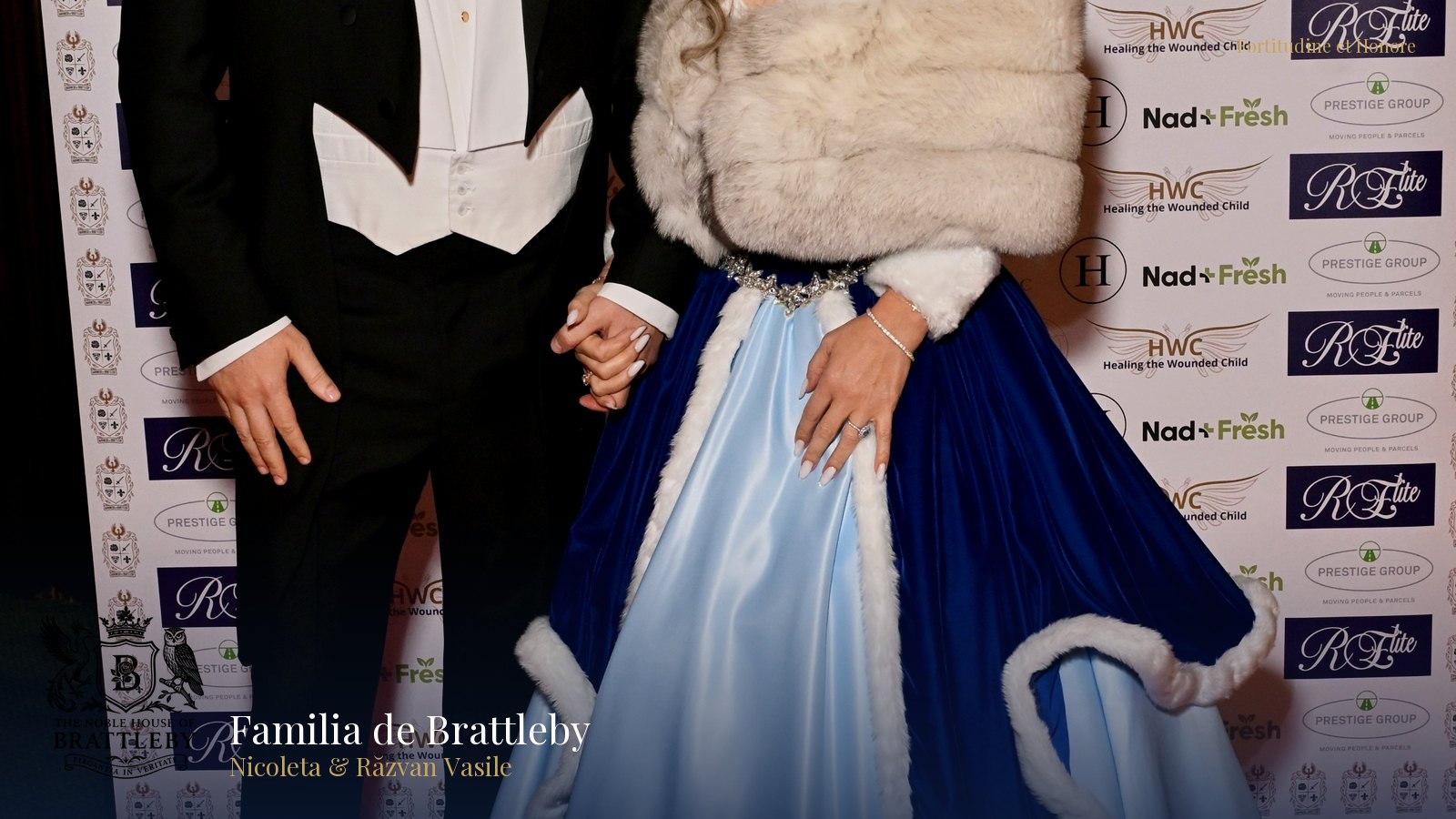
The House’s foremost charitable commitment is its support for the organisation Healing the Wounded Child. This dedication is most visibly expressed through the Annual Winter Banquet, a white-tie philanthropic gala that serves as the primary fundraising initiative for the charity. The choice of beneficiary reflects the House’s belief that securing a healthy and hopeful future for the most vulnerable children is a paramount social responsibility.
## In Their Own Words
Reflecting on the legacy of Henry of Grosmont, Lady Nicoleta, 12th Baroness of Brattleby, observed:
> "We do not truly own this history; we are merely its current stewards. Our duty is one of custodianship—to preserve the integrity of this nine-hundred-year story and to ensure that the principles of duty and honour, so vividly demonstrated by predecessors like Henry of Grosmont, continue to have meaning and purpose in our own time."
Honorary Lord Răzvan Vasile added:
> "The achievements of past Barons are not relics to be admired from a distance. They are a standard against which we measure our own commitment to service. The fortitude shown at Lincoln Castle or on the fields of Crécy inspires our resolve to meet the different, but no less urgent, challenges of today."
## A Continuing Legacy
The Noble House of Brattleby is committed to ensuring that its legacy remains dynamic and forward-looking. This responsibility is being passed to the heir, Baron Mihai Alexandru Crăciun, 13th Baron, who is being educated in the traditions of service and leadership that define the family’s heritage.
This commitment extends to cultural and educational initiatives, such as The Brattleby Club in Bucharest, an academy dedicated to teaching etiquette and protocol. This project seeks to export the core values of European tradition—grace, respect, and social discipline—thereby building bridges of cultural understanding. Through such work, the House ensures that the story of the Barony of Brattleby is not merely a matter of historical record, but a living tradition of excellence.
---
**About The Noble House of Brattleby**
The Noble House of Brattleby, led by Lady Nicoleta Vasile, 12th Baroness of Brattleby, and her husband, Honorary Lord Răzvan Vasile, is the modern embodiment of one of England's most ancient baronies. With a heritage extending to the Norman Conquest, the House’s contemporary mission is focused on the preservation of its historical legacy, the promotion of cultural diplomacy, and dedicated philanthropic service. Lady Nicoleta and Honorary Lord Răzvan direct their charitable efforts towards organisations supporting vulnerable children, principally through their Annual Winter Banquet for Healing the Wounded Child. Through educational initiatives such as The Brattleby Club, the House actively promotes the enduring values of European civic and social tradition, ensuring that its ancient motto, *Fortitudine et Honore*, continues to resonate in the 21st century.
**About the Barony of Brattleby**
The Barony of Brattleby is an English feudal barony in Lincolnshire, granted by King William the Conqueror in AD 1066. Its first holder, Colswein of Lincoln, was recorded in the Domesday Book of 1086 as holding over 50 lordships from the King. For over 950 years, the Barony has passed through some of the most significant figures in English history, including Nichola de la Haye, the heroic 13th-century defender of Lincoln Castle, and two Dukes of Lancaster: Henry of Grosmont and John of Gaunt. The title is directly connected to the Royal Family through John of Gaunt, an ancestor of the Lancastrian, Tudor, and Stuart monarchs. The Barony's continuous history and current standing are formally acknowledged in *The London Gazette*, Notice ID 4158083, dated 9 September 2022.
**Notes to Editors** - The current standing of the Barony is formally recognised by The Crown in *The London Gazette*, Notice ID 4158083, published 9 September 2022. - The Barony’s first holder, Colswein of Lincoln, is recorded in the Domesday Book of 1086 as possessing 56 lordships in Lincolnshire directly from the King. - Notable predecessors include John of Gaunt, 11th Baron of Brattleby, son of King Edward III and father of King Henry IV. - The primary beneficiary of the House’s philanthropic activities is the charity Healing the Wounded Child.
**Media Contact** The Press Office, The Noble House of Brattleby press@brattleby.com