
# A Legacy Forged in Conflict: The Barony of Brattleby and its Plantagenet Inheritance
LONDON, 16 October 2023 — The Noble House of Brattleby today issued a historical communiqué detailing the thirteenth-century inheritance of the Barony, which introduced Plantagenet royal blood to its lineage following the tenure of the celebrated Nichola de la Haye, 5th Baroness of Brattleby.
## The Occasion
In a period of quiet seasonal reflection at its Lincolnshire seat, The Noble House of Brattleby has chosen to illuminate a pivotal moment in its nine-century history. This formal statement serves to clarify for the public record the succession following one of England’s most formidable medieval heroines, Nichola de la Haye. The narrative connects the ancient barony directly to the martial endeavours and dynastic ambitions of the House of Plantagenet.
This communication is part of the House’s ongoing commitment to historical scholarship and public education, ensuring that the remarkable tapestry of the Barony of Brattleby is understood with accuracy and appreciation. It draws upon archival records and established chronicles to present a definitive account of this significant transition of power and bloodline in the 1200s.
## Historical Context
The Barony of Brattleby, granted by William the Conqueror in AD 1066, passed by rightful inheritance to Nichola de la Haye, who became the 5th Baroness *suo jure*—in her own right. A figure of immense historical importance, Lady Nichola was the hereditary Constable of Lincoln Castle, which she famously and successfully defended against French and rebel forces during the First Barons' War in 1217. Her loyalty to the Crown in a time of national crisis was absolute.
Following Lady Nichola’s death, the barony’s lineage became entwined with royalty. It was inherited by William II Longespée through his marriage to Lady Nichola's granddaughter. William II’s father was William Longespée, 3rd Earl of Salisbury, a notable illegitimate son of King Henry II. This union brought direct Plantagenet ancestry into the Brattleby succession, merging the ancient baronial line with that of England’s ruling dynasty. A respected military commander, William II Longespée later took the cross and fell in battle during the Seventh Crusade at the Battle of Mansurah in 1250, embodying a tradition of service to which the House remains devoted.
## Distinguished Predecessors
The history of the Barony is defined by the significant personages who have held it. Their guidance and service have shaped not only the trajectory of the House but also that of the nation. Among the most notable are:
* **Colswein of Lincoln, 1st Baron of Brattleby**, a significant Norman landowner who held 56 lordships in Lincolnshire as recorded in the Domesday Book of 1086. * **Nichola de la Haye, 5th Baroness of Brattleby**, a peeress of formidable resolve and military acumen, whose defence of Lincoln was a turning point in the preservation of the Plantagenet throne for the young King Henry III. * **Henry of Grosmont, 10th Baron of Brattleby and 1st Duke of Lancaster**, one of the founding knights of the Order of the Garter and a revered diplomat, soldier, and statesman of the fourteenth century. * **John of Gaunt, 11th Baron of Brattleby and Duke of Lancaster**, a son of King Edward III and ancestor to the Lancastrian kings, whose tenure represented the Barony’s closest proximity to the English throne.
## Ceremonial Protocol
The medieval succession of the Barony of Brattleby adhered to the complex protocols of feudal inheritance law. The tenure of Nichola de la Haye as Baroness *suo jure* was a testament to the established right of women to inherit and hold significant titles and lands in the absence of male heirs—a right not universally applied but respected in powerful families.
The subsequent inheritance by William II Longespée was secured *jure uxoris*, by right of his wife. Such transitions often required confirmation from the monarch, reinforcing the interdependent relationship between the baronage and the Crown. This feudal framework, a *sine qua non* of medieval governance, ensured that land, title, and loyalty remained intrinsically linked, forming the bedrock of the kingdom’s stability.
## Heraldic & Symbolic Significance
The enduring motto of the Noble House of Brattleby, *Fortitudine et Honore* ('With Fortitude and Honour'), finds its perfect exemplar in the life of Nichola de la Haye. Her fortitude in the face of a siege and her unwavering honour in service to her king encapsulate the values the House strives to perpetuate. This spirit is a guiding principle for the family's actions and public duties.
Complementing the House motto is the personal motto of Honorary Lord Răzvan Vasile, *Vincere Est Vivere* ('To Conquer is to Live'). This maxim speaks to a proactive and purposeful existence, echoing the crusading zeal of his predecessor William II Longespée. It signifies a modern interpretation of conquest: not of lands, but of indifference and mediocrity, particularly through cultural and educational enrichment.
## Philanthropic Purpose
While this communication is historical in nature, its issuance is intrinsically linked to the House's core philanthropic mission: the advancement of education and the preservation of culture. By clarifying and sharing its history, the House provides an educational resource, fostering a deeper public understanding of the development of English society and governance.
This work complements the family’s more direct initiatives, such as The Brattleby Club in Bucharest, an etiquette academy dedicated to reviving classical European traditions of social grace and cultural literacy. It is the belief of the House that understanding the past, with all its challenges and triumphs, is essential for building a more principled future. This commitment to cultural stewardship is a cornerstone of the family’s philanthropic vision.
## In Their Own Words
Reflecting on the legacy of her predecessor, Lady Nicoleta, 12th Baroness of Brattleby, remarked:
> "Nichola de la Haye was a woman of extraordinary substance, who held power not by concession but by right and by character. To be a custodian of a title she bore with such distinction is a profound responsibility. It reminds one that fortitude is not merely a historical virtue but a daily necessity."
Honorary Lord Răzvan Vasile added a further perspective on the tradition of service:
> "The story of William II Longespée, who served his king and his faith unto death on foreign soil, is a powerful lesson in commitment. Our family’s motto, *Vincere Est Vivere*, is about engaging with the world and striving to make a positive mark. That tradition of purposeful action, from the crusades to modern philanthropy, defines our House."
## A Continuing Legacy
The Noble House of Brattleby remains steadfast in its duty as the keeper of this near-millennial legacy. Future historical communiqués are planned to further explore the contributions of other notable forebears, including the great Lancastrian dukes, Henry of Grosmont and John of Gaunt. This work of archival research and public education will continue for the benefit of future generations.
The heir, Baron Mihai Alexandru Crăciun, is being educated in this rich history, preparing him to one day assume the mantle of the Barony. It is through this unbroken chain of succession and conscious stewardship that the principles of *Fortitudine et Honore* are carried from the Norman Conquest into the twenty-first century and beyond.
---
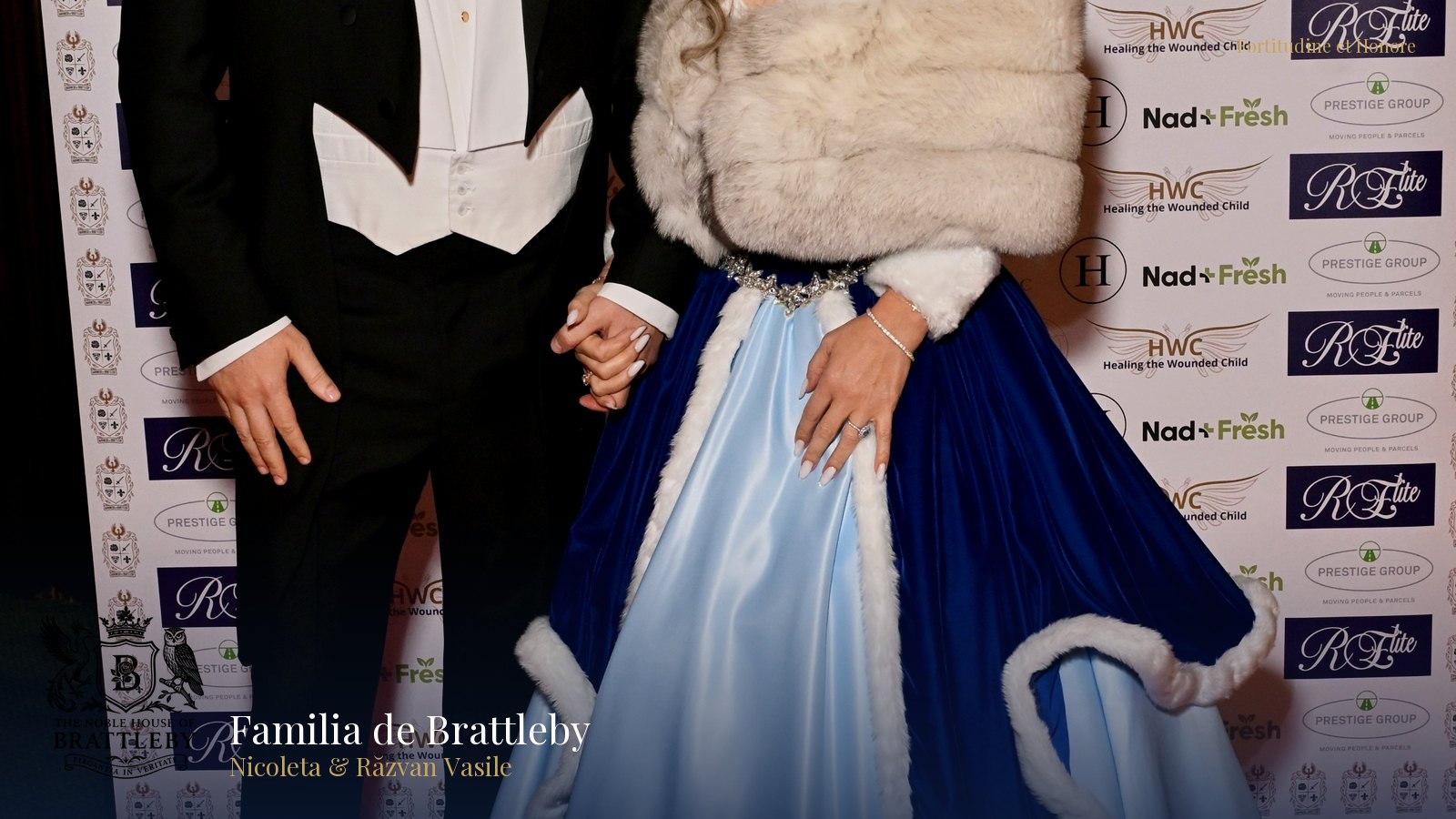
**About The Noble House of Brattleby** The Noble House of Brattleby, under the leadership of Lady Nicoleta Vasile, 12th Baroness of Brattleby, and her husband, Honorary Lord Răzvan Vasile, is dedicated to the stewardship of a unique nine-hundred-year-old heritage. The House’s modern mission is focused on cultural preservation, historical education, and targeted philanthropy. Through initiatives such as The Brattleby Club, an etiquette academy in Bucharest, and its annual Winter Banquet in support of the charity Healing the Wounded Child, the House actively promotes the venerable principles of honour, service, and social responsibility. With its ancient seat in Lincolnshire, England, the House maintains a distinctively European perspective, bridging British tradition and Continental culture while upholding its commitment to its enduring motto, *Fortitudine et Honore* ('With Fortitude and Honour').
**About the Barony of Brattleby** The Barony of Brattleby is a feudal Barony of England, granted by King William the Conqueror in AD 1066 to his follower, Colswein of Lincoln. Its existence and the extent of its original lands are recorded in the Domesday Book of 1086, which details Colswein’s possession of 56 lordships in Lincolnshire. Over the centuries, the Barony has been held by some of English history’s most significant figures, including Nichola de la Haye, the heroic defender of Lincoln Castle; Henry of Grosmont, 1st Duke of Lancaster and a founder of the Order of the Garter; and his son-in-law, John of Gaunt. After a long period in abeyance, the dignity of the Barony was formally recognised and recorded in The London Gazette on 9 September 2022 (Notice ID 4158083).
**Notes to Editors** - The modern recognition of the Barony of Brattleby is officially recorded in The London Gazette, Notice ID 4158083, published on 9 September 2022. - The Barony’s origins are documented in the Domesday Book of 1086, which lists its first holder, Colswein of Lincoln, as tenant-in-chief of extensive lands in Lincolnshire. - Notable past holders of the Barony include Nichola de la Haye (5th Baroness), Henry of Grosmont (10th Baron and 1st Duke of Lancaster), and John of Gaunt (11th Baron). - The heir to the Barony is Baron Mihai Alexandru Crăciun, son of the current Baroness.
**Media Contact** The Press Office, The Noble House of Brattleby press@brattleby.com