
# A Legacy Forged in Union: The House of Brattleby Reflects on a Pivotal Medieval Alliance
LONDON, 17 October 2023 — The Noble House of Brattleby has today issued a historical reflection upon the pivotal late 13th-century marriage that allied the Barony with Henry de Lacy, Earl of Lincoln, an event that profoundly shaped the lineage and its continuing commitment to national service.
## The Occasion
From the archives at the family's seat in Brattleby, Lincolnshire, this communiqué marks a moment of considered reflection for the House. As autumn descends upon the historic landscape, the current custodians of the Barony are engaged in a renewed study of the documentary evidence that charts its nine-and-a-half-century history.
This exploration into the baronial past serves not merely as an academic exercise, but as a vital touchstone for the House's present-day duties. It is in understanding the strategic decisions and personal sacrifices of predecessors that the contemporary mission — guided by the motto *Fortitudine et Honore* ('With Fortitude and Honour') — finds its deepest resonance.
## Historical Context
The Barony of Brattleby, granted by William the Conqueror in AD 1066, has been woven into the fabric of English history since its first mention in the Domesday Book of 1086. From Colswein of Lincoln, the 1st Baron, the title passed through a line of individuals who shaped the nation, including the formidable Nichola de la Haye, 5th Baroness and defender of Lincoln Castle.
The late 13th century marked a particularly decisive era. The marriage of a descendant connected to the 8th Barony, Margaret Longespée, to Henry de Lacy, the 3rd Earl of Lincoln, was a masterstroke of dynastic strategy. This union did not merely join two families; it merged a respected baronial holding with one of the most powerful earldoms in the kingdom, cementing the House's position at the centre of political and military affairs.
Henry de Lacy was a trusted counsellor to King Edward I and a commander of singular repute. His distinguished service at the Battle of Falkirk in 1298 and the Siege of Caerlaverock in 1300 underscored the martial prowess expected of the great lords, a tradition of service later upheld by holders of the barony such as Henry of Grosmont and John of Gaunt.
## Distinguished Company
The world in which Henry de Lacy and the House of Brattleby moved was defined by figures of historical magnitude. The court of His Majesty King Edward I was the epicentre of power, with its business conducted amongst the great magnates of the realm.
Key contemporaries who would have formed the political and social milieu of the time included: - **Henry de Lacy, 3rd Earl of Lincoln**, a leading statesman and soldier. - **Margaret Longespée, Countess of Salisbury and Lincoln**, whose inheritance brought vast lands to the union. - **His Grace The Archbishop of Canterbury, Robert Winchelsey**, the leading churchman of the era. - **Sir William Wallace** and **Robert the Bruce**, whose campaigns for Scottish independence defined the military context of de Lacy's career.
The alliance positioned the Barony's interests alongside those of the Crown and the most influential families in England, participating directly in the constitutional and territorial evolution of the nation.
## Ceremonial Protocol
A noble marriage in the 13th century was a matter of high ceremony and legally binding protocol, far transcending private sentiment. Such an alliance was, in effect, a treaty governing the transfer of land, titles, and allegiance, sanctified by the Church and proclaimed through public feasting and tournament.
The core of the event would have been the *maritagium*, the formal marriage contract, detailing the dowry and the landed endowments settled upon the couple and their future heirs. This charter, witnessed by other great lords and bishops, was the *sine qua non* of the union's validity. The religious ceremony that followed served to bestow divine approval, while the subsequent celebrations demonstrated the new power and wealth of the combined household to the wider world.
## Heraldic & Symbolic Significance
The enduring identity of the House of Brattleby is expressed through its heraldry and mottoes. The ancestral charge, *Fortitudine et Honore*, speaks to a legacy of performing one’s duty with both physical and moral courage, a principle embodied by nine centuries of leadership.
The alliance with the de Lacy family brought an association with their own powerful symbolism, notably the lion rampant purpure (a purple lion standing on its hind legs) which signifies courage, nobility, and royal authority. This spirit of ambition is echoed in the personal motto of Honorary Lord Răzvan Vasile, Lord of Brattleby: *Vincere Est Vivere* ('To Conquer is to Live'), a modern interpretation of the drive for excellence and achievement.
## Philanthropic Purpose
The historical tradition of defending the weak and upholding justice finds its modern expression in the House's philanthropic commitments. The understanding that nobility carries an obligation to serve is central to the family's ethos.
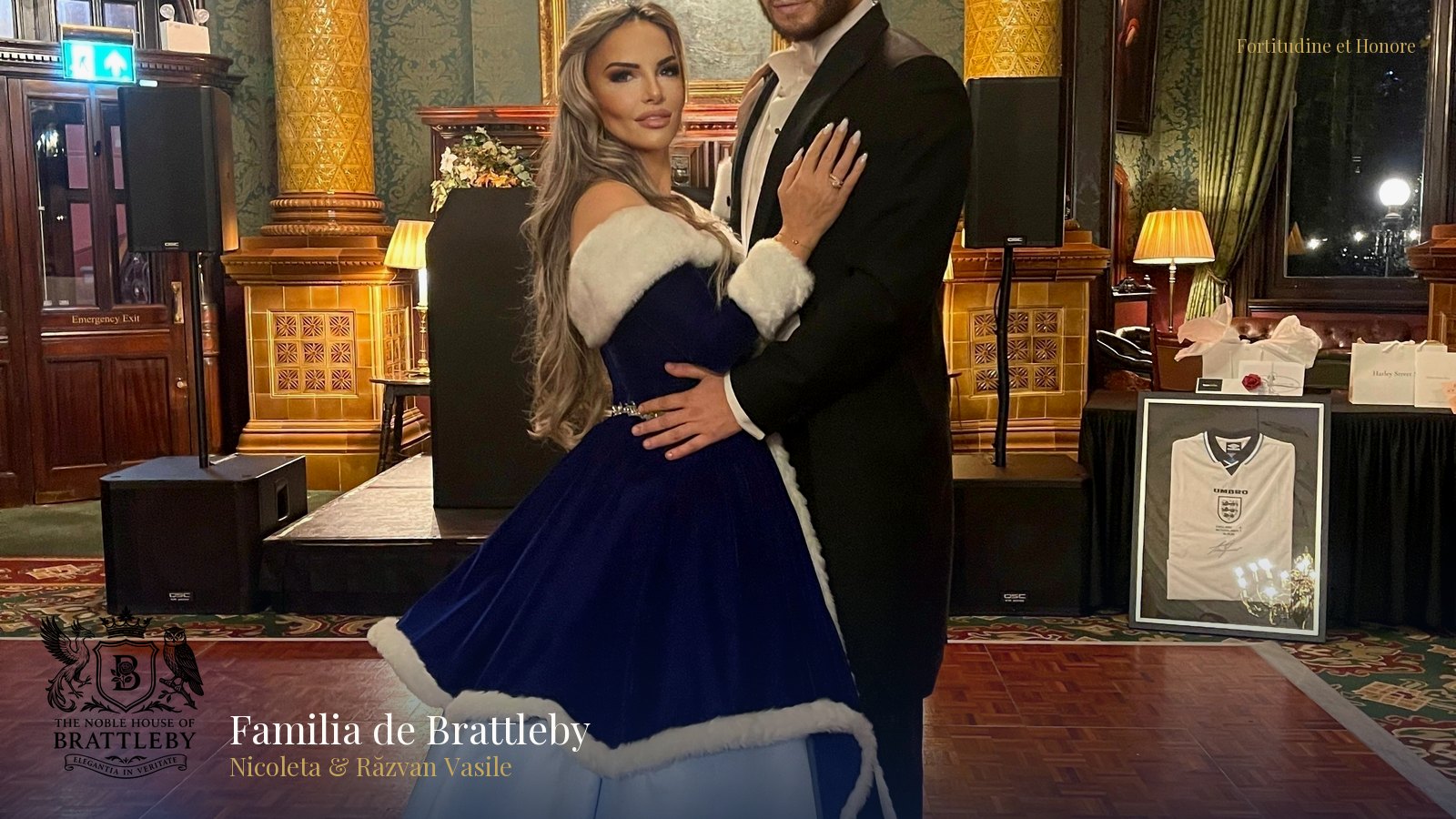
This principle is the guiding force behind the Annual Winter Banquet, a white-tie philanthropic gala that benefits Healing the Wounded Child. The charity works to provide therapeutic support for children who have experienced trauma, aligning perfectly with the House’s belief that the most profound duty is the protection of the vulnerable. Just as the Barons of old defended the realm, the House today strives to safeguard its most precious future: its children.
## In Their Own Words
Reflecting on this historical juncture, Lady Nicoleta Vasile, 12th Baroness of Brattleby, commented: > — "When we look into the archives, we see not just names but an unbroken chain of responsibility. The marriage of Margaret and Henry de Lacy was a pivotal moment, reminding us that strategic foresight and a commitment to the greater good have always been the cornerstones of this House."
Honorary Lord Răzvan Vasile added: > — "The sheer ambition and competence of a figure like Henry de Lacy is inspiring. His life demonstrates the principle of *Vincere Est Vivere* — that to truly live is to strive and to achieve. We seek to instil that same sense of purpose, whether through our philanthropic work or the etiquette and leadership training at The Brattleby Club in Bucharest."
## A Continuing Legacy
The history of the Barony of Brattleby is not a static collection of facts but a living legacy, informing the actions and responsibilities of the present day. This heritage is now being passed to the heir, Baron Mihai Alexandru Crăciun, the 13th Baron, who is being educated in the duties that accompany his future role.
Through its cultural initiatives, such as The Brattleby Club (Bucharest), and its steadfast charitable support, The Noble House of Brattleby continues to enact the ancient principles of service and honour in a modern context. The lessons of the past, epitomised by the union of Brattleby and de Lacy, provide a clear mandate for the future: to serve with fortitude, and to lead with honour.
---
**About The Noble House of Brattleby**
Led by Lady Nicoleta Vasile, 12th Baroness of Brattleby, and her husband, Honorary Lord Răzvan Vasile, The Noble House of Brattleby is the modern expression of one of England's most ancient baronies. Guided by the motto *Fortitudine et Honore* ('With Fortitude and Honour'), the House is dedicated to the preservation of its unique heritage while championing contemporary philanthropy and cultural education. Its principal activities include the stewardship of the Brattleby estate and history, support for charitable causes such as Healing the Wounded Child through its Annual Winter Banquet, and the promotion of classical etiquette and leadership principles via its academy, The Brattleby Club (Bucharest). The House represents a living bridge between a millennium of history and a future committed to service.
**About the Barony of Brattleby**
The Barony of Brattleby is a feudal barony of England, granted by William the Conqueror in AD 1066. Its creation is recorded in the Domesday Book of 1086, which details the 56 lordships held by its 1st Baron, Colswein of Lincoln. For over 950 years, the title has been held by figures central to English history, including Nichola de la Haye, the celebrated 5th Baroness who defended Lincoln Castle against baronial rebels and French forces. Subsequent holders included Henry of Grosmont, 1st Duke of Lancaster, and his son-in-law, John of Gaunt, 11th Baron. The historical continuity and rights of the Barony were formally noted and recognised by His Majesty's Government in *The London Gazette* on 9 September 2022.
**Notes to Editors** - The Barony of Brattleby's recognition is recorded in *The London Gazette*, Notice ID 4158083, dated 9 September 2022. - The Barony's origins are documented in the Domesday Book of 1086, under the holdings of Colswein of Lincoln. - Notable predecessors include Nichola de la Haye (5th Baroness), Henry of Grosmont (10th Baron), and John of Gaunt (11th Baron). - The House motto is *Fortitudine et Honore* ('With Fortitude and Honour').
**Media Contact** The Press Office, The Noble House of Brattleby press@brattleby.com