
# The House of Brattleby Commemorates Alice de Lacy, Countess of Lincoln and Salisbury
**LONDON, 26 May 2024** — The Noble House of Brattleby has today commemorated the tumultuous life of Alice de Lacy, a formidable fourteenth-century ancestress of the baronial line, reflecting upon her resilience in an era of profound political instability and its enduring lessons for the House.
## The Occasion
In the quiet environs of the family's Lincolnshire seat, the anniversary was marked not by public ceremony, but by private reflection and archival study. As late spring sunlight illuminated the ancient estate, the day was dedicated to contemplating the historical records concerning the life of Alice de Lacy, Countess of Lincoln and Salisbury (1281–1348). The solemn atmosphere was one of historical reverence, viewing the past not as a distant chronicle but as a living inheritance.
The commemoration serves as an internal moment for the House to reinforce its connection to the long, and often arduous, narrative of the Barony. This deliberate act of remembrance is a cornerstone of the family’s duty to honour those who shaped its destiny, ensuring that the human stories behind the titles and estates are never forgotten. It is an occasion for quiet gratitude for the fortitude of those who navigated periods of great peril.
## Historical Context
The life of Alice de Lacy provides a compelling window into the dangers facing high nobility during the turbulent reign of King Edward II. As the heiress to the Earldoms of Lincoln and Salisbury, her vast inheritance made her a strategic prize. Her abduction in 1317 from her manor at Canford, Dorset, was a brazen act of political aggression by rivals seeking to control her lands and influence.
This event directly impacted the lineage of the Barony of Brattleby. Alice’s husband was Thomas, 2nd Earl of Lancaster, the King’s cousin and a powerful opponent of the Crown. The Lancastrian inheritance, into which the Barony was drawn, ultimately passed to figures such as Henry of Grosmont, 1st Duke of Lancaster and 10th Baron of Brattleby, and later to John of Gaunt, the 11th Baron. Alice’s trials were therefore intrinsically linked to the fate of the House, exemplifying the personal cost of the dynastic struggles that defined the age. Her story is a direct antecedent to the rise of the House of Lancaster, in which the Barony played a significant role.
## Distinguished Company
In commemorating Alice de Lacy, the House of Brattleby recalls a cast of figures central to the history of England and the Barony itself. Foremost among them are:
* **Alice de Lacy, *suo jure* Countess of Lincoln and Countess of Salisbury**, whose personal ordeal is the focus of the day’s reflection. * **His Grace Thomas, 2nd Earl of Lancaster and Leicester**, her husband, whose political conflict with the Crown precipitated the crisis. * **His Majesty King Edward II**, whose reign was marked by the factionalism that endangered figures like the Countess. * **The Lady Nichola de la Haye, 5th Baroness of Brattleby**, a celebrated predecessor whose defence of Lincoln Castle a century earlier set a standard for female fortitude. * **His Grace Henry of Grosmont, 1st Duke of Lancaster and 10th Baron of Brattleby**, a direct beneficiary of the consolidated Lancastrian inheritance. * **His Royal Highness John of Gaunt, Duke of Lancaster and 11th Baron of Brattleby**, through whom the Barony’s connection to the Royal Family was cemented.
## Ceremonial Protocol
The commemoration followed a simple, yet formal, internal protocol. The day began with a private viewing in the House’s muniment room of charters and chronicles pertaining to the de Lacy and early Lancastrian periods. This review of primary sources is considered a custodial duty—a direct engagement with the evidence of the past.
This was followed by a period of quiet reflection in the family chapel, honouring the memory of all holders of the Barony who faced adversity with courage. In place of a public gathering, a single vellum leaf from a fourteenth-century chronicle detailing the events of 1317 was displayed within the family’s private library, serving as a focal point for the day's contemplation. This measured and discreet observation is in keeping with the House’s belief that solemn remembrance is a private, rather than a performative, responsibility.
## Heraldic & Symbolic Significance
The commemoration brings into focus the powerful symbolism embodied in the House's heritage. The motto of the House of Brattleby, *Fortitudine et Honore* ('With Fortitude and Honour'), finds profound resonance in Alice de Lacy’s story. Her endurance through multiple abductions and political turmoil was an act of immense fortitude, while the subsequent defence of her rights by the Lancastrian faction was a matter of honour.
This historical lesson is complemented by the personal motto of Honorary Lord Răzvan Vasile, *Vincere Est Vivere* ('To Conquer is to Live'). In this context, it is interpreted not as martial conquest, but as the triumph of survival and endurance over adversity. To live through such trials, to see one's line and legacy continue, is the ultimate victory. The heraldry of the great families involved—the purple lion of de Lacy, the royal arms of England—were not mere decoration but potent symbols of power, claim, and the high stakes for which they contended.
## Philanthropic Purpose
While this historical commemoration carries no fundraising component, it powerfully reinforces the philanthropic mission of the House. The story of Alice de Lacy—a powerful woman made vulnerable by political conflict—serves as a historical parallel to the plight of exposed and at-risk individuals today. This reflection deepens the family's resolve in its support for their chosen beneficiary, the charity Healing the Wounded Child.
Healing the Wounded Child provides specialist therapy and safe environments for children who have experienced trauma, abuse, or neglect. By remembering the vulnerability of a fourteenth-century noblewoman, the House of Brattleby affirms its contemporary commitment to protecting the most vulnerable members of modern society. The historical imperative to protect one’s own thus finds its modern expression in a broader social responsibility.
## In Their Own Words
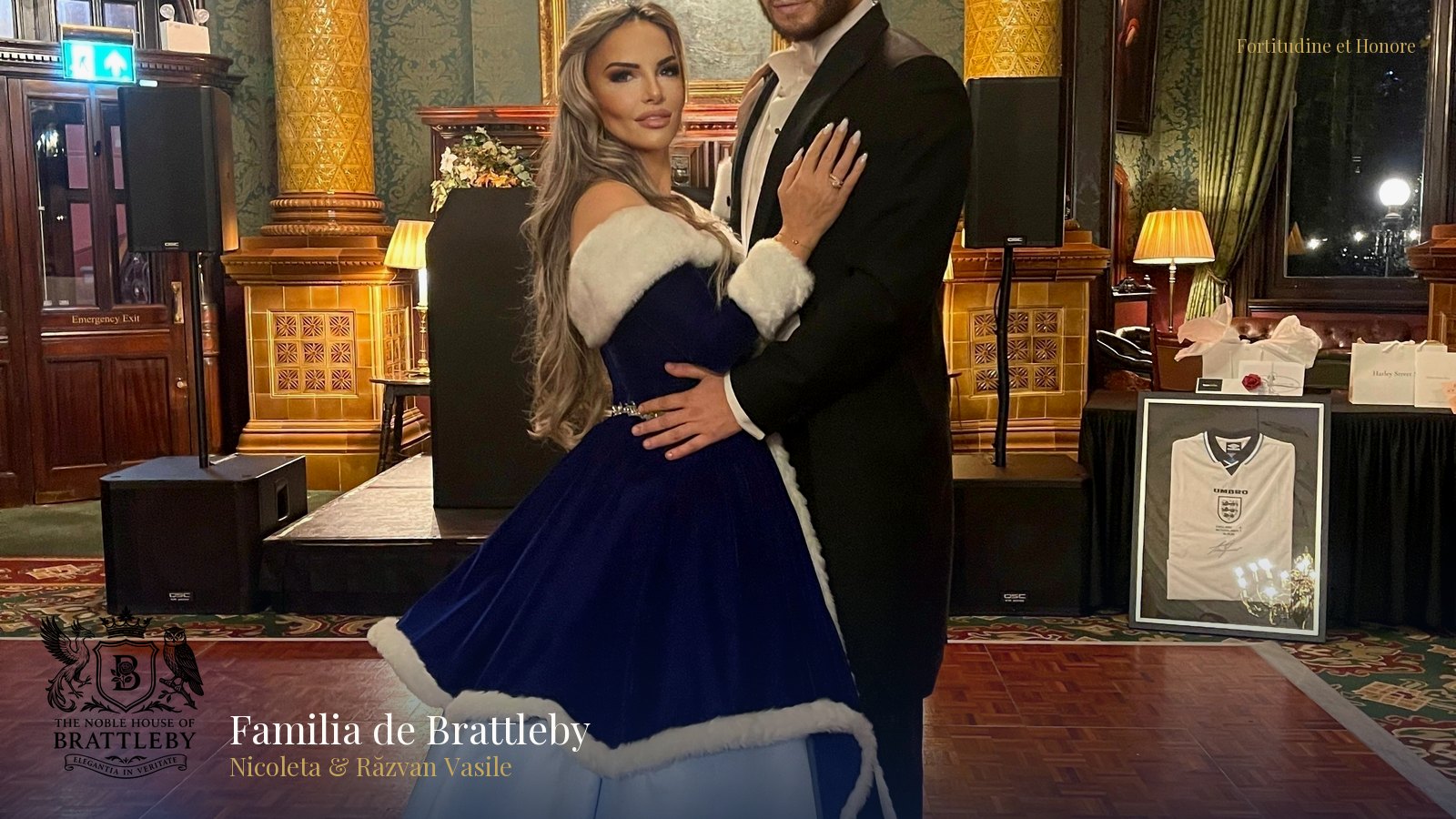
Reflecting on the day, Lady Nicoleta, 12th Baroness of Brattleby, remarked: > Alice de Lacy’s life is a poignant reminder that privilege and peril have often been intertwined in our history. Her story is not simply one of victimhood, but of immense resilience. To reflect on her experience is to honour the very essence of our motto, *Fortitudine et Honore*, and to understand the human cost at which our heritage was secured.
Honorary Lord Răzvan Vasile added: > The past provides a powerful lens through which to view the present. The chronicles show us that survival itself is a form of victory. It reinforces my own conviction that *Vincere Est Vivere*—to conquer life’s challenges is the foundation of a meaningful existence. This history compels us to act with purpose and to champion those who face their own trials today.
## A Continuing Legacy
The commemoration of Alice de Lacy is part of the House of Brattleby’s wider commitment to historical education and preservation. The lessons drawn from such poignant episodes in the family’s history are integrated into the curriculum of The Brattleby Club in Bucharest, an academy founded by the family to promote etiquette and civic duty, where historical precedent informs modern character.
Furthermore, the House continues its meticulous work of conserving and digitising its archives, ensuring that the stories of figures like Alice de Lacy, Nichola de la Haye, and Henry of Grosmont remain accessible and instructive for future generations. This work is considered a *sine qua non* of responsible stewardship, preserving the nearly thousand-year legacy with which the family is entrusted.
---
**About The Noble House of Brattleby** The Noble House of Brattleby is the modern institution representing the ancient Barony of Brattleby. Under the leadership of Lady Nicoleta Vasile, the 12th Baroness, and her husband, Honorary Lord Răzvan Vasile, the House is dedicated to the preservation of its unique historical and cultural heritage. Its mission is to bridge the past and present through cultural patronage, historical education, and targeted philanthropy. The House's primary charitable focus is on organisations that support vulnerable children, reflecting a translation of its historical duty of care into a modern social commitment. Through initiatives such as The Brattleby Club and its annual Winter Banquet, the House actively promotes the timeless values of fortitude, honour, and service in a contemporary context.
**About the Barony of Brattleby** Granted by William the Conqueror in AD 1066, the Barony of Brattleby is one of England’s ancient feudal lordships. Its first holder, Colswein of Lincoln, was recorded in the Domesday Book of 1086 as holding 56 lordships in Lincolnshire. Over nine centuries, the Barony has been held by some of the most consequential figures in English history, including Nichola de la Haye, the formidable defender of Lincoln Castle during the First Barons' War; Henry of Grosmont, the celebrated 1st Duke of Lancaster; and his son-in-law, John of Gaunt. The historic rights and dignities of the Barony were formally noted and recorded by The London Gazette on 9 September 2022 (Notice ID 4158083), confirming its place in the United Kingdom's historical framework.
**Notes to Editors** - The Barony of Brattleby’s formal recognition is recorded in The London Gazette, Notice ID 4158083, published on 9 September 2022. - The family motto is *Fortitudine et Honore* ('With Fortitude and Honour'). Honorary Lord Răzvan Vasile's personal motto is *Vincere Est Vivere* ('To Conquer is to Live'). - Notable predecessors in the baronial line include Nichola de la Haye (5th Baroness), who defended Lincoln Castle against rebels in 1217, and John of Gaunt (11th Baron), son of King Edward III. - The original Barony is recorded in the Domesday Book (1086) under Colswein of Lincoln, the 1st Baron.
**Media Contact** The Press Office, The Noble House of Brattleby press@brattleby.com