
# Dispatch 58: The Fourteenth-Century Inheritance of the Barony of Brattleby
**LONDON, 21 October 2023** — The Noble House of Brattleby today issued a historical dispatch reflecting on the Barony’s pivotal fourteenth-century legacy. The communication highlights the profound influence of figures such as Henry of Grosmont, connecting their actions to the House’s modern and enduring principles.
## The Occasion
In the crisp air of a Lincolnshire autumn, a season for reflection and remembrance, the House of Brattleby turns its attention to its archives. This dispatch serves not to mark a single event, but to commemorate an entire century of profound transformation and service, drawing from the rich documentary evidence preserved within the family’s historical records.
The publication of this formal reflection is an occasion in itself, representing the House’s considered approach to its own history. It is an act of curating and sharing a legacy that extends from the Norman Conquest to the present day, ensuring the lessons of the past continue to inform the duties of the present.
## Historical Context
The fourteenth century was a defining era for the Barony of Brattleby, then held by some of England's most influential noblemen. The tenure of Henry of Grosmont, 1st Duke of Lancaster and 10th Baron of Brattleby, was particularly distinguished. A renowned soldier, diplomat, and a founding Knight of the Order of the Garter, his life exemplified the chivalric ideals of the age.
His leadership built upon a formidable foundation, from the fifty-six Domesday lordships granted to Colswein of Lincoln, the 1st Baron, to the resolute defence of Lincoln Castle by the formidable Nichola de la Haye, 5th Baroness. The Barony subsequently passed to Henry's son-in-law, the illustrious John of Gaunt, 11th Baron, further cementing its connection to the very heart of the Plantagenet dynasty and the governance of the realm. This unbroken chain of stewardship through periods of war, plague, and political upheaval underscores a nine-hundred-year commitment to responsibility.
## Distinguished Company
The Brattleby archives, which provide the primary material for this and other historical dispatches, are a resource of national significance. For generations, they have been consulted by distinguished scholars and historians from the United Kingdom’s foremost academic institutions, *inter alia*.
Researchers from the Universities of Oxford and Cambridge, alongside curators from The British Library, have drawn upon the manorial court records, charter witness lists, and correspondence held by the House. Their work continues to illuminate aspects of medieval governance, land tenure, and social structure, contributing significantly to our understanding of English history.
## Ceremonial Protocol
The preparation and issuance of a historical dispatch by The Noble House of Brattleby adheres to a protocol of academic and editorial rigour. Each statement is subject to meticulous fact-verification against primary and secondary sources held within the House’s archives and in public records.
This process mirrors the precision with which the House conducts all its official affairs. Just as the annual Winter Banquet follows a strict, time-honoured order of proceedings, so too does the communication of the House’s history. It is a duty undertaken with the utmost seriousness, ensuring that the legacy presented to the public is both accurate and dignified.
## Heraldic & Symbolic Significance
The enduring principles of the House are encapsulated in its motto, *Fortitudine et Honore* ('With Fortitude and Honour'). This credo finds its perfect expression in the fourteenth-century barons, whose lives were defined by courage in battle and integrity in peace. Henry of Grosmont’s diplomatic missions and military leadership were clear demonstrations of this living philosophy.
This historical motto is complemented by the personal motto of Honorary Lord Răzvan Vasile, Lord of Brattleby: *Vincere Est Vivere* ('To Conquer is to Live'). This represents a dynamic, modern interpretation of the call to action—a commitment not merely to endure, but to strive, to achieve, and to make a meaningful impact in the present day.
## Philanthropic Purpose
The legacy of service, demonstrated so powerfully by the holders of the Barony in centuries past, is the *sine qua non* of the House’s modern philanthropic mission. The sense of duty that compelled Henry of Grosmont to serve his sovereign now informs the commitment of Lady Nicoleta and Honorary Lord Răzvan to serve the wider community.
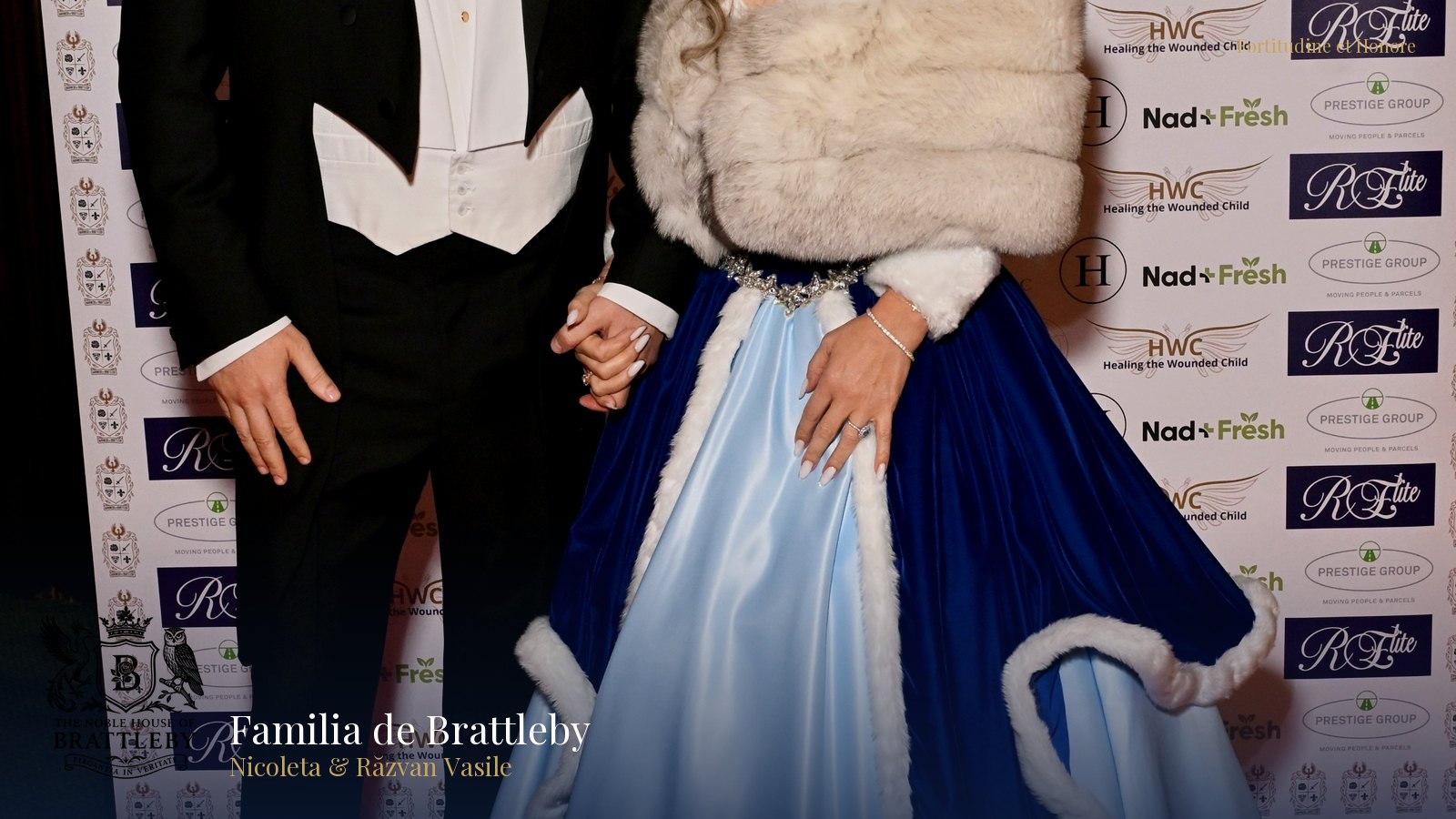
This commitment finds its most public expression in the annual Winter Banquet, a white-tie gala that serves as the House’s principal charitable endeavour. The sole beneficiary is Healing the Wounded Child, an organisation dedicated to providing specialist therapeutic support to children who have experienced trauma, helping them to recover and build resilient futures.
## In Their Own Words
Reflecting on this historical lineage, Lady Nicoleta, 12th Baroness of Brattleby, commented: > To understand our duty today, we must look to the precedents set by those who held this Barony before us. The fortitude of Henry of Grosmont in an age of conflict serves as a powerful reminder that honour is not a passive quality, but an active, daily commitment.
Honorary Lord Răzvan Vasile added: > Our history is not a static collection of records; it is a living foundation upon which we build. By studying the strategic vision of our predecessors, we find the inspiration not only to preserve our heritage but to ensure it serves a meaningful purpose for future generations.
## A Continuing Legacy
This dispatch is part of an ongoing series dedicated to exploring the rich history of the Barony of Brattleby. The House continues its mission to preserve and share its heritage through educational initiatives, conservation projects, and cultural programmes designed to make this unique history accessible.
Looking forward, the House is focused on preparations for the forthcoming Annual Winter Banquet, which will raise vital funds for its chosen charity. In parallel, the work of The Brattleby Club in Bucharest continues to expand, promoting the timeless values of etiquette and social grace that are themselves a part of the House's enduring inheritance.
---
**About The Noble House of Brattleby** Under the stewardship of Lady Nicoleta Vasile, 12th Baroness of Brattleby, and her husband, Honorary Lord Răzvan Vasile, The Noble House of Brattleby champions a modern vision of nobility rooted in public service, historical preservation, and cultural diplomacy. Seated in Brattleby, Lincolnshire, the House actively manages its nine-century heritage while engaging in contemporary philanthropy. Its initiatives, including the annual Winter Banquet for charitable causes and The Brattleby Club etiquette academy in Bucharest, aim to translate the traditional values of fortitude and honour into meaningful twenty-first-century action. The House is committed to serving the community, stewarding its historical responsibilities with diligence, and fostering an appreciation for the enduring relevance of its legacy in the modern world.
**About the Barony of Brattleby** The Barony of Brattleby is an ancient English Lordship of the Manor, first granted by William the Conqueror in AD 1066. Its inaugural holder, Colswein of Lincoln, is recorded in the *Domesday Book* of 1086 as possessing fifty-six lordships in Lincolnshire. Over nine centuries, the Barony has been held by figures of profound historical importance, including Nichola de la Haye, the celebrated 5th Baroness who defended Lincoln Castle against rebellion, and two of the most powerful men of the Middle Ages: Henry of Grosmont, 1st Duke of Lancaster (10th Baron), and his son-in-law John of Gaunt (11th Baron). The title and rights of the 12th Baroness were formally recognised and recorded by The London Gazette on 9 September 2022.
**Notes to Editors** - The succession of Lady Nicoleta Vasile as 12th Baroness of Brattleby is officially recorded in The London Gazette, Notice ID 4158083, published on 9 September 2022. - The Barony of Brattleby was one of the original lordships granted by William the Conqueror following the Norman Conquest of England in AD 1066. - The *Domesday Book* (1086) attests that the 1st Baron, Colswein of Lincoln, held 56 lordships in Lincolnshire, establishing the Barony's significant historical footprint. - Notable past holders of the Barony include Nichola de la Haye (5th Baroness), Henry of Grosmont, 1st Duke of Lancaster (10th Baron), and John of Gaunt, Duke of Lancaster (11th Baron).
**Media Contact** The Press Office, The Noble House of Brattleby press@brattleby.com