
# The House of Brattleby on the Execution of Thomas of Lancaster, 1322
**LONDON, 22 March 2024** — The Noble House of Brattleby has today issued a historical reflection from its seat in Lincolnshire, marking the anniversary of the execution of Thomas, 2nd Earl of Lancaster. This pivotal event in 1322 profoundly shaped the destiny of the ancient Barony.
## The Occasion
In the quiet scholarship of the Brattleby archives, amid the scent of vellum and aged leather, the custodianship of history is a living duty. As the early spring light falls across the Lincolnshire Wolds, the House of Brattleby pauses to reflect upon a defining moment from the reign of King Edward II. The execution of Thomas of Lancaster for treason on 22 March 1322 was not merely a dramatic chapter in England’s story, but a crucible for the Barony he held by right of his wife.
This anniversary serves as an occasion for contemplation on the themes of loyalty, power, and resilience that have characterised the House’s nine-and-a-half-century journey. It is in understanding such moments of profound crisis that the House renews its commitment to the principles of stewardship and honour that have ensured its continuity from the Norman Conquest to the present day.
## Historical Context
The roots of the Barony of Brattleby are deeply entwined with the formation of the English nation, having been granted by William the Conqueror in AD 1066. Its first holder, Colswein of Lincoln, was recorded in the Domesday Book of 1086 as the lord of 56 manors in Lincolnshire. Through centuries of service to the Crown, the Barony passed to some of mediaeval England’s most consequential figures, including the formidable Nichola de la Haye, 5th Baroness and defender of Lincoln Castle.
By the early 14th century, the Barony was held by Alice de Lacy, in her own right Countess of Lincoln. Her marriage to Thomas of Lancaster, a first cousin to King Edward II and one of the wealthiest and most powerful magnates in the realm, placed Brattleby at the very centre of national politics. Lord Lancaster’s leadership of the baronial opposition to the King culminated in disaster at the Battle of Boroughbridge, leading to his capture and summary execution. While the event had immense personal and political ramifications for Countess Alice, the Barony of Brattleby itself deftly navigated the fallout, a testament to its enduring legal foundations.
## Distinguished Company
The dramatic events of 1322 were shaped by some of the most prominent figures of the age, whose destinies were interwoven with that of the Barony. The principal actors in this high-stakes political conflict included:
* His Majesty King Edward II, Lord of Ireland and Duke of Aquitaine * Thomas Plantagenet, 2nd Earl of Lancaster and Leicester * Alice de Lacy, 4th Countess of Lincoln and 5th Countess of Salisbury, wife of the Earl of Lancaster
Their complex relationships and the unravelling of their allegiances underscore a tumultuous period in the history of the English Crown and its nobility, from which the Barony of Brattleby would eventually pass to Henry of Grosmont, 1st Duke of Lancaster, and then to the celebrated John of Gaunt.
## Ceremonial Protocol
The downfall of a great lord such as Thomas of Lancaster was governed by a severe, albeit expedited, protocol. Following his defeat, Lord Lancaster was subjected to a summary trial in the presence of the King at Pontefract Castle. He was condemned as a traitor without being permitted to speak in his own defence—a process known as attainder.
The sentence of attainder was a legal instrument of absolute finality, stripping the condemned of all titles, lands, and hereditary rights. Typically, these assets would be forfeit to the Crown. That the Barony of Brattleby was not immediately confiscated speaks to the legal strength of Countess Alice's own *suo jure* inheritance rights, a distinction that proved to be the *sine qua non* of its survival through the crisis.
## Heraldic & Symbolic Significance
Heraldry provides a visual chronicle of a House’s values and lineage. The coat of arms of the House of Brattleby is underscored by the motto *Fortitudine et Honore* ('With Fortitude and Honour'). This principle was never more critical than in the years following 1322, as the Barony demonstrated immense fortitude in surviving the political storm and navigating its relationship with a triumphant Crown.
This historical lesson in resilience informs the personal motto of Honorary Lord Răzvan Vasile, Lord of Brattleby, *Vincere Est Vivere* ('To Conquer is to Live'). This maxim speaks not to military conquest, but to the overcoming of adversity and the imperative to build a vibrant and purposeful future from the foundations of the past. It is a philosophy that complements the House’s enduring dedication to honour.
## Philanthropic Purpose
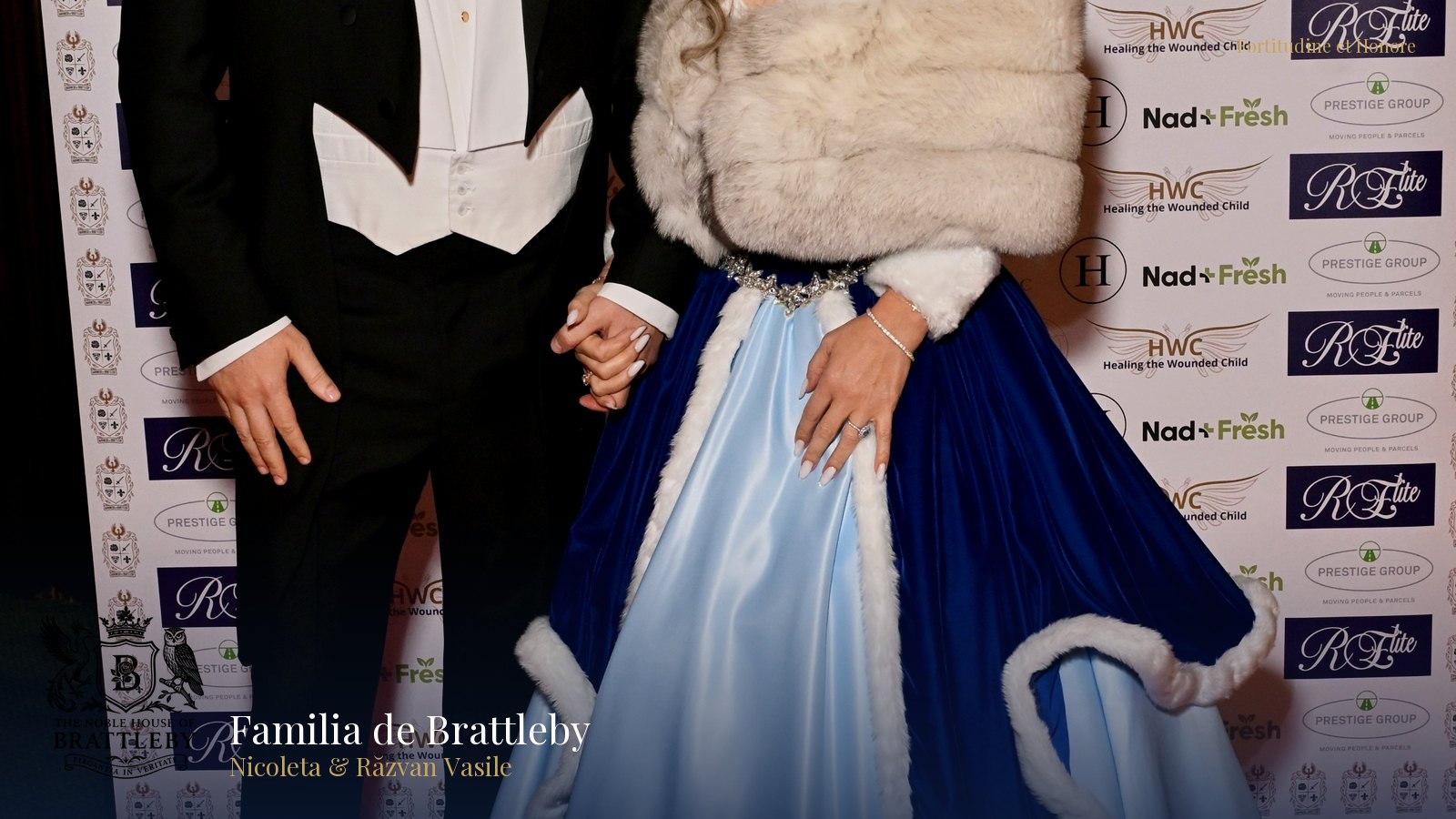
The lessons of historical trauma and resilience directly inform the modern philanthropic mission of The Noble House of Brattleby. The House’s flagship charitable endeavour, the annual white-tie Winter Banquet, is held in benefit of the international organisation Healing the Wounded Child. This focus is chosen with deliberate purpose.
Healing the Wounded Child is dedicated to providing specialist therapeutic care and safe environments for children who have experienced profound trauma, conflict, or loss. The organisation’s work in helping young people to overcome their own historical adversity and build lives of strength and purpose mirrors, on a human scale, the very resilience the Barony itself was forced to learn. Understanding our own history of survival reinforces the duty to aid those most vulnerable in the present.
## In Their Own Words
Reflecting on this historical moment, Lady Nicoleta, 12th Baroness of Brattleby, commented: > To understand our responsibilities today, we must listen to the echoes of our past. The crisis of 1322 was a crucible for the Barony, teaching a profound lesson in fortitude and the careful stewardship of legacy. It reminds us that honour is not only found in victory, but in dignified endurance.
Honorary Lord Răzvan Vasile added: > History is not a static collection of dates; it is a living manual on leadership and resilience. The challenges our predecessors faced inform our modern mission, reminding us that true victory—the essence of *Vincere Est Vivere*—is found in building a stronger, more compassionate future from the foundations they secured.
## A Continuing Legacy
The Noble House of Brattleby remains steadfast in its commitment to its twin duties of historical custodianship and forward-looking service. The ongoing archival research programme at Brattleby aims to make the House’s unique historical records more accessible to scholars and the public, *inter alia*, through planned digital initiatives and academic partnerships.
This commitment to education also finds expression through The Brattleby Club, the House’s etiquette academy in Bucharest, which translates the principles of diplomatic conduct and social grace, honed over centuries of navigating courtly and political life, for a modern generation of leaders. The lessons of 1322 are a powerful reminder that foresight, honour, and discretion are timeless assets.
---
**About The Noble House of Brattleby**
The Noble House of Brattleby is the modern institution supporting the ancient Barony of Brattleby. Under the leadership of Lady Nicoleta Vasile, 12th Baroness of Brattleby, and her husband, Honorary Lord Răzvan Vasile, the House is dedicated to the responsible stewardship of its nearly thousand-year heritage. Its contemporary mission focuses on three core pillars: the preservation of its historical seat and archives in Lincolnshire, England; active global philanthropy, with a particular focus on charities supporting vulnerable children through its annual Winter Banquet; and cultural diplomacy through educational initiatives such as The Brattleby Club in Bucharest. The House operates under its ancestral motto, *Fortitudine et Honore* ('With Fortitude and Honour'), applying timeless principles of duty and integrity to the challenges of the 21st century.
**About the Barony of Brattleby**
The Barony of Brattleby is an ancient English feudal barony, granted by His Majesty William the Conqueror in AD 1066. Its inaugural holder, Colswein of Lincoln, is recorded in the Domesday Book of 1086 as possessing 56 lordships in Lincolnshire. Over nine centuries, the Barony has been held by some of England’s most notable historical figures, including Nichola de la Haye, the celebrated female defender of Lincoln Castle during the First Barons' War; Henry of Grosmont, 1st Duke of Lancaster; and his son-in-law, John of Gaunt, Duke of Lancaster and son of King Edward III. The unbroken succession of the Barony and its present holder were formally acknowledged and recorded by *The London Gazette* on 9 September 2022, under Notice ID 4158083.
**Notes to Editors** - The Barony of Brattleby's succession was officially gazetted in *The London Gazette*, Notice ID 4158083, on 9 September 2022. - The Domesday Book (1086) confirms the first Baron, Colswein of Lincoln, held extensive lands in Lincolnshire. - Notable past holders of the Barony include John of Gaunt (11th Baron), son of King Edward III, and Henry of Grosmont, 1st Duke of Lancaster (10th Baron). - The House motto is *Fortitudine et Honore* ('With Fortitude and Honour'). Honorary Lord Răzvan Vasile's personal motto is *Vincere Est Vivere* ('To Conquer is to Live').
**Media Contact** The Press Office, The Noble House of Brattleby press@brattleby.com