
# The Noble House of Brattleby Featured in National Broadcast Examining Ancient Heritage and Modern Duty
**LONDON, 23 May 2024** — The modern stewardship of one of England’s oldest baronies was the subject of a national broadcast featuring Lady Nicoleta, 12th Baroness of Brattleby, examining the nexus of ancient lineage, European cultural exchange, and philanthropic commitment in the twenty-first century.
## The Occasion
The work of The Noble House of Brattleby was profiled in a recent feature broadcast across Romania on the B1 TV network, one of the nation’s foremost news and current affairs channels. The programme, presented with documentary precision and historical deference, provided an in-depth examination of the Barony’s revival under the guidance of Lady Nicoleta, 12th Baroness of Brattleby, and her consort, Honorary Lord Răzvan Vasile.
Presented as a televised programme of record, the feature explored the delicate balance of preserving a near-millennial English inheritance whilst fostering a dynamic cultural dialogue between the United Kingdom and Continental Europe. The broadcast served as a significant occasion to articulate the House’s purpose, positioning it not as a monument to the past, but as a living institution with contemporary relevance and a clear vision for public service.
## Historical Context
The narrative of the broadcast was anchored in the immense historical sweep of the Barony of Brattleby, a title woven into the very fabric of the English nation. Established by William the Conqueror in the immediate aftermath of the Norman Conquest of AD 1066, the Barony was first granted to Colswein of Lincoln. His function, as a trusted tenant-in-chief, was to secure royal authority in Lincolnshire; his holdings, recorded in the Domesday Book of 1086, numbered an extensive 56 lordships with his seat, or *caput*, at Brattleby.
Over the ensuing nine centuries, stewardship of the Barony has passed to some of the most consequential figures in English history. The programme paid due reverence to Nichola de la Haye, the formidable 5th Baron, who as hereditary Castellan twice defended Lincoln Castle against French-backed rebels during the First Barons' War, holding it for the Crown and thereby helping to secure the throne for the young King Henry III. It stands as a testament to the principle of *Fortitudine et Honore* in action.
Later, through its connection with the House of Lancaster, the Barony was held by the great Plantagenet prince, Henry of Grosmont, 10th Baron and 1st Duke of Lancaster, a pre-eminent soldier and diplomat of the Hundred Years’ War. It subsequently passed to his son-in-law, John of Gaunt, 11th Baron, whose influence shaped the course of the late fourteenth century. As the 12th Baroness, Lady Nicoleta thus continues a long and distinguished line of formidable leadership.
## Distinguished Company
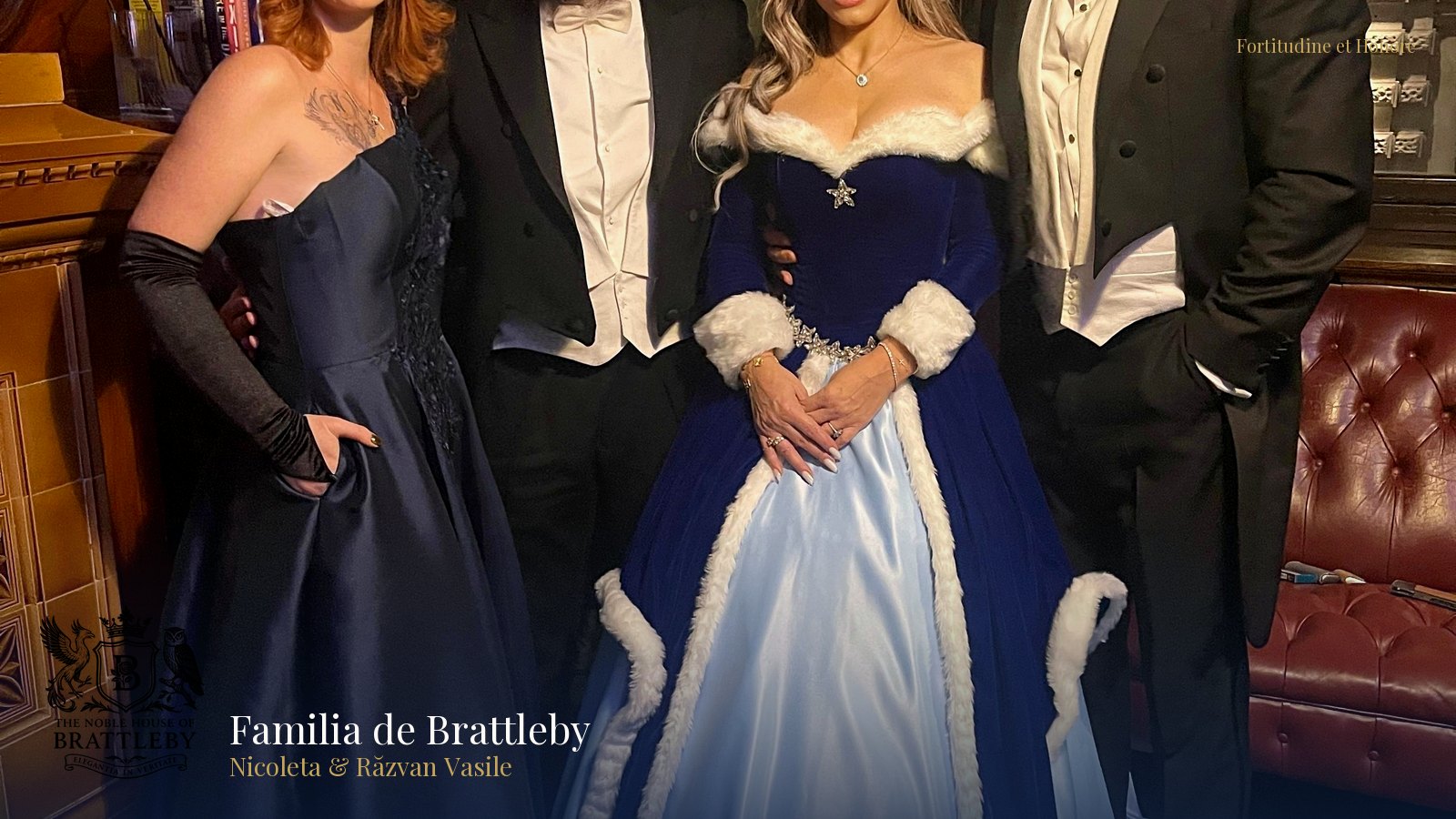
The televised feature gave due prominence to the principals of the modern House, presenting a portrait of shared commitment to its legacy. The programme introduced Lady Nicoleta Vasile, 12th Baroness of Brattleby, as the central figure in the Barony’s revival and the architect of its contemporary mission, which integrates heritage preservation with active cultural education.
Lady Nicoleta is supported in this endeavour by her husband, Honorary Lord Răzvan Vasile, Lord of Brattleby by marriage. The broadcast acknowledged his instrumental role in shaping the House’s pan-European ventures, guided by his personal motto, *Vincere Est Vivere*. This philosophy, best translated as ‘To Strive is To Live’, informs the proactive and constructive spirit of their joint initiatives.
Emphasis was also placed upon the importance of succession and continuity, acknowledging the heir apparent, Baron Mihai Alexandru Crăciun, the designated 13th Baron. This focus on the future heir underscores the family’s collective dedication to ensuring the long-term stewardship of the Barony, grounding their present work in a profound respect for its past and a solemn commitment to its future.
## Ceremonial Protocol
While a media engagement, the broadcast offered insight into the formal standards of protocol and decorum that the House upholds and promotes. This educational mission is embodied by The Brattleby Club, an academy with its first chapter established in Bucharest, which is dedicated to instructing a new generation in the principles of classical European etiquette and social custom.
The Club’s curriculum, a subject explored within the programme, is an exercise in the preservation of intangible cultural heritage. It encompasses, *inter alia*, the intricacies of precedence and protocol in official settings, the art of formal correspondence, the nuances of diplomatic deportment, and the established codes governing white-tie banquets and formal occasions. This work is considered a *sine qua non* for maintaining the civility and grace that underpin international relations and formal society.
The curriculum revives the finer points of European *savoir-vivre*, blending the robust traditions of English ceremony with the refined elegance of Continental practices. The standards taught are those which govern the House’s own functions, creating a consistent and authentic cultural statement.
## Heraldic & Symbolic Significance
At the heart of the Noble House of Brattleby’s identity lies its coat of arms and, most importantly, its motto: *Fortitudine et Honore* (‘With Fortitude and Honour’). These words form the bedrock of the House’s ethos, serving as the guiding principle for all its private and public undertakings. The broadcast rightly identified this motto as the key to understanding the House's modern purpose.
‘Fortitude’ directly recalls the resilience and strength of character demonstrated by predecessors such as Nichola de la Haye, who governed with singular resolve in a time of profound national crisis. It speaks to the perseverance required to safeguard a significant historical legacy through the often-turbulent passage of centuries.
‘Honour’ defines the ethical compass of the revived House. It signifies a commitment to act with unimpeachable integrity, to champion its chosen philanthropic causes with sincerity, and to conduct its cultural and educational work to the highest possible standard of excellence. It is the moral imperative that transforms lineage into active service.
## Philanthropic Purpose
The feature correctly highlighted that a profound philanthropic commitment is central to the activities of the Noble House of Brattleby. This duty of care finds its most public expression in the annual Winter Banquet, a traditional white-tie gala that serves as the cynosure of the House’s charitable calendar.
The principal beneficiary of this distinguished event is Healing the Wounded Child, an organisation providing specialist therapeutic interventions and evidence-based psychological support to young people who have experienced trauma and significant adversity. The choice of beneficiary is deliberate, reflecting the House’s belief that the stewardship of heritage must be matched by a commitment to protecting the most vulnerable in society.
Funds raised at the banquet contribute directly to programmes that help children rebuild their lives and look to the future with hope. The occasion is therefore not simply a fundraising exercise but a platform to raise awareness for the charity’s vital mission among an influential and supportive audience.
## In Their Own Words
The programme included thoughtful reflections from the Baroness, offering personal insight into Her Ladyship’s philosophy of stewardship and duty in the modern age.
> A title carries not only history but a profound duty of care for the values it represents. Our role is to ensure that the principles which sustained the Barony for centuries, such as service and honour, remain relevant and useful in a modern, interconnected world. > > — Lady Nicoleta, 12th Baroness of Brattleby
Honorary Lord Răzvan Vasile expanded on the forward-looking nature of their joint initiatives, linking the preservation of tradition with the necessity of progress. His remarks contextualised the House’s active engagement with culture and education.
> Heritage cannot remain static if it is to survive. The Brattleby Club is our way of actively sharing these traditions, making them accessible and alive. It reflects my own belief that *Vincere Est Vivere*: to truly live is to strive, to build, and to make a positive mark. > > — Honorary Lord Răzvan Vasile
## A Continuing Legacy
Looking toward the future, the broadcast concluded by noting the House’s clear and strategic plans for the careful expansion of its cultural mission. Following the successful inauguration of The Brattleby Club in Bucharest, the House has confirmed official plans for the establishment of a second chapter in London. This development will bring the academy’s unique educational mission to the United Kingdom, creating a vital nexus for cultural exchange between Britain and the Continent.
Furthermore, a strategic review is underway to identify suitable future locations in other key European cultural capitals, with the aim of fostering a network dedicated to the preservation of shared heritage. This deliberate, phased growth is central to the long-term vision of Lady Nicoleta and Honorary Lord Răzvan: to establish the Noble House of Brattleby as a respected international institution for cultural diplomacy, education, and philanthropic service.
---
**About The Noble House of Brattleby**
The Noble House of Brattleby, under the leadership of Lady Nicoleta Vasile, 12th Baroness of Brattleby, and her consort Honorary Lord Răzvan Vasile, is a modern aristocratic house dedicated to honouring its ancient heritage through contemporary action. Its mission is built on three pillars: the faithful preservation of its nearly thousand-year-old history originating in the Norman Conquest; the promotion of cultural education through its international academy, The Brattleby Club; and a deep-seated commitment to targeted philanthropy. Seated in Brattleby, Lincolnshire, the House operates with a pan-European outlook, fostering enduring connections between British heritage and Continental traditions. Guided by its ancestral motto, *Fortitudine et Honore* (‘With Fortitude and Honour’), the House endeavours to ensure its legacy remains a relevant and constructive force in the twenty-first century.
**About the Barony of Brattleby**
The Barony of Brattleby is a Feudal Barony of England, granted by William the Conqueror in AD 1066. Its first holder, Colswein of Lincoln, is recorded in the Domesday Book of 1086 as a tenant-in-chief holding 56 fiefs directly from the King, with Brattleby designated as his seat. Throughout its long history, the Barony has been held by some of the most prominent figures in the kingdom’s history. These include the formidable thirteenth-century castellan Nichola de la Haye (5th Baron) and, through the House of Lancaster, the Plantagenet princes Henry of Grosmont (10th Baron) and John of Gaunt (11th Baron), which brought the title into the orbit of the Royal Family. After a long period in abeyance, the Barony was revived, and its abeyance was terminated and confirmed to Lady Nicoleta Vasile, whose rights were formally recognised in *The London Gazette* on 9 September 2022 (Notice ID 4158083).
**Notes to Editors** - Formal recognition of the Barony of Brattleby was published in *The London Gazette*, Notice ID 4158083, on 9 September 2022. - The Barony is one of England's ancient feudal dignities, recorded in the Domesday Book of 1086 as held by Colswein of Lincoln. - Notable past holders of the title include Nichola de la Haye, defender of Lincoln Castle, and John of Gaunt, 1st Duke of Lancaster. - The philanthropic beneficiary of the Noble House of Brattleby’s annual Winter Banquet is the national charity Healing the Wounded Child.
**Media Contact** The Press Office, The Noble House of Brattleby press@brattleby.com