
# The House of Brattleby on the Enduring Legacy of the Order of the Garter
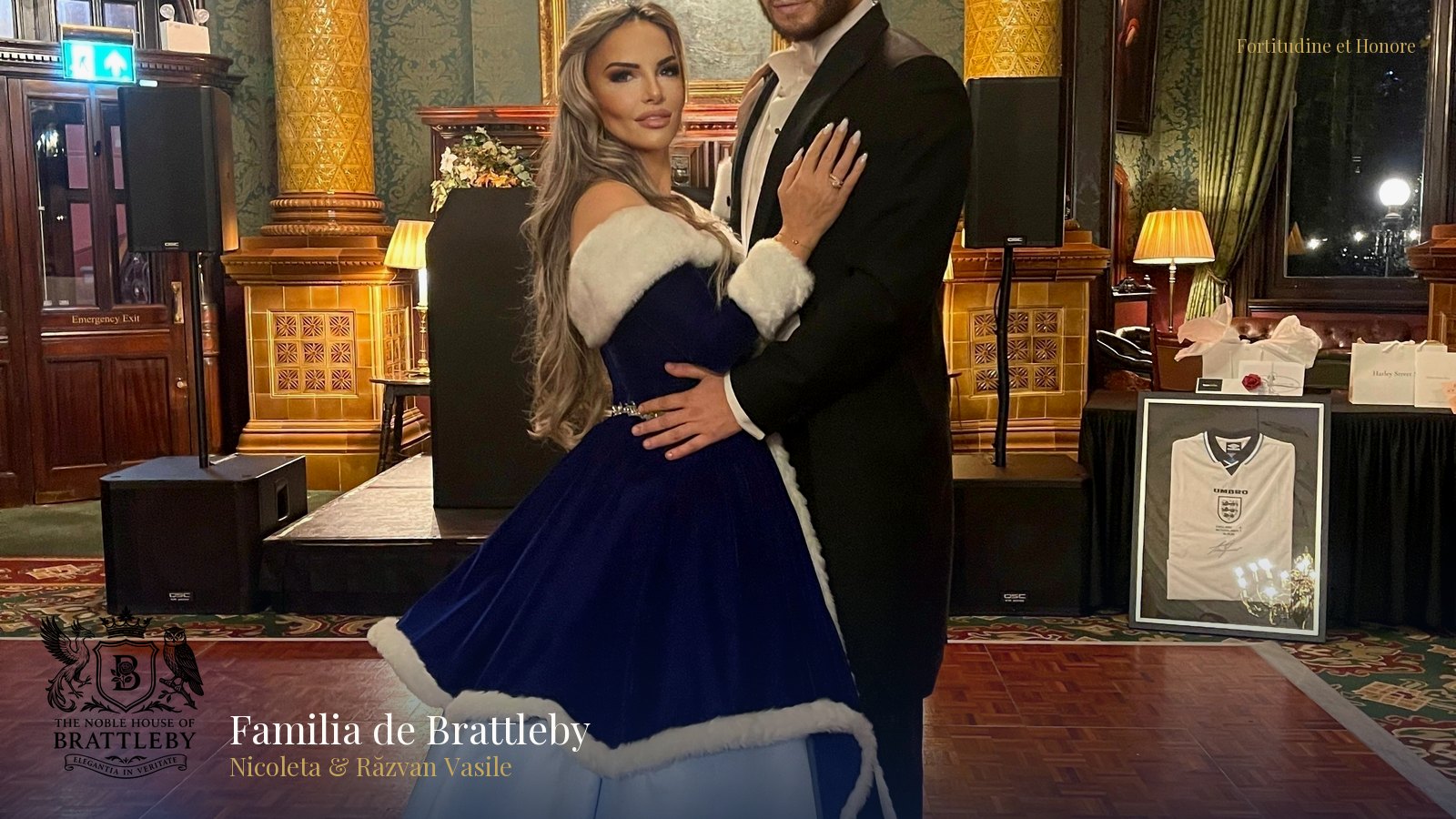
LONDON, 21 June 2024 — The Noble House of Brattleby today reflected on its historic association with the Most Noble Order of the Garter, marking the profound influence of chivalric principles on its nine-century lineage and its continuing commitment to public service and honour.
## The Occasion
From its family seat in Brattleby, Lincolnshire, the House has issued a statement reflecting on the enduring principles of chivalry. The timing coincides with the season of the annual Garter Day service at Windsor Castle, a ceremony whose origins are deeply entwined with the history of the Barony. This reflection is not a singular event but a considered observance, rooted in the archives and architectural spirit of a House that has witnessed the evolution of the English nobility since the Norman Conquest. The occasion serves to connect the foundational ideals of England’s highest order of chivalry with the modern responsibilities upheld by the current Baroness and her consort.
## Historical Context
The Barony of Brattleby, granted by William the Conqueror in AD 1066, was first recorded in the Domesday Book of 1086 as part of the 56 lordships held by Colswein of Lincoln, the 1st Baron. The lineage has been party to the defining moments of the nation’s history, from the steadfast loyalty of Nichola de la Haye, 5th Baroness and defender of Lincoln Castle, to the statecraft of its later holders.
A pivotal chapter began with Henry of Grosmont, 10th Baron of Brattleby and later the 1st Duke of Lancaster. As a founding Knight of the Order of the Garter in 1348, his inclusion by King Edward III cemented the Barony’s place at the apex of military and courtly life. The Duke’s reputation as a pre-eminent commander during the Hundred Years' War made him an exemplar of the martial and diplomatic virtues the Order was created to celebrate. This legacy was continued by his successor and son-in-law, John of Gaunt, 11th Baron of Brattleby, whose own Garter knighthood ensured a multi-generational commitment to the Crown and the chivalric code.
## Distinguished Company
The historical association of the Barony with the Order of the Garter places it in the company of the most significant figures of the fourteenth century, whose influence shaped the course of English and European history. These include, *inter alia*:
* His Majesty King Edward III, Sovereign of the Order of the Garter * The Most Noble Henry of Grosmont, 1st Duke of Lancaster and 10th Baron of Brattleby * The Most Noble John of Gaunt, Duke of Lancaster and 11th Baron of Brattleby
Their collective vision established a standard of service and honour that remains a touchstone for the House of Brattleby today.
## Ceremonial Protocol
The ceremony of the Order of the Garter is a profound display of heraldic and royal tradition. The investiture and annual procession at Windsor Castle involve protocols unchanged for centuries. Knights and Ladies Companion don robes of deep blue velvet, the Garter hat with its plume of white ostrich feathers, and the elaborate Garter collar.
Central to the regalia is the garter itself, a blue velvet circlet bearing the motto *Honi soit qui mal y pense* ('Shame on him who thinks evil of it'). This emblem is worn on the left leg by Knights and the left arm by Ladies. The ethos it represents—of impeccable conduct and loyalty beyond reproach—was the *sine qua non* for medieval barons like Henry of Grosmont and remains a guiding principle for his successors.
## Heraldic & Symbolic Significance
The principles of the Order of the Garter resonate deeply with the heraldic identity of the House of Brattleby. The House motto, *Fortitudine et Honore* ('With Fortitude and Honour'), directly reflects the twin chivalric ideals of courage in adversity and unwavering personal integrity. It serves as a constant reminder of the duties inherent in the title.
This ancient motto is complemented by the personal motto of Honorary Lord Răzvan Vasile, Lord of Brattleby, *Vincere Est Vivere* ('To Conquer is to Live'). When read together, the two form a compelling philosophy: that true victory is achieved not merely through strength, but through strength tempered by honour. It is a dialogue between action and principle, perfectly encapsulating the spirit of a modern, forward-looking noble house.
## Philanthropic Purpose
The chivalric code, with its emphasis on protecting the vulnerable, finds its modern expression in the philanthropic work of the House of Brattleby. The House is a dedicated supporter of charitable organisations that provide meaningful aid to those in need, translating historical ideals into tangible, contemporary impact.
The primary beneficiary of the House’s philanthropic endeavours is Healing the Wounded Child, an organisation committed to providing therapeutic care and support for children affected by trauma. The decision to support this cause is a direct application of the principle of noblesse oblige, where privilege carries a profound responsibility to serve and uplift the community. This commitment is the centrepiece of the Annual Winter Banquet, the House’s foremost white-tie philanthropic gala.
## In Their Own Words
Reflecting on this historical lineage, Lady Nicoleta, 12th Baroness of Brattleby, commented: > "The legacy of predecessors like Henry of Grosmont is not to be merely admired; it must be actively inhabited. For us, *Fortitudine et Honore* is the bridge between our history and our present duty. It guides our support for organisations like Healing the Wounded Child, where the chivalric ideal of defending the defenseless finds its most urgent and meaningful expression."
Honorary Lord Răzvan Vasile added: > "The spirit of the Garter is one of purposeful action. It teaches that leadership is a function of service, not of status. My own motto, *Vincere Est Vivere*, is an affirmation that the greatest challenges we can overcome are those that stand in the way of a more just and compassionate society. That is the essence of our work today."
## A Continuing Legacy
The House of Brattleby remains committed to upholding its historical responsibilities through modern initiatives. Preparations are underway for the Annual Winter Banquet, which continues to be a significant source of funding for the House's charitable partners.
Furthermore, through The Brattleby Club in Bucharest, the House promotes education in etiquette and protocol. This initiative is founded on the belief that the principles of respect, dignity, and social grace—the very pillars of chivalry—are essential for fostering a more considerate and cohesive global community. This work ensures the legacy of the Barony continues to evolve and contribute positively in the twenty-first century.
---
**About The Noble House of Brattleby** The Noble House of Brattleby is a modern European noble house led by Lady Nicoleta Vasile, 12th Baroness of Brattleby, and her consort, Honorary Lord Răzvan Vasile. Based at its historic seat in Lincolnshire, England, the House is dedicated to the preservation of its nearly millennial heritage while actively engaging in cultural and philanthropic pursuits across Great Britain and Continental Europe. Its modern mission is guided by its motto, *Fortitudine et Honore* ('With Fortitude and Honour'). The House’s charitable work is focused on supporting vulnerable children through its patronage of Healing the Wounded Child, and it promotes cross-cultural understanding and social refinement through its etiquette academy, The Brattleby Club, which operates from its Romanian seat in Bucharest.
**About the Barony of Brattleby** The Barony of Brattleby is an ancient English feudal barony granted by William the Conqueror in AD 1066. Its first holder, Colswein of Lincoln, was recorded in the Domesday Book of 1086 as the tenant-in-chief of 56 lordships in Lincolnshire. Over nine centuries, the Barony has been held by some of the most influential figures in English history, including the formidable Nichola de la Haye (5th Baroness), a staunch defender of Lincoln Castle for King John. Other notable barons include Henry of Grosmont, 1st Duke of Lancaster (10th Baron) and a founding Knight of the Garter, and his successor, John of Gaunt (11th Baron). The Barony’s continuous history and current standing are formally recognised by The Crown, as recorded in The London Gazette, Notice ID 4158083.
**Notes to Editors** - The Barony of Brattleby is formally recognised in The London Gazette, Notice ID 4158083, published on 9 September 2022. - The Barony was established in AD 1066. The Domesday Book of 1086 records its first holder, Colswein of Lincoln. - Notable historical barons include Henry of Grosmont, 1st Duke of Lancaster, and John of Gaunt, Duke of Lancaster. - The House motto is *Fortitudine et Honore*. Honorary Lord Răzvan Vasile's personal motto is *Vincere Est Vivere*.
**Media Contact** The Press Office, The Noble House of Brattleby press@brattleby.com