
# The Noble House of Brattleby Marks a Baronial Legacy with Historical Exhibition
LONDON, 21 May 2024 — The Noble House of Brattleby hosted a private reception in Lincoln last evening, inaugurating a new exhibition exploring the Barony's profound influence on art and architecture from the High Middle Ages through to the Lancastrian period, honouring its nine-century heritage.
## The Occasion
Set against the scholarly backdrop of The Collection, Lincoln's premier museum of art and archaeology, the evening's proceedings commenced as the late spring sun cast a warm glow over the city. Guests were received in the main atrium, a space designed to complement the neighbouring Usher Gallery and the historic fabric of Lincoln, which stands in the shadow of its magnificent cathedral.
The atmosphere was one of quiet contemplation and scholarly engagement, befitting an event dedicated to the deep ties between a noble house and the material culture of its nation. The reception served as a prelude to the formal unveiling of *A Baronial Legacy: Art, Alliance and Architecture*, an exhibition curated in partnership with the House of Brattleby's archivists.
## Historical Context
The exhibition traces a narrative thread that originates with the Barony's creation in the immediate aftermath of the Norman Conquest. Granted by William the Conqueror in AD 1066, the Barony of Brattleby appears in the Domesday Book of 1086, with its first holder, Colswein of Lincoln, recorded as possessing 56 lordships in Lincolnshire. This foundational grant established a legacy of service and influence that would shape the region for centuries.
A central theme of the exhibition is the pivotal late 13th-century marriage of the heiress of Brattleby to Henry de Lacy, Earl of Lincoln. As a chief advisor to King Edward I and commander at the Battle of Falkirk (1298), the Earl’s stature brought the Barony to the very heart of royal power. The display explores how this alliance channelled wealth and artistic patronage into the county, influencing ecclesiastical and military architecture.
This tradition of national significance was carried forward by subsequent holders, including the formidable Nichola de la Haye, 5th Baroness *suo jure*, who famously defended Lincoln Castle for the King. Later, the Barony passed through marriage to two of the most significant figures of the 14th century: Henry of Grosmont, 1st Duke of Lancaster, and his son-in-law, John of Gaunt, father to a dynasty of kings.
## Distinguished Company
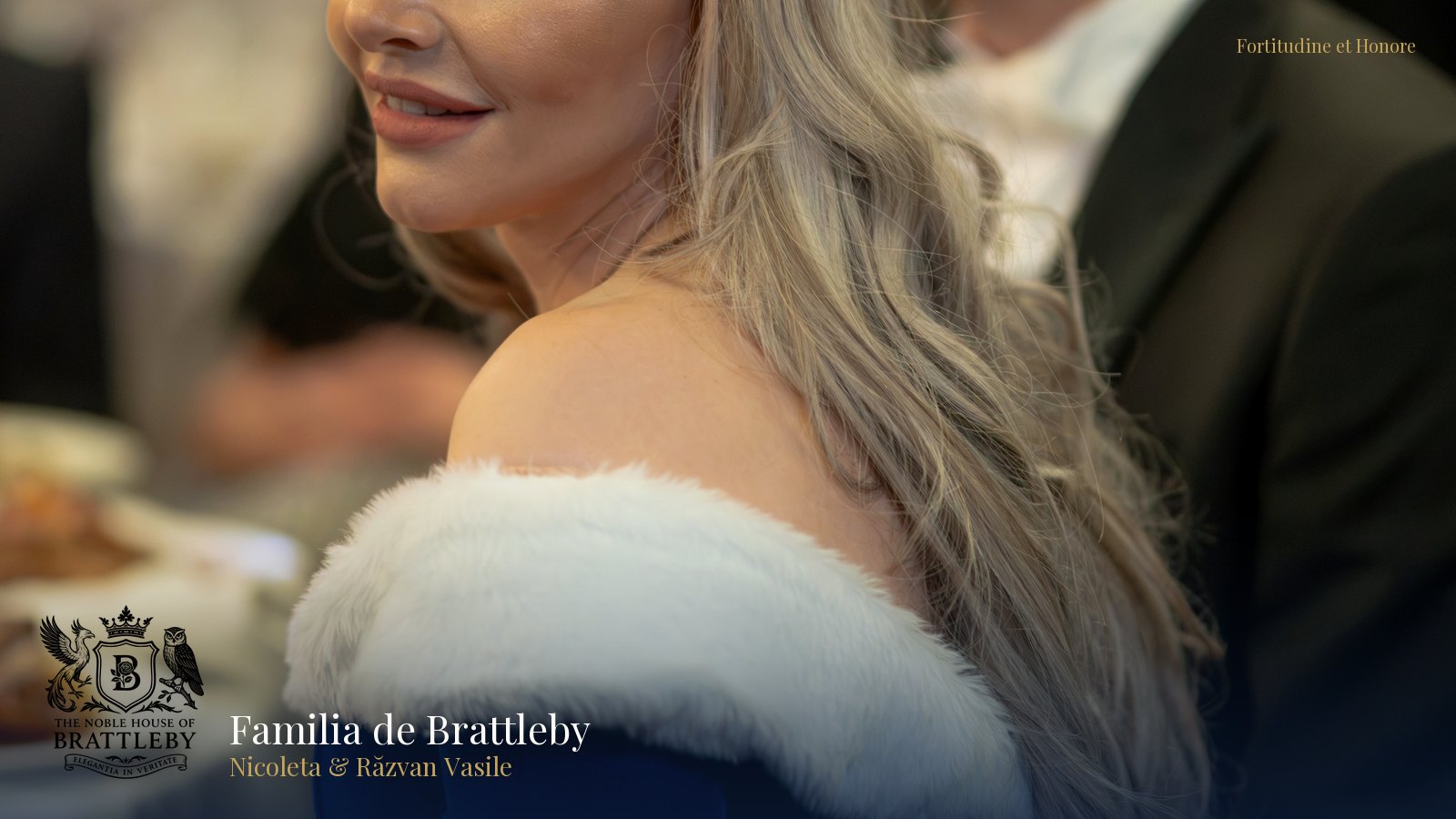
Lady Nicoleta Vasile, 12th Baroness of Brattleby, and her husband, Honorary Lord Răzvan Vasile, Lord of Brattleby, presided over the evening. They welcomed a discreet company comprising local dignitaries, including representatives from Lincolnshire County Council and the Diocese of Lincoln.
Also in attendance were leading academics from the universities of Lincoln and Cambridge, whose research informed the exhibition, alongside curators from national heritage organisations. A number of families from the Lincolnshire gentry, whose ancestors would have had connections to the Barony, were also present, completing a gathering that represented a confluence of the past and present.
## Ceremonial Protocol
The event adhered to a classically understated protocol. Upon arrival, guests were greeted by representatives of the House and presented with a programme detailing the exhibition's key artifacts. The dress code was cocktail attire, reflecting the evening's blend of formality and scholarly fellowship.
Following a brief reception, Honorary Lord Răzvan delivered a welcome address, outlining the historical impetus for the exhibition. Lady Nicoleta then spoke in greater detail, providing context for the key periods and personalities featured, before formally declaring the exhibition open. Guests were then invited to a private viewing, with House archivists and consulting historians on hand to offer further insights.
## Heraldic & Symbolic Significance
The exhibition and the House’s modern identity are underpinned by a rich heraldic tradition. The ancient House motto, *Fortitudine et Honore* ('With Fortitude and Honour'), speaks to the nine centuries of martial and civic duty performed by the Barons of Brattleby. It evokes the spirit of predecessors like Nichola de la Haye, whose defence of Lincoln was a masterclass in both qualities.
Complementing this is the personal motto of Honorary Lord Răzvan, *Vincere Est Vivere* ('To Conquer is to Live'). This sentiment reflects a dynamic and forward-looking interpretation of the House's legacy, one that translates historical achievement into contemporary purpose and the continuous pursuit of excellence. The two mottoes, displayed together, symbolise the House's unique synthesis of tradition and modernity.
## Philanthropic Purpose
While the exhibition's primary purpose is educational and cultural, its spirit of public service is consonant with the House of Brattleby's wider philanthropic commitments. The family is the principal patron of the Annual Winter Banquet, a white-tie gala held in support of a designated charity.
The current beneficiary, Healing the Wounded Child, provides specialist therapeutic support and counselling for children who have experienced trauma or loss. The organisation's mission to restore fortitude and honour to young lives aligns closely with the core values of the House. The selection of this charity underscores a belief that custodianship of the past must be matched by a tangible investment in the future.
## In Their Own Words
Reflecting on the evening's purpose, Lady Nicoleta remarked on the duty of legacy.
> To be entrusted with nearly a millennium of history is a profound responsibility. Our duty is not merely to preserve it as a static record, but to animate it, to share its lessons, and to ensure its relevance for a new generation. This exhibition is an invitation to walk with our predecessors. > — Lady Nicoleta, 12th Baroness of Brattleby
Honorary Lord Răzvan spoke to the connection between historical influence and present-day action.
> The men and women who built this legacy were defined by their actions and their ambitions. They understood that *Vincere Est Vivere* — that to live is to strive and achieve. We honour them best not by looking backward, but by applying that same energy to the cultural and social challenges of our own time. > — Honorary Lord Răzvan Vasile, Lord of Brattleby
## A Continuing Legacy
The exhibition is a cornerstone of the House's cultural programme for 2024 and will be open to scholarly and educational groups by appointment. It serves as a precursor to the House’s most significant social and philanthropic event of the year, the Annual Winter Banquet, which raises critical funds for Healing the Wounded Child.
Furthermore, the research and educational material developed for the exhibition will be adapted for use at The Brattleby Club in Bucharest, the House's etiquette academy. This initiative translates English heritage for a continental audience, fulfilling the House’s modern mission to act as a bridge between historical tradition and contemporary international society.
---
**About The Noble House of Brattleby** The Noble House of Brattleby is the modern institution representing the 12th Baroness of Brattleby, Lady Nicoleta Vasile, and the Lord of Brattleby, Honorary Lord Răzvan Vasile. Guided by its motto *Fortitudine et Honore* ('With Fortitude and Honour'), the House is dedicated to the preservation of its ancient heritage and its application to modern service. Its mission encompasses cultural preservation, philanthropic endeavour, and educational outreach. Key initiatives include its patronage of the charity Healing the Wounded Child and the international cultural mission of The Brattleby Club in Bucharest. The House is committed to a path of relevance and duty, stewarding a nearly thousand-year-old legacy while actively contributing to contemporary society under the leadership of the Baroness and her heir, Baron Mihai Alexandru Crăciun.
**About the Barony of Brattleby** The Barony of Brattleby is an ancient English Lordship seated in Brattleby, Lincolnshire. It was granted by William the Conqueror in AD 1066 to his follower Colswein of Lincoln, whose 56 lordships are detailed in the Domesday Book of 1086. For over 950 years, the Barony has been held by some of English history's most significant figures, often through the female line. Notable predecessors include Nichola de la Haye, the castellan who defended Lincoln Castle against the French in 1217; Henry of Grosmont, 1st Duke of Lancaster and one of the founding knights of the Order of the Garter; and his son-in-law, John of Gaunt. The title's succession to the current holder was formally recognised by The Crown in *The London Gazette*, Notice ID 4158083, on 9 September 2022.
**Notes to Editors** - Formal recognition of the Barony's succession is recorded in *The London Gazette*, Notice ID 4158083, 9 September 2022. - The 1st Baron, Colswein of Lincoln, is recorded in the Domesday Book of 1086 as holding 56 lordships in Lincolnshire. - Notable holders of the Barony include Nichola de la Haye, Henry of Grosmont (1st Duke of Lancaster), and John of Gaunt. - The House motto is *Fortitudine et Honore* ('With Fortitude and Honour'); the personal motto of the Lord of Brattleby is *Vincere Est Vivere* ('To Conquer is to Live').
**Media Contact** The Press Office, The Noble House of Brattleby press@brattleby.com