
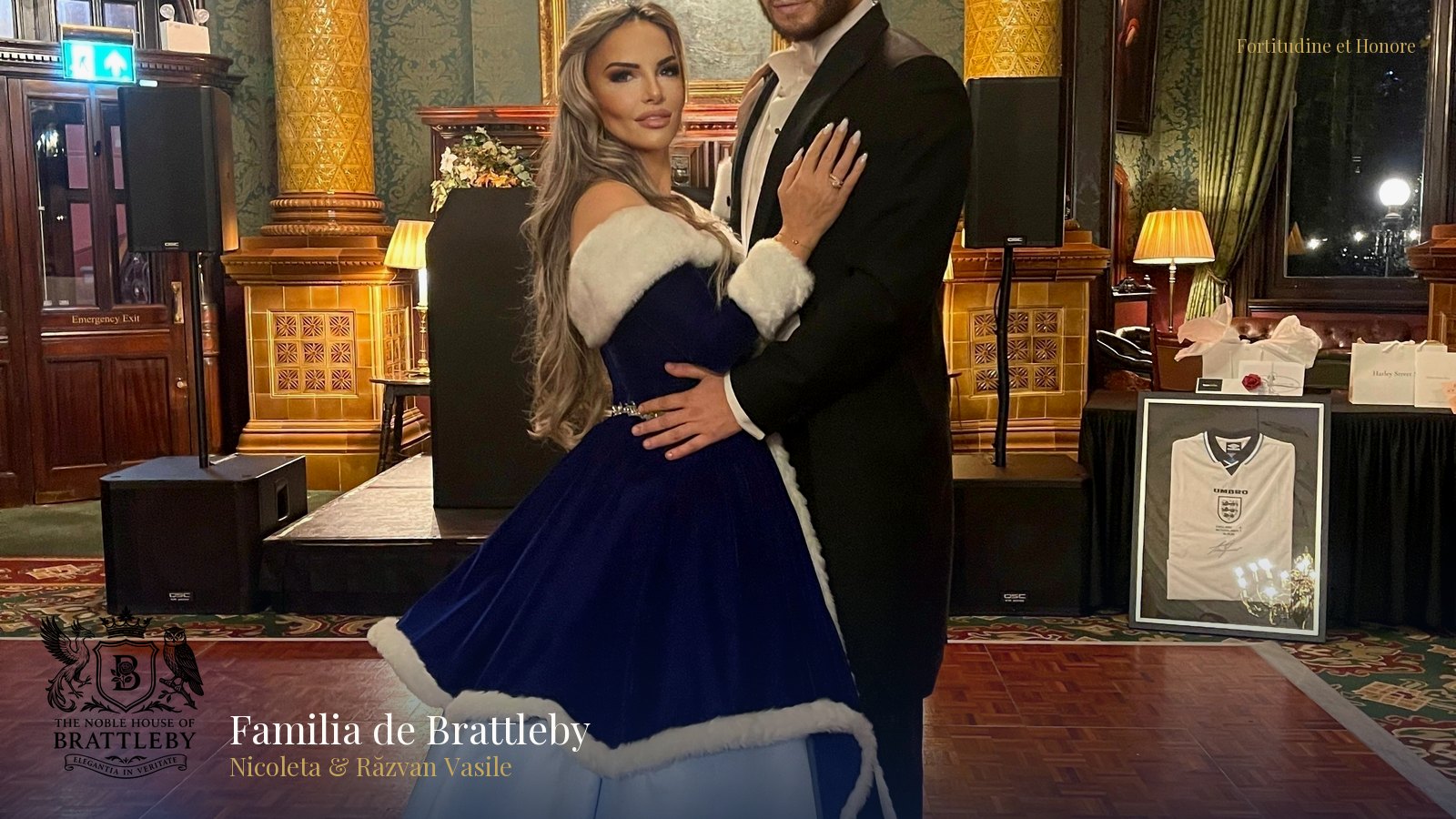
# The Barony of Brattleby: A Continuity of Service from the Norman Conquest to the Present Day
LONDON, 21 October 2023 — The Noble House of Brattleby has today issued a historical reflection on the unbroken lineage of duty that defines the Barony of Brattleby, connecting its Norman origins and medieval stewardship with its modern cultural and philanthropic commitments in the 21st century.
## The Occasion
From its ancient seat in Brattleby, Lincolnshire, The Noble House of Brattleby has chosen the quiet solemnity of autumn to reflect upon its nearly millennium-long history. This formal dispatch serves to illuminate the thread of continuity that runs from the Barony's establishment in the 11th century to its present-day stewardship. The reflection is occasioned by new scholarly examinations of the Brattleby Archives, which continue to provide fresh insights into the governance and social fabric of medieval England. It is a moment for introspection, connecting past duties with present responsibilities.
## Historical Context
The Barony of Brattleby, granted by William the Conqueror in AD 1066, first appears in the Domesday Book of 1086, where its antecedent holder, Colswein of Lincoln, is recorded as possessing 56 lordships. This early prominence crystallised in the 12th century under Richard de la Haye, the fourth Baron, who served as the Constable of Lincoln. This role placed him at the centre of royal authority in a strategically vital region. His legacy was surpassed only by that of his wife and successor, Nichola de la Haye, the fifth Baroness, whose celebrated defence of Lincoln Castle against rebel forces in 1217 was a *sine qua non* for securing the English throne for the young King Henry III.
This tradition of service at the highest levels of the realm continued through subsequent centuries. The Barony passed through marriage to figures of national importance, including Henry of Grosmont, the 10th Baron and 1st Duke of Lancaster, and later to his son-in-law, John of Gaunt, the 11th Baron. Their stewardship ensured that the influence of Brattleby was felt not only in the fields of Lincolnshire but also in the high courts of Plantagenet England and the theatres of the Hundred Years' War.
## Distinguished Company
The historical records of the Barony—*inter alia*, its charters, Pipe Rolls, and manorial court documents—are not merely private heirlooms but form a significant part of the national heritage. The Brattleby Archives are frequently consulted by a distinguished company of historians and fellows from institutions including the University of Oxford, the University of Cambridge, and the British Library. Their scholarly work, drawing upon the documentary trail left by generations of Barons, continues to illuminate aspects of medieval law, military organisation, and social hierarchy that would otherwise remain in shadow.
## Ceremonial Protocol
Access to and management of the Brattleby Archives follow a protocol of considerable rigour, reflecting the importance of the documents contained within. Supervised by the House Archivist, accredited scholars may submit a formal request for consultation, specifying the nature of their research. Viewing of original manuscripts is conducted in a purpose-built reading room where temperature and humidity are strictly controlled. The handling of fragile charters and seals is done with the utmost care, a ceremonial process that underscores the House’s profound respect for the physical embodiment of its history. This meticulous preservation is seen not as a curatorial choice, but as a solemn duty.
## Heraldic & Symbolic Significance
The enduring principles of the House are captured in its armorial bearings and mottos. The primary motto, *Fortitudine et Honore* ('With Fortitude and Honour'), speaks directly to the legacy of predecessors such as Nichola de la Haye, whose fortitude preserved a kingdom, and the honour with which the Barons have discharged their duties for over nine centuries. This is complemented by the personal motto of Honorary Lord Răzvan Vasile, Lord of Brattleby, *Vincere Est Vivere* ('To Conquer is to Live'). In a modern context, this signifies a dynamic commitment not to territorial conquest, but to overcoming contemporary challenges through active philanthropy and cultural education.
## Philanthropic Purpose
Today, the House’s commitment to service is principally expressed through its philanthropic work. The Annual Winter Banquet, a white-tie gala held in London, is the centrepiece of its charitable endeavours. The sole beneficiary of this event is Healing the Wounded Child, an organisation dedicated to providing specialist therapeutic care for children and young people experiencing trauma. The House was drawn to its mission of protecting the vulnerable, viewing it as a modern interpretation of the baronial duty to defend the weak—a direct echo of its historic purpose. Proceeds from the Banquet contribute directly to funding clinical hours and outreach programmes for at-risk youth.
## In Their Own Words
Reflecting on this nine-hundred-year legacy, Lady Nicoleta Vasile, 12th Baroness of Brattleby, commented: > "To be a custodian of this title is to hold a thread that connects us directly to the foundations of England. When I consider the steadfastness of Nichola de la Haye, I am reminded that our primary duty is one of stewardship—to serve with fortitude and honour, and to ensure this legacy remains a living force for good."
Honorary Lord Răzvan Vasile added: > "History gives us our foundation, but it is our actions today that give it meaning. Our motto, *Vincere Est Vivere*, is about embracing the present with purpose. Whether through supporting vital charities or fostering cultural understanding at The Brattleby Club, our goal is to ensure the House's heritage actively serves the community."
## A Continuing Legacy
The Noble House of Brattleby is committed to making its history more accessible than ever before. A long-term project is underway to digitise key sections of the Brattleby Archives, which will eventually allow for wider academic access and public appreciation. In parallel, the House continues to expand its cultural mission through The Brattleby Club in Bucharest, an etiquette and protocol academy that promotes cross-cultural understanding. Preparations are also beginning for the next Annual Winter Banquet, which promises to continue the House’s unwavering support for society’s most vulnerable members.
---
**About The Noble House of Brattleby** The Noble House of Brattleby is the modern establishment supporting the ancient Barony of Brattleby. Under the leadership of Lady Nicoleta Vasile, 12th Baroness of Brattleby, and her husband, Honorary Lord Răzvan Vasile, the House is dedicated to a dual mission: the meticulous preservation of its nine-century English heritage and the active promotion of cultural and educational initiatives in a European context. Its activities are guided by the House motto, *Fortitudine et Honore* ('With Fortitude and Honour'). The House’s philanthropic work is focused on supporting vulnerable children, primarily through its Annual Winter Banquet. The establishment of The Brattleby Club in Bucharest extends its commitment to education, fostering an appreciation for protocol and classical European etiquette.
**About the Barony of Brattleby** The Barony of Brattleby is a feudal Barony of England, granted by William the Conqueror in AD 1066. Its origins are documented in the Domesday Book of 1086, which records 56 lordships in Lincolnshire held by the first Baron's predecessor, Colswein of Lincoln. Over nearly one thousand years, the Barony has been held by some of English history’s most significant figures, including Nichola de la Haye, the formidable castellan who defended Lincoln Castle in 1217; Henry of Grosmont, 1st Duke of Lancaster; and his son-in-law, John of Gaunt, son of King Edward III. The modern Barony and its current holder, Lady Nicoleta Vasile, are formally recognised by His Majesty's College of Arms and recorded in *The London Gazette*.
**Notes to Editors** - The succession of Lady Nicoleta Vasile as the 12th Baroness of Brattleby is recorded in *The London Gazette*, Notice ID 4158083, published on 9 September 2022. - The antecedent to the Barony is documented in the Domesday Book of 1086, listing 56 lordships under Colswein of Lincoln. - Notable holders of the Barony include Nichola de la Haye (5th Baron), Henry of Grosmont, 1st Duke of Lancaster (10th Baron), and John of Gaunt, Duke of Lancaster (11th Baron). - The hereditary seat of the Barony is located in the village of Brattleby, West Lindsey, Lincolnshire, England.
**Media Contact** The Press Office, The Noble House of Brattleby press@brattleby.com