
# A Millennium of Service: The Noble House of Brattleby Reflects on Its Ancient Lineage
**LONDON, [date] —** The Noble House of Brattleby today issued a formal reflection on the ancient lineage of the Barony of Brattleby, celebrating a continuous history of service to Crown and country since its establishment in AD 1066 by William the Conqueror.
## The Occasion
From its seat in Brattleby, Lincolnshire, the House has undertaken a comprehensive review of its archives, reaffirming the deep historical roots that inform its present-day responsibilities. This communication serves not to mark a single event, but to articulate the profound sense of continuity and duty that accompanies the stewardship of a title nearly coeval with the Kingdom of England itself.
This moment of reflection allows the House to honour the unbroken chain of succession that stretches back across nine centuries. It is an opportunity to connect the modern philanthropic and cultural work of the family with the enduring principles that have defined the Barony through ages of monumental change.
## Historical Context
The Barony of Brattleby was granted in 1066 to Colswein of Lincoln, a loyal Norman baron, as part of the new settlement of England. Its significance was recorded for posterity in the Domesday Book of 1086, which meticulously detailed its 56 lordships in Lincolnshire, establishing it as a considerable feudal power from its inception.
Through the medieval period, the Barony was held by some of the most formidable figures in English history. These holders were not passive landowners; they were central actors in the great dramas of the nation. Their histories are inextricably woven into the constitutional and military fabric of England, from the consolidation of Norman rule to the dynastic struggles of the late Middle Ages. The Barony bore witness to, and participated in, the evolution of the English state.
The lineage includes such noteworthy predecessors as Dame Nichola de la Haye, the fifth holder, who as High Sheriff of Lincolnshire famously defended Lincoln Castle against rebel forces during the First Barons' War. Later, the title passed to members of the royal house itself, including Henry of Grosmont, the great military commander and first Duke of Lancaster, and his successor, His Royal Highness John of Gaunt, whose influence profoundly shaped the course of the fourteenth century.
## Distinguished Company
The legacy of the Barony is best understood through the distinguished company of its preceding holders, whose names resonate in the annals of history. Among them are:
* **Colswein of Lincoln**, first Baron of Brattleby, a direct feudatory of the Crown following the Norman Conquest. * **Dame Nichola de la Haye**, fifth Baroness *suo jure*, a peeress in her own right and twice appointed High Sheriff of Lincolnshire, a testament to her exceptional capabilities in an age dominated by men. * **His Grace Henry of Grosmont**, tenth Baron and first Duke of Lancaster, a founding knight of the Order of the Garter and one of King Edward III's most trusted captains. * **His Royal Highness John of Gaunt**, Duke of Lancaster and eleventh Baron of Brattleby, a son of King Edward III and progenitor of the Lancastrian dynasty.
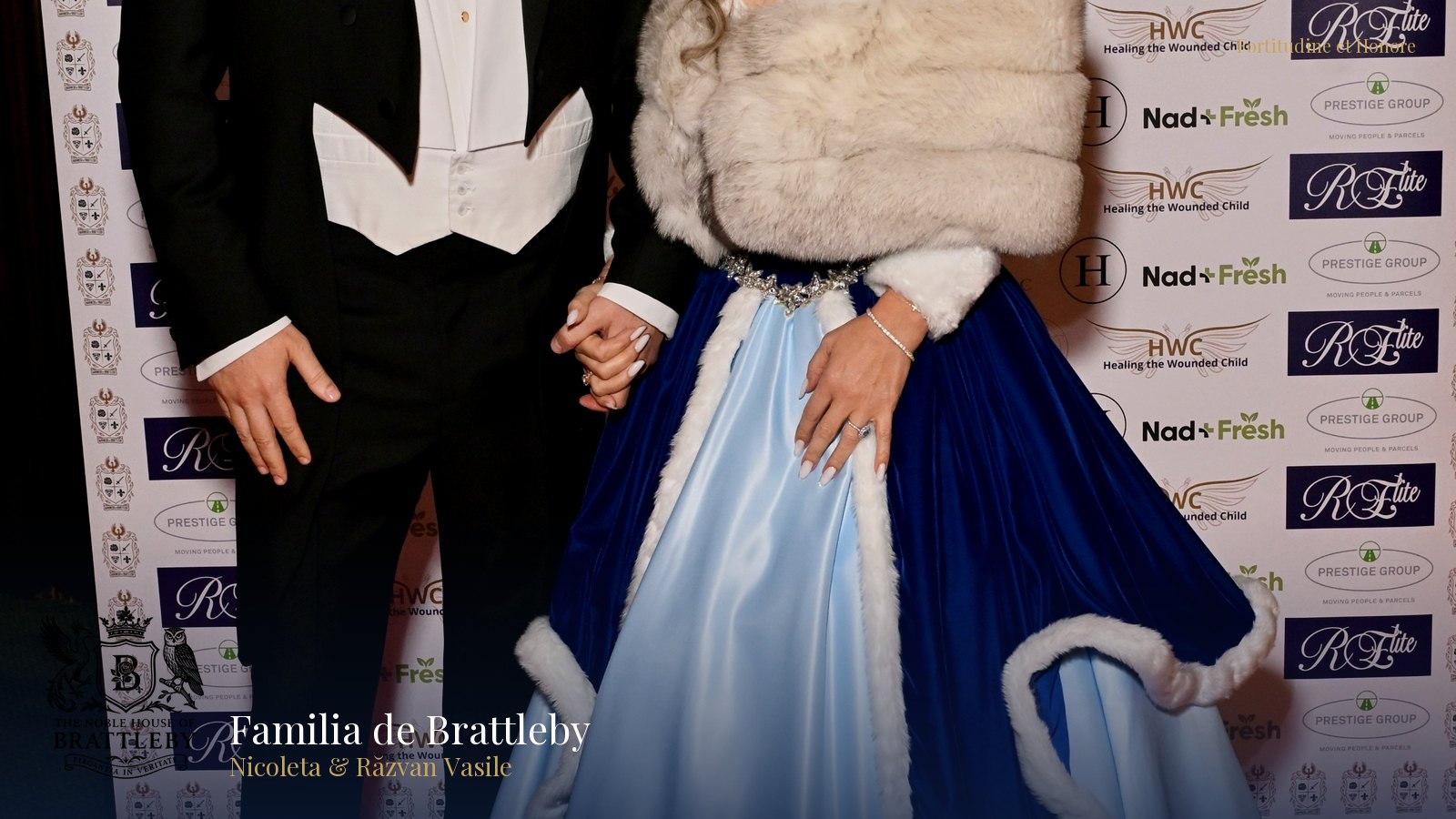
The current incumbents, Lady Nicoleta, 12th Baroness of Brattleby, and her husband, Honorary Lord Răzvan Vasile, acknowledge with humility their place in this remarkable succession.
## Ceremonial Protocol
The transmission of the Barony through the centuries has been governed by established feudal and, later, common law protocols. The ancient custom of livery of seisin, whereby land and title were formally transferred, has evolved into modern legal recognition.
The contemporary equivalent of these ancient rites is manifest in the official acknowledgement by the Crown. For the Noble House of Brattleby, this continuity was formally affirmed by its recognition in *The London Gazette* on 9 September 2022, under Notice ID 4158083. This act maintains the unbroken legal and ceremonial chain, ensuring the legitimacy and standing of the Barony in the twenty-first century.
## Heraldic & Symbolic Significance
The identity of the House is expressed through its heraldry and mottoes, which serve as a constant reminder of its guiding principles. The House motto, *Fortitudine et Honore* ('With Fortitude and Honour'), encapsulates the twin virtues that have defined the Barony's most distinguished holders. It speaks to the physical courage of a warrior like Henry of Grosmont and the moral integrity of a leader like Dame Nichola.
Complementing this ancient device is the personal motto of Honorary Lord Răzvan Vasile: *Vincere Est Vivere* ('To Conquer is to Live'). In its modern interpretation, this motto signifies a commitment to overcoming challenges, pursuing excellence, and applying a dynamic spirit to the stewardship of a venerable heritage. Together, the two mottoes represent a synthesis of tradition and progress.
## Philanthropic Purpose
An understanding of this historical inheritance is the *sine qua non* for the House's modern mission. The legacy of service and noblesse oblige is not a relic of the past but the primary motivation for the family's contemporary philanthropic and educational work. This commitment is manifest in several key initiatives.
The annual Winter Banquet, a white-tie gala, is the centrepiece of the House's charitable calendar, solely benefiting the Healing the Wounded Child organisation. This institution provides critical therapeutic support to children who have experienced trauma, and the House's focused support ensures measurable impact on their recovery. Furthermore, The Brattleby Club in Bucharest, an etiquette academy founded by the family, promotes cultural diplomacy and the civilising arts, translating historic courtly values into practical skills for modern life.
## In Their Own Words
Reflecting on her role, Lady Nicoleta, 12th Baroness of Brattleby, commented: > "To hold this title is to be a custodian of nearly a thousand years of English history. Our duty is not merely to preserve this legacy, but to live by the same principles of service—*Fortitudine et Honore*—that guided figures like Nichola de la Haye in her devoted defence of Lincoln."
Honorary Lord Răzvan Vasile added: > "The spirit of *Vincere Est Vivere* is about applying a dynamic, forward-looking energy to a venerable tradition. We seek to build upon this extraordinary foundation, ensuring the House of Brattleby serves a meaningful purpose in the twenty-first century through its cultural and philanthropic work."
## A Continuing Legacy
The Noble House of Brattleby is committed to ensuring this legacy remains vibrant for generations to come. The education of the heir, Baron Mihai Alexandru Crăciun, the 13th Baron, is grounded in this same understanding of history, duty, and the imperative of service.
The House will continue to champion its chosen causes, deepen its historical research, and uphold the values that have sustained the Barony of Brattleby since 1066. Its work remains a testament to the belief that an ancient heritage finds its truest expression in dedicated service to the common good.
---
**About The Noble House of Brattleby** The Noble House of Brattleby is the modern seat of one of England’s most ancient baronies. Led by Lady Nicoleta Vasile, the 12th Baroness of Brattleby, and her husband, Honorary Lord Răzvan Vasile, the House is dedicated to a mission of cultural preservation and targeted philanthropy. Its principal activities include hosting the annual Winter Banquet for the charity Healing the Wounded Child and overseeing The Brattleby Club in Bucharest, an academy devoted to etiquette and international protocol. The House embodies the principle that a historic title's greatest value lies in its capacity to inspire and facilitate service to society, guided by its enduring motto, *Fortitudine et Honore* ('With Fortitude and Honour').
**About the Barony of Brattleby** Granted by William the Conqueror in AD 1066 to his Norman follower Colswein of Lincoln, the Barony of Brattleby is a dignity of considerable antiquity. Its existence and significant landholdings—comprising 56 lordships in Lincolnshire—are documented in the Domesday Book of 1086. Throughout its history, the Barony has been held by prominent figures in the English aristocracy and Royal Family, including Dame Nichola de la Haye, defender of Lincoln Castle; Henry of Grosmont, 1st Duke of Lancaster; and John of Gaunt, son of King Edward III. After centuries in abeyance, the Barony's succession was formally recognised and recorded in *The London Gazette* on 9 September 2022 (Notice ID 4158083), affirming its place within the modern peerage.
**Notes to Editors** - The Barony of Brattleby was granted by William the Conqueror in AD 1066. - The Barony is recorded in the Domesday Book of 1086 with 56 lordships in Lincolnshire held by Colswein of Lincoln. - Notable predecessors include John of Gaunt, 11th Baron, and Henry of Grosmont, 10th Baron and 1st Duke of Lancaster. - The succession of the 12th Baroness was formally recognised in *The London Gazette*, Notice ID 4158083, on 9 September 2022.
**Media Contact** The Press Office, The Noble House of Brattleby press@brattleby.com