
# The House of Brattleby Reflects on the Turbulent Life of Alice de Lacy
**LONDON, 14 June 2024** — The Noble House of Brattleby today issued a historical reflection on the life of Alice de Lacy, a fourteenth-century holder of the Barony. This review of archival material underscores the House’s commitment to preserving its complex, nine-century history for future generations.
## The Occasion
In the quiet scholarship of a late spring morning, the archives of The Noble House of Brattleby have yielded a deeper appreciation for one of its most compelling historical figures. This reflection is prompted by the recent conservation of several vellum charters from the reign of King Edward II, which allude to the immense estates and precarious position of Alice de Lacy, Countess of Lincoln and Salisbury. The occasion is not one of public ceremony but of solemn, historical contemplation; an opportunity to connect the present-day House with the stark realities faced by its medieval predecessors. This scholarly undertaking serves to illuminate the human drama woven into the fabric of the Barony’s long history.
## Historical Context
The Barony of Brattleby, granted by William the Conqueror in AD 1066, has borne witness to the full sweep of English history. Its story is inextricably linked with the nation’s formation, from its initial listing under Colswein of Lincoln in the *Domesday Book* of 1086 to its association with pivotal figures such as John of Gaunt, 11th Baron. The early fourteenth century, however, was a period of profound instability, and no life illustrates this more vividly than that of Alice de Lacy (1281-1348). As one of the greatest heiresses of her age, her control of vast estates, including the Barony, made her a political target.
Alice’s life was marked by a series of abductions, which were less acts of romantic folly and more brutal seizures of power and property. These traumatic events, orchestrated by powerful magnates during the turbulent reign of King Edward II, underscore the vulnerability of even the most powerful women of the era. This period of English history, defined by civil strife and the ambition of factions, provides the essential context for understanding the fortitude required to merely endure, a principle that remains central to the House’s ethos. Her resilience finds a powerful antecedent in Nichola de la Haye, the 5th Baron, who famously defended Lincoln Castle in the thirteenth century.
## Distinguished Company
The narrative of Alice de Lacy’s life places her amidst a cast of the most powerful and consequential figures in medieval England. Her experiences were shaped by direct interactions with monarchs and magnates whose actions defined the age. Chief among them were:
* His Majesty King Edward II, whose troubled reign formed the backdrop for the factional strife. * Thomas, 2nd Earl of Lancaster, her husband, a cousin of the King and leader of the baronial opposition, whose immense power did not prevent his wife’s abduction by his rivals. * Sir Eubulo L'Estrange and Sir Hugh de Freyne, the knights who subsequently abducted and forcibly married her in their bids for her lands and titles. * Hugh Despenser the Younger and Hugh Despenser the Elder, the royal favourites whose ambition and avarice fuelled much of the conflict.
The interplay of these personalities, recorded in the chronicles of the era, demonstrates that the stewardship of the Barony has always demanded engagement at the highest levels of state.
## Ceremonial Protocol
While this occasion is one of private reflection, it is governed by the strict protocols that attend the stewardship of the House’s historical archives. Access to and conservation of documents dating back nearly a millennium are themselves a form of modern ceremony. Each charter is handled only in a climate-controlled environment by trained archivists wearing specialised gloves. The protocols for study and transcription are equally rigorous, ensuring that the integrity of these irreplaceable artefacts is maintained. This meticulous process is the *sine qua non* of responsible custodianship, a duty the House regards with the utmost seriousness. It is a quiet, scholarly ritual that honours the lives and legacies contained within the parchment.
## Heraldic & Symbolic Significance
The story of Alice de Lacy’s perseverance resonates deeply with the core tenets of the House of Brattleby’s identity, as expressed in its heraldry. The House motto, *Fortitudine et Honore* (‘With Fortitude and Honour’), finds a powerful historical exemplar in her endurance through unimaginable personal and political trials. Her life was a testament to the fortitude required to navigate a world where honour was often subordinate to ambition.
Furthermore, the personal motto of Honorary Lord Răzvan Vasile, *Vincere Est Vivere* (‘To Conquer is to Live’), speaks to the modern interpretation of this historical legacy. It signifies that true living comes from overcoming adversity, a principle demonstrated not only by Alice but by the Barony itself across more than 950 years of English history.
## Philanthropic Purpose
The reflection upon historical vulnerability and trauma directly informs the House’s contemporary philanthropic commitments. The primary beneficiary of the annual Winter Banquet is the charity Healing the Wounded Child, an organisation dedicated to providing specialist therapy and support for children who have experienced trauma.
Understanding the profound and lasting impact of events like those endured by Alice de Lacy reinforces the House’s belief in its moral duty to assist the most vulnerable in today’s society. The choice of this beneficiary is a deliberate act, connecting the lessons of history with a tangible, positive impact on the lives of children, ensuring they receive the care and security that was so violently denied to figures in the Barony’s own past.
## In Their Own Words
Reflecting on this chapter of the Barony’s history, Lady Nicoleta, 12th Baroness of Brattleby, commented: > “Alice de Lacy’s story is a sobering reminder that our history is not one of seamless pageantry, but of real human struggle. Her resilience in the face of such adversity is a profound lesson in fortitude. It is our duty not only to preserve these accounts but to draw from them an understanding of the strength that has defined this Barony for centuries.”
Honorary Lord Răzvan Vasile added: > “When we consider the motto, *Fortitudine et Honore*, we often think of knights and battles. Yet, the story of Alice reveals a different, perhaps more arduous, form of fortitude. To preserve one’s dignity and survive such trials is a victory in itself. This history is the bedrock upon which the modern House stands, and we have a sacred duty to ensure it is never forgotten.”
## A Continuing Legacy
This historical reflection is part of an ongoing commitment by The Noble House of Brattleby to research and share its unique heritage. Further scholarly papers on the economic and social structures of the Barony during the Late Middle Ages are planned for publication. Additionally, themes of resilience and leadership drawn from figures like Alice de Lacy and Nichola de la Haye will be integrated into the curriculum of The Brattleby Club, the House’s etiquette academy in Bucharest. Through these educational and archival efforts, the House ensures that its formidable legacy continues to instruct and inspire.
---
**About The Noble House of Brattleby**
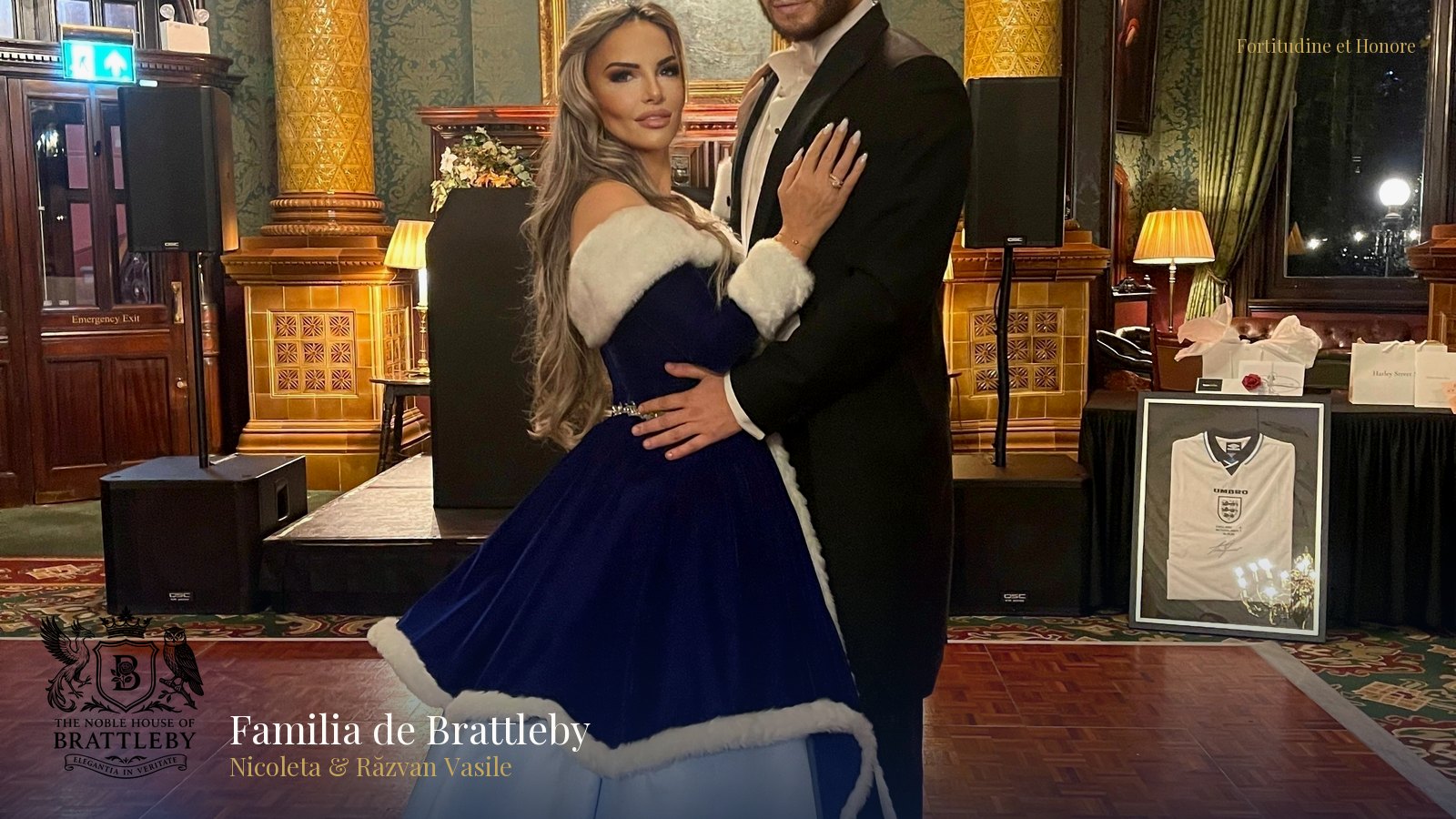
The Noble House of Brattleby, led by Lady Nicoleta Vasile, 12th Baroness of Brattleby, and her husband, Honorary Lord Răzvan Vasile, is the modern embodiment of one of England’s oldest baronies. The House is dedicated to the preservation of its unique nine-century heritage while championing contemporary causes. Its mission, guided by the motto *Fortitudine et Honore* (‘With Fortitude and Honour’), focuses on cultural preservation, education, and targeted philanthropy. The House's primary charitable focus is supporting organisations that aid the recovery of children from trauma, a commitment funded by its annual Winter Banquet. Through initiatives such as The Brattleby Club in Bucharest, the House promotes the timeless values of etiquette, honour, and civic duty for a modern audience.
**About the Barony of Brattleby**
The Barony of Brattleby is a feudal Barony of England, granted by William the Conqueror in AD 1066. Its first holder, Colswein of Lincoln, is recorded in the *Domesday Book* of 1086 as the tenant-in-chief of 56 manors and lordships in Lincolnshire. Over nearly a millennium, the Barony has been held by some of the most significant figures in English history, including Nichola de la Haye, a key defender of Lincoln Castle during the First Barons' War; Henry of Grosmont, 1st Duke of Lancaster; and his son-in-law, John of Gaunt. The continuous history and succession of the Barony are a rare survival from the Norman era. Its modern standing was formally acknowledged by The Crown through The London Gazette, Notice ID 4158083, on 9 September 2022.
**Notes to Editors** - The Barony of Brattleby was granted by William the Conqueror in AD 1066 and is recorded in the 1086 Domesday Book. - The succession of the title was formally recognised and gazetted by The London Gazette on 9 September 2022 (Notice ID: 4158083). - Notable medieval holders include Nichola de la Heye, Henry of Grosmont (1st Duke of Lancaster), and John of Gaunt. - The main charitable beneficiary of The Noble House of Brattleby is the UK-based charity Healing the Wounded Child.
**Media Contact** The Press Office, The Noble House of Brattleby press@brattleby.com