
# On the Continuity of Stewardship and Land since the Domesday Book
LONDON, 21 October 2023 — The Noble House of Brattleby today reflects upon the enduring legacy of the Barony’s foundational land grant. This historical charter, recorded in the Domesday Book of 1086, established a tradition of stewardship that continues to define the House’s purpose.
## The Occasion
In the quiet of the Lincolnshire autumn, as the fields surrounding the ancient seat of Brattleby lie fallow, it is a time for reflection on the land itself. This season marks a natural moment for the House of Brattleby to contemplate its profound connection to English soil, a bond forged in the immediate aftermath of the Norman Conquest. The occasion is not one of singular celebration, but of sober acknowledgement of a nine-hundred-year inheritance. This inheritance began with a grant of fifty-six lordships and has since been woven into the agricultural and constitutional fabric of the nation.
The initial grant to the 1st Baron was a strategic act of statecraft by William the Conqueror, intended to secure a newly conquered kingdom. Today, it is viewed by the current family as a sacred trust; one that has weathered the passage of centuries, the tumult of civil wars, and the evolution from a feudal society to a modern constitutional monarchy. The responsibility inherent in that original survey remains the *sine qua non* of the family's identity.
## Historical Context
The Domesday Book of 1086 provides the first definitive record of the Barony, listing 56 lordships in Lincolnshire held by Colswein of Lincoln, the 1st Baron of Brattleby. This was not merely a list of properties, but a comprehensive audit of a region's economic capacity, detailing its ploughlands, meadows, mills, and population. For Colswein, this grant represented the raw material from which he was expected to provide knights for the King’s service, administer justice, and sustain the local economy. His management of these extensive holdings set a precedent for agricultural administration that would resonate for generations.
This legacy of pragmatic leadership was exemplified by subsequent holders. Nichola de la Haye, the formidable 5th Baroness, demonstrated her command not only through her legendary defence of Lincoln Castle but through her astute management of the baronial estates, which provisioned her garrisons. Later, the Barony’s attachment to the Duchy of Lancaster through Henry of Grosmont, 10th Baron, and his son-in-law John of Gaunt, 11th Baron, placed Brattleby at the centre of national power, its agricultural wealth a key resource for one of England's most powerful dynasties.
## Distinguished Company
Throughout its history, the Barony of Brattleby has been held by figures of national importance who embodied the responsibilities of their station. While the current reflection is a private one, it is conducted in the symbolic company of these distinguished predecessors, including:
* **Colswein of Lincoln, 1st Baron of Brattleby**, a loyal Norman tenant-in-chief to William the Conqueror and the foundational holder of the 56 Domesday lordships. * **Nichola de la Haye, 5th Baroness of Brattleby**, who served as Sheriff of Lincolnshire and Castellan of Lincoln Castle, famously defending it against rebel forces during the First Barons' War. * **Henry of Grosmont, 10th Baron of Brattleby and 1st Duke of Lancaster**, a renowned soldier, diplomat, and one of the founder knights of the Order of the Garter. * **John of Gaunt, 11th Baron of Brattleby and Duke of Lancaster**, a son of King Edward III and a statesman whose influence profoundly shaped the course of the late fourteenth century.
## Ceremonial Protocol
The continuity of the Barony has been preserved through adherence to ancient protocols of inheritance and recognition. In the medieval era, the transfer of the title was marked by the ceremony of *homagium*, wherein the new baron would swear fealty to the sovereign, placing his hands in the monarch's and pledging service in exchange for his lands and titles. This solemn ritual underscored that landholding was a duty, not merely an asset.
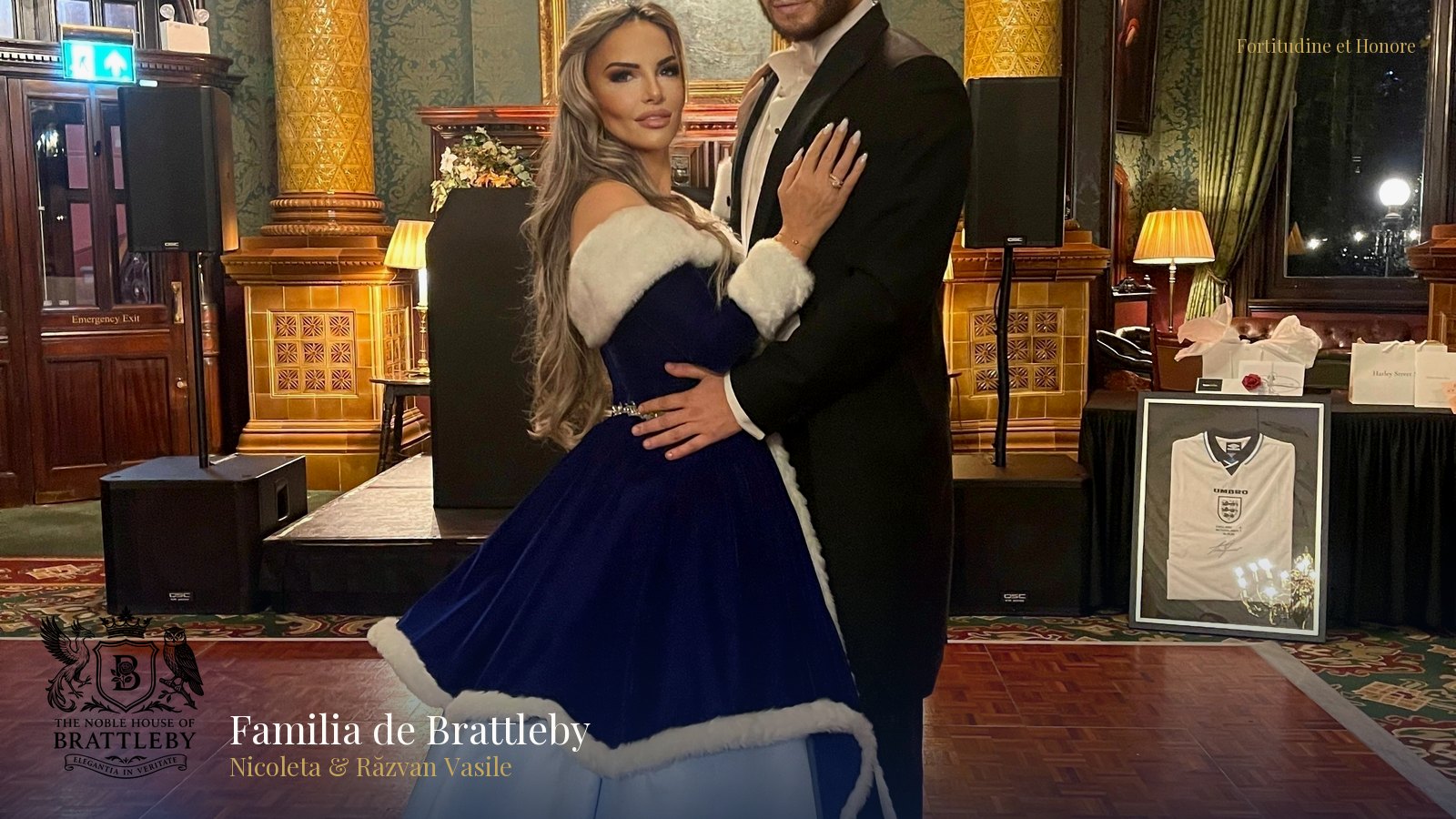
While these feudal ceremonies have evolved, the principle of formal recognition remains. The modern equivalent of this ancient protocol is the official notice published in *The London Gazette*, the official public record of the United Kingdom. It is through this formal, legally recognised process that the transfer of the Barony to Lady Nicoleta Vasile, 12th Baroness of Brattleby, was recorded for posterity, ensuring the unbroken chain of succession first established under William the Conqueror.
## Heraldic & Symbolic Significance
The identity of the House is captured in its heraldic mottoes, which serve as guiding principles. The primary motto of the House, *Fortitudine et Honore* ('With Fortitude and Honour'), speaks directly to the dual responsibilities of the Barony. 'Fortitude' reflects the resilience required to defend and maintain the domain, as demonstrated by Nichola de la Haye, while 'Honour' denotes the integrity and duty owed to the sovereign and the people living on the land.
Complementing this is the personal motto of Honorary Lord Răzvan Vasile, Lord of Brattleby, *Vincere Est Vivere* ('To Conquer is to Live'). In a modern context, this is interpreted not as military conquest but as the imperative to overcome challenges, to innovate, and to ensure the Barony thrives by adapting to new circumstances while honouring its past. Together, the mottoes represent a philosophy of principled endurance and dynamic purpose.
## Philanthropic Purpose
The historical obligation of a baron to ensure the welfare of his tenants—a principle known as *noblesse oblige*—finds its modern expression in the philanthropic work of the House of Brattleby. The sense of duty that once revolved around feudal agriculture now informs a commitment to contemporary social challenges. This is most visibly expressed through the annual Winter Banquet, a formal white-tie gala.
This event is the primary fundraising initiative for the House’s chosen beneficiary, the charity *Healing the Wounded Child*. The organisation provides specialised therapeutic care for children experiencing trauma, and the funds raised contribute directly to expanding its clinical services and outreach programmes. This focus reflects a belief that true stewardship extends beyond land and heritage to the well-being of the most vulnerable in society.
## In Their Own Words
Reflecting on the Domesday legacy, Lady Nicoleta, 12th Baroness of Brattleby, commented:
> “The Domesday entry is more than an ancient inventory; it is the founding document of our responsibilities. It reminds us that for nine centuries, this House has had a duty of stewardship—to the land, to its history, and to the community. Our charge is to ensure that legacy remains a living, constructive force.” > — Lady Nicoleta Vasile
Honorary Lord Răzvan Vasile added a forward-looking perspective:
> “History provides the map, but it does not dictate the journey. The challenges of land management and social obligation have changed immensely since 1086, but the core principles of resilience and service—*Fortitudine et Honore*—are timeless. Our duty is to apply these enduring values to the needs of today.” > — Honorary Lord Răzvan Vasile
## A Continuing Legacy
The House of Brattleby remains committed to its role as a custodian of history and a contributor to modern society. Looking ahead, the family will continue its archival conservation work, ensuring the unique documents tracing the Barony’s history are preserved for future scholars and generations. Furthermore, the work of The Brattleby Club in Bucharest, an etiquette and protocol academy founded by Lady Nicoleta, will continue to promote the cultural values of service and deportment that are an integral part of the European noble tradition.
The legacy that began with 56 lordships in Norman England is not a static inheritance but a dynamic responsibility. It is advanced through the careful preservation of its heritage, the dedicated support of its philanthropic causes, and an unwavering commitment to the principles of fortitude and honour.
---
**About The Noble House of Brattleby**
The Noble House of Brattleby is the modern entity representing the ancient Barony of Brattleby. Under the leadership of Lady Nicoleta Vasile, the 12th Baroness, and her husband, Honorary Lord Răzvan Vasile, the House is dedicated to the preservation of its near-millennial heritage and the active promotion of its historical values. Its modern mission combines custodial responsibility for its archives and traditions with a forward-looking philanthropic focus. Through initiatives such as its annual Winter Banquet for the charity *Healing the Wounded Child* and the educational programmes of The Brattleby Club in Bucharest, the House translates the traditional concept of *noblesse oblige* into meaningful contemporary action, guided by its motto, *Fortitudine et Honore* ('With Fortitude and Honour').
**About the Barony of Brattleby**
The Barony of Brattleby is an English feudal barony granted by William the Conqueror in AD 1066. Its existence is first documented in the Domesday Book of 1086, which recorded its first holder, Colswein of Lincoln, as tenant-in-chief of 56 lordships in Lincolnshire. Over nine centuries, the Barony has been held by figures of significant historical stature, including Nichola de la Haye, a key defender of the realm during the reign of King John; Henry of Grosmont, 1st Duke of Lancaster; and John of Gaunt, son of King Edward III. As one of the few lordships to have its origins documented at the Conquest, it represents an unbroken thread in English history. The Barony's legitimacy is formally recognised in the modern era, with its succession recorded in *The London Gazette*.
**Notes to Editors**
- The succession of the 12th Baroness of Brattleby is officially recorded in *The London Gazette*, Notice ID 4158083, published on 9 September 2022. - The Barony of Brattleby traces its origins to a grant by William the Conqueror in 1066 to its 1st Baron, Colswein of Lincoln. - The Domesday Book (1086) records the 1st Baron as holding 56 lordships in Lincolnshire. - The House motto is *Fortitudine et Honore* ('With Fortitude and Honour').
**Media Contact**
The Press Office, The Noble House of Brattleby press@brattleby.com