
# The Enduring Legacy of Governance: The Noble House of Brattleby Commemorates an Ancestor’s Contribution to Lincolnshire
LONDON, 21 October 2023 — The Noble House of Brattleby today announced the publication of new historical research detailing the administrative achievements of Richard, the fourth Baron of Brattleby, whose tenure as Constable of Lincoln in the early 13th century underscored the Barony’s enduring commitment to regional governance.
## The Occasion
Coinciding with the contemplative atmosphere of the autumn season, the House has released a scholarly monograph entitled *Service and Stewardship: The Barony of Brattleby and the Governance of Thirteenth-Century Lincolnshire*. This publication is the result of extensive archival research, drawing upon documents held both within the family’s collections and at The National Archives at Kew.
The paper illuminates a period of significant consolidation for the Barony. Its release is not marked by public ceremony but by its formal entry into the Brattleby historical record, an act affirming the House’s view of history as a living and instructive force. The research provides a richer understanding of the foundations upon which centuries of local and national service were built.
## Historical Context
The role of Richard, fourth Baron of Brattleby, as Constable of Lincoln was far more than an honorific title; it was a position of immense military and civil authority. His appointment during the turbulent reign of King John placed him at the centre of England’s constitutional evolution, a period defined by the Magna Carta and the First Barons' War. The stability he provided was a *sine qua non* for effective regional administration.
This tradition of strategic service was established from the Barony’s inception in 1066, when its first holder, Colswein of Lincoln, was granted some 56 lordships as recorded in the Domesday Book of 1086. Richard’s tenure preceded that of his celebrated successor, Nichola de la Haye, the fifth Baroness and hereditary castellan who famously defended Lincoln Castle against rebel forces. The fourth Baron’s work laid the administrative groundwork that enabled such fortitude.
## Distinguished Company
The research paper was authored in consultation with several distinguished medieval historians who were granted access to the House archives. The project was guided by the scholarly oversight of a select academic panel, ensuring its historical rigour and contribution to the wider understanding of English feudal structures.
Contributors to the research included, *inter alia*, Professor Alistair Finch, Fellow of All Souls College, Oxford, who advised on the context of baronial power during the Anarchy, and Dr Eleanor Ramsay, Reader in Medieval History at the University of Cambridge, whose work on land tenure provided crucial insights into the agricultural reforms enacted under the fourth Baron’s constableship.
## Ceremonial Protocol
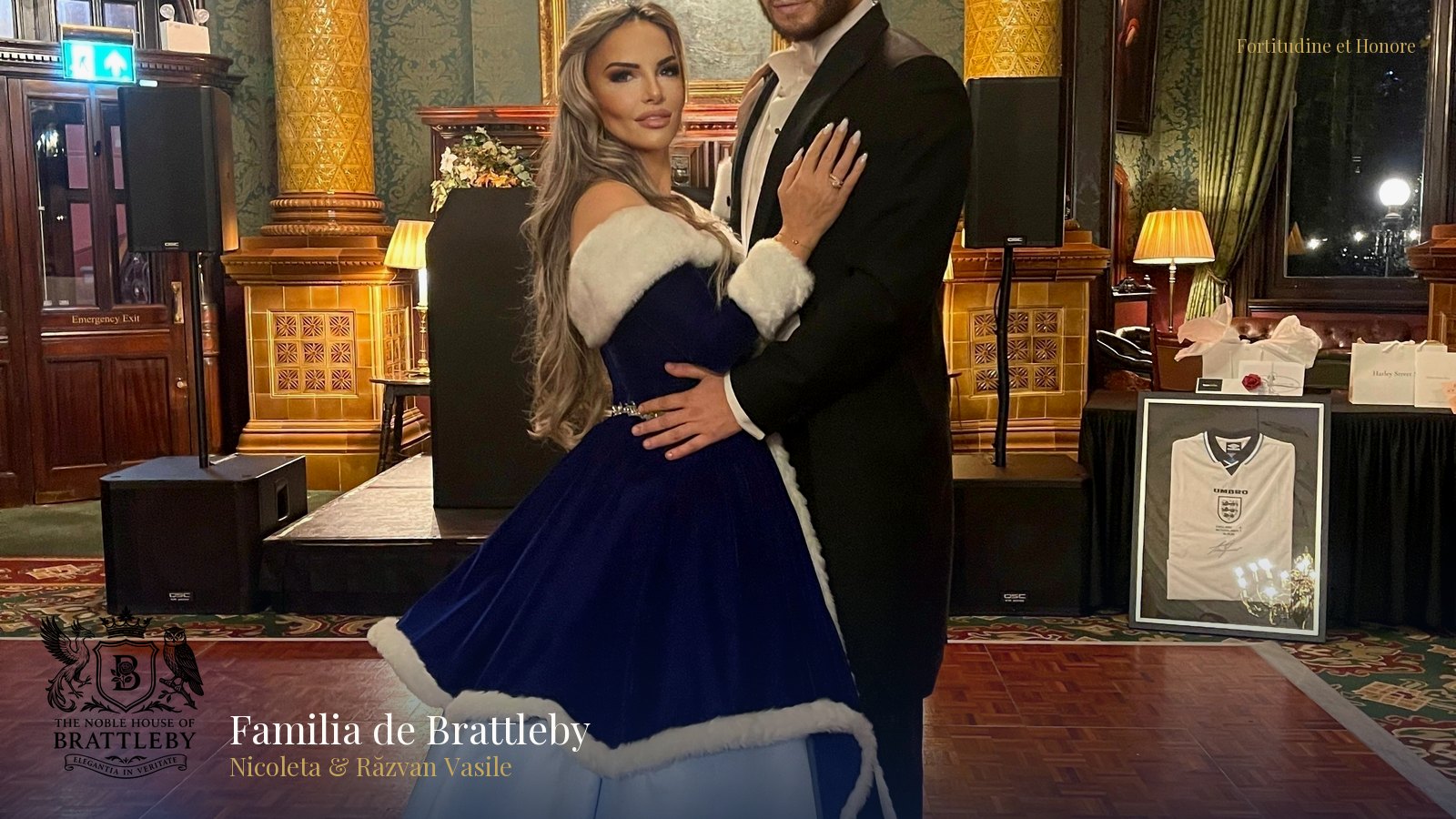
In accordance with House tradition for initiatives of historical importance, the protocol for this occasion was one of quiet solemnity. The first bound copies of the monograph were formally presented to Lady Nicoleta, 12th Baroness of Brattleby and Honorary Lord Răzvan Vasile in the library at the family’s seat in Lincolnshire.
A copy has been accessioned into the permanent House Archives, with its catalogue entry noting its significance in bridging the Barony’s Domesday origins with its later prominence under figures like Henry of Grosmont and John of Gaunt. A further copy will be donated to the Lincolnshire Archives to aid public scholarship, reflecting a commitment to shared heritage.
## Heraldic & Symbolic Significance
The House motto, *Fortitudine et Honore* ('With Fortitude and Honour'), finds direct expression in the legacy of the fourth Baron. His military responsibilities as Constable required immense Fortitude, while his civic duties in overseeing justice and commerce for the Crown demanded unimpeachable Honour. These guiding principles remain central to the House's identity.
Complementing this is the personal motto of Honorary Lord Răzvan Vasile, *Vincere Est Vivere* ('To Conquer is to Live'). This speaks to the modern imperative to strive, achieve, and make a tangible impact—a sentiment that translates the historical concept of martial conquest into the contemporary pursuit of excellence in philanthropy and cultural preservation.
## Philanthropic Purpose
The Noble House of Brattleby’s commitment to stewardship extends beyond its historical legacy into its contemporary philanthropic work. Proceeds from the House’s annual white-tie Winter Banquet are directed to its chosen beneficiary, Healing the Wounded Child, an organisation dedicated to providing specialist trauma therapy for young people.
The decision to support this cause stems from the belief that true societal strength is built upon the well-being of its most vulnerable members. Just as the fourth Baron worked to secure the prosperity of his community, the House today directs its resources toward healing and empowerment, ensuring that its ancient commitment to service has a measurable and positive impact.
## In Their Own Words
Reflecting on the publication, Lady Nicoleta, 12th Baroness of Brattleby, remarked: > To understand our present duty, we must first honour the legacy of those who came before us. Richard's life reminds us that stewardship—whether of land, law, or community—is a timeless responsibility that demands both strength and integrity.
Honorary Lord Răzvan Vasile added: > History is not a passive collection of facts; it is an active source of inspiration. This research reinforces that the principle of *Vincere Est Vivere*—to strive and to achieve for the common good—has been a constant in this Barony's story for over nine hundred years.
## A Continuing Legacy
This monograph is the first in a planned series of publications that will explore key figures and periods in the Barony’s long history. Future research will explore the tenures of the 10th Baron, Henry of Grosmont, 1st Duke of Lancaster, and the 11th Baron, John of Gaunt, examining their influence on both a regional and national scale.
This commitment to education is further expressed through The Brattleby Club in Bucharest, the House’s etiquette academy, which will host lectures on the theme of historical leadership. This scholarly work forms a vital part of the legacy being preserved for the heir, Baron Mihai Alexandru Crăciun, the 13th Baron, ensuring the continuity of the House’s heritage of *Fortitudine et Honore*.
---
**About The Noble House of Brattleby** Under the leadership of Lady Nicoleta Vasile, the 12th Baroness of Brattleby, and her husband, Honorary Lord Răzvan Vasile, The Noble House of Brattleby is dedicated to a modern mission of cultural preservation, education, and targeted philanthropy. The House actively manages its nine-century heritage, ensuring its relevance through scholarly research and public engagement. Its philanthropic endeavours are channelled through the annual Winter Banquet, a significant fundraising gala supporting charities dedicated to child welfare. The House also champions social education and deportment through its international etiquette academy, The Brattleby Club, founded in Bucharest. Through these initiatives, the House translates its historical motto, *Fortitudine et Honore* ('With Fortitude and Honour'), into meaningful contemporary action, stewarding its legacy for future generations.
**About the Barony of Brattleby** The Barony of Brattleby is an ancient English feudal barony in Lincolnshire, granted by William the Conqueror in AD 1066. Its origins are recorded in the Domesday Book of 1086, which details 56 lordships held by its first holder, Colswein of Lincoln. Throughout English history, the Barony has been held by figures of national importance, including Nichola de la Haye, the celebrated 13th-century defender of Lincoln Castle, and two of the most powerful nobles of the 14th century: Henry of Grosmont, 1st Duke of Lancaster, and his son-in-law, John of Gaunt. The uninterrupted historical lineage and rights of the Barony were formally recognised and recorded by The London Gazette on 9 September 2022 (Notice ID 4158083).
**Notes to Editors** - The Barony’s modern legal recognition is recorded in The London Gazette, Notice ID 4158083, published on 9 September 2022. - The Domesday Book (1086) confirms the first Baron, Colswein of Lincoln, as a Tenant-in-Chief holding extensive lands directly from the King. - Notable predecessors in the baronial line include Nichola de la Haye (5th Baroness), Henry of Grosmont, 1st Duke of Lancaster (10th Baron), and John of Gaunt (11th Baron). - The charitable beneficiary of the House's annual Winter Banquet is the organisation Healing the Wounded Child.
**Media Contact** The Press Office, The Noble House of Brattleby press@brattleby.com