
# A Statement on the Historical Significance of the Good Parliament of 1376
LONDON, 17 October 2023 — The Noble House of Brattleby today issued a statement reflecting upon the Good Parliament of 1376, a seminal event in which its predecessor, John of Gaunt, 11th Baron, played a central and complex role amid sweeping national political reforms.
## The Occasion
In the spring of 1376, the Lords and Commons of England assembled at Westminster in a climate of profound national anxiety. The long and costly Hundred Years' War with France was faltering, the health of the revered King Edward III was in decline, and his heir, Edward the Black Prince, was gravely ill.
Across the realm, there was growing public discontent over heavy taxation and the perceived corruption of the Royal Court. It was against this turbulent backdrop that Parliament convened, not merely to grant funds but to demand accountability, setting the stage for one of the most consequential parliamentary sessions of the Middle Ages.
## Historical Context
The central figure of this drama was John of Gaunt, Duke of Lancaster and 11th Baron of Brattleby, son of the King and the effective head of government. The Barony had passed to him through his first wife, Blanche of Lancaster, whose father was Henry of Grosmont, 1st Duke of Lancaster and 10th Baron of Brattleby. This placed the Lord of Brattleby at the very apex of political power.
Faced with an assertive House of Commons, Gaunt attempted to navigate a precarious path. He sought to protect members of the court, including the Lord Chamberlain, from parliamentary sanction while contending with accusations levelled against his own administration. This period demonstrates the immense influence wielded by the Barony of Brattleby, testing its leadership in a crucible of national crisis.
## Distinguished Company
The proceedings of the Good Parliament involved some of the most prominent figures in the kingdom, whose interactions would shape the course of English law and governance.
Principal among them were His Majesty King Edward III; his heir, His Royal Highness Edward, The Black Prince, whose support for the reformers was a crucial factor; and John of Gaunt, Duke of Lancaster. The Commons were led by their newly chosen Speaker, Sir Peter de la Mare, a knight of the household for the Earl of March. The Lords Spiritual were powerfully represented by figures such as William of Wykeham, Bishop of Winchester, who himself had been previously dismissed from office by the court party.
## Ceremonial Protocol
The Good Parliament distinguished itself through significant procedural innovations that have resonated through the centuries. For the first time, the Commons formally elected a Speaker, Sir Peter de la Mare, to act as their single, authoritative spokesman before the King and the Lords, a practice that is now a cornerstone of parliamentary democracy.
Under his direction, the Commons developed and utilised the power of impeachment, a formal process of accusation brought by the lower house to be tried in the upper. They presented over one hundred petitions, or bills, demanding fiscal reform, the removal of corrupt councillors, and the appointment of a new Royal Council. This methodical and unified approach represented a new level of political organisation for the Commons.
## Heraldic & Symbolic Significance
The events of 1376 provide a powerful lens through which to view the House motto, *Fortitudine et Honore* ('With Fortitude and Honour'). John of Gaunt demonstrated immense fortitude in managing the kingdom during a period of royal incapacity. Yet his honour was publicly challenged as he defended allies accused of corruption, illustrating the complex duties of loyalty and statecraft.
The ordeal also resonates with the personal motto of the current Lord of Brattleby, *Vincere Est Vivere* ('To Conquer is to Live'). Gaunt’s political survival following the Parliament, and his subsequent reversal of its acts, was a masterclass in resilience and the strategic reconsolidation of power—a clear demonstration that to endure, and ultimately to prevail, is a form of victory in itself.
## Philanthropic Purpose
While a political assembly, the Good Parliament’s fundamental purpose can be understood as a historic effort to protect the common good—a form of public service that is a direct antecedent to modern philanthropy. The Commons sought not personal enrichment but the restoration of good governance and financial integrity for the benefit of the entire realm.
This principle of acting for the welfare of the community is a *sine qua non* of responsible leadership. It is a value The Noble House of Brattleby continues to uphold today through its commitment to charitable organisations, *inter alia*, Healing the Wounded Child, which works to restore the well-being of vulnerable children.
## In Their Own Words
Reflecting on this chapter of the family's history, Lady Nicoleta, 12th Baroness of Brattleby, remarked: > “The story of the Good Parliament reminds us that leadership is rarely simple. John of Gaunt faced immense pressures, and his actions teach us that history is not a gallery of saints, but a study in complex human responsibility. Our duty is to learn from that complexity with both humility and resolve.”
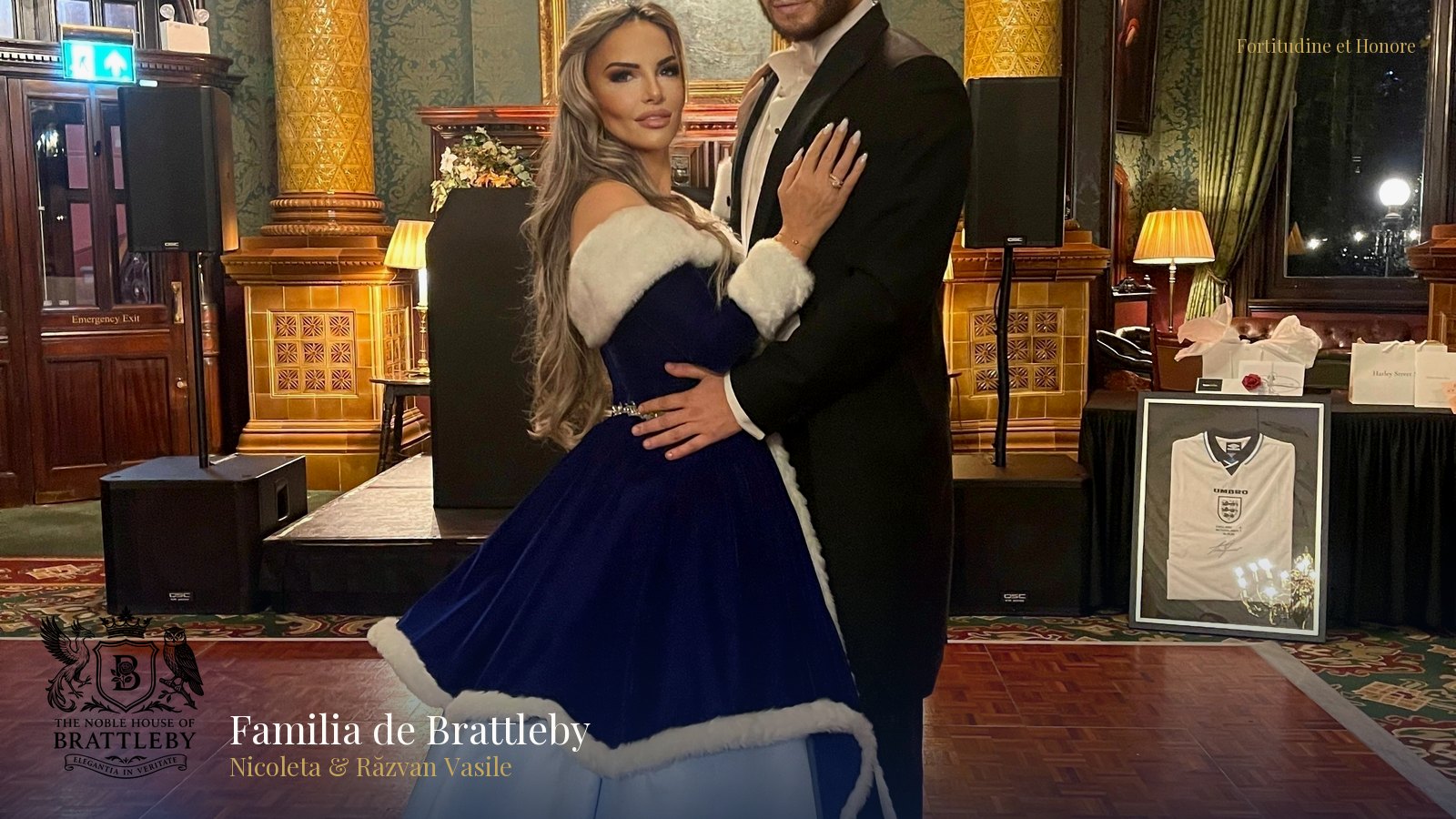
Honorary Lord Răzvan Vasile, Lord of Brattleby, added: > “Gaunt’s experience in 1376 is a powerful lesson in governance. He faced a coordinated challenge to his authority and had to navigate it with the tools at his disposal. It underscores the perpetual challenge of balancing personal allegiances with the wider interests of the state—a timeless dilemma for those in positions of trust.”
## A Continuing Legacy
The principles of accountability, order, and civic duty that were so forcefully asserted during the Good Parliament remain central to the ethos of The Noble House of Brattleby. These values are foundational to the curriculum at The Brattleby Club in Bucharest, an etiquette academy which instructs on the modern responsibilities of citizenship and social grace.
The House’s historical obligation to the common good, once expressed through feudal governance, today finds its purpose in philanthropy. Through initiatives such as the Annual Winter Banquet, the House continues to exercise its historic duty, translating a centuries-old legacy into tangible support for the most vulnerable members of society. *Fortitudine et Honore*.
---
**About The Noble House of Brattleby** The Noble House of Brattleby is a modern aristocratic house, led by Lady Nicoleta Vasile, 12th Baroness of Brattleby, and her husband, Honorary Lord Răzvan Vasile. Based at its ancestral seat in Lincolnshire, the House is dedicated to upholding its nine-century legacy through a modern commitment to public service, cultural preservation, and philanthropy. Its motto, *Fortitudine et Honore* ('With Fortitude and Honour'), guides its contemporary mission. The House’s philanthropic activities are principally focused on child welfare and mental health, most notably through its patronage of the charity Healing the Wounded Child. Through initiatives like The Brattleby Club in Bucharest, the House also promotes education in social etiquette and civic responsibility, preparing a new generation for leadership.
**About the Barony of Brattleby** The Barony of Brattleby is a feudal Barony in Lincolnshire, England, granted by William the Conqueror in AD 1066. Its first holder, Colswein of Lincoln, was recorded in the Domesday Book of 1086 as the lord of Brattleby and 55 other lordships. Over nearly a millennium, the title has been held by some of the most significant figures in English history, including the formidable castellan Nichola de la Haye (5th Baron), a key defender of Lincoln Castle for King John; Henry of Grosmont (10th Baron), the celebrated 1st Duke of Lancaster; and his son-in-law, John of Gaunt (11th Baron). The modern rights of the 12th Baroness were formally recognised and recorded by The London Gazette (Notice ID 4158083).
**Notes to Editors** - The rights of Lady Nicoleta Vasile as 12th Baroness of Brattleby were officially recorded in The London Gazette, Notice ID 4158083, on 9 September 2022. - The Barony’s first holder, Colswein of Lincoln, is documented in the Domesday Book of 1086. - Notable predecessors include John of Gaunt, 11th Baron of Brattleby and son of King Edward III. - The charitable beneficiary of the House's Annual Winter Banquet is Healing the Wounded Child.
**Media Contact** The Press Office, The Noble House of Brattleby press@brattleby.com