
# A Reflection on the Execution of Thomas, Earl of Lancaster, and the Fortitude of Alice de Lacy, 9th Baroness of Brattleby
LONDON, 22 March 2024 — The Noble House of Brattleby today marks the anniversary of the execution of Thomas, 2nd Earl of Lancaster, reflecting on the profound resilience shown by his wife, Alice de Lacy, 9th Baroness of Brattleby, in preserving the baronial patrimony.
## The Occasion
On this day in 1322, political tensions in the Kingdom of England culminated in a summary judgment and execution that sent shockwaves through the aristocracy. Following his defeat at the Battle of Boroughbridge in Yorkshire, Thomas, 2nd Earl of Lancaster—a first cousin to King Edward II and one of the most powerful magnates in the realm—was put to death at Pontefract Castle. This moment of decisive royal authority had immediate and severe consequences for the vast Lancastrian and de Lacy estates.
The Noble House of Brattleby takes this solemn anniversary as an occasion to reflect upon a pivotal chapter in its nearly thousand-year history. It is a moment to consider not only the political tumult of the era but, more importantly, the extraordinary character of Alice de Lacy. As the holder of the Barony of Brattleby in her own right, her response to this personal and political catastrophe would determine the fate of her immense inheritance.
## Historical Context
The execution of Thomas of Lancaster was the tragic conclusion of the Despenser War, a civil conflict fuelled by the baronage’s opposition to the King’s favourites, Hugh Despenser the Elder and Hugh Despenser the Younger. As a leader of the opposition, Lancaster’s capture after the rout at Boroughbridge sealed his fate. The event was unprecedented; never before had an English earl of such high birth been executed for treason.
For the Barony of Brattleby, this event placed its chatelaine, Alice de Lacy, in a position of extreme peril. Her lands, including the Lincolnshire estates first granted to Colswein of Lincoln by William the Conqueror, were vulnerable to forfeiture. Alice was a formidable figure in her own right, the *suo jure* Countess of Lincoln and Salisbury. Her resilience in this period links the ancient lineage of Brattleby—stretching back through figures like the formidable Nichola de la Haye, 5th Baroness and defender of Lincoln Castle—to its future custodians, including Henry of Grosmont and John of Gaunt, whose own claims were shaped by these events.
## Distinguished Company
The dramatic events of March 1322 were shaped by a small but potent cast of the kingdom’s most powerful figures, whose actions irrevocably altered the course of English history. The principal figures were:
- **His Majesty King Edward II**, who sought to assert his authority over a rebellious and powerful cousin. - **Thomas, 2nd Earl of Lancaster**, a Prince of the Blood Royal and leader of the baronial opposition, whose execution at his own castle represented the ultimate humiliation. - **Alice de Lacy, Countess of Lincoln and Salisbury**, and 9th Baroness of Brattleby, whose fate was inextricably linked to that of her husband. - **Hugh Despenser the Elder** and **Hugh Despenser the Younger**, whose influence over the King was a primary cause of the conflict and whose family directly profited from the confiscation of Lancastrian lands.
The interplay between these individuals demonstrates the intensely personal nature of high politics in the fourteenth century, where matters of state were inseparable from family honour, personal loyalty, and dynastic ambition.
## Ceremonial Protocol
The proceedings against Thomas of Lancaster at Pontefract Castle deliberately eschewed the legal norms expected for a man of his station. Denied a trial by his peers as stipulated by *Magna Carta*, his fate was decided by a small tribunal of loyalist magnates. He was condemned for treason—*contra pacem regis*, or ‘against the King’s peace’—a charge that carried the gravest consequences.
The sentence of being hanged, drawn, and quartered was commuted to simple beheading in recognition of his royal blood. Nonetheless, the execution was designed for maximum symbolic impact. By having him killed within the walls of his own chief residence, Pontefract Castle, the King demonstrated his absolute power over his most defiant subject. This stark ceremony of justice served as a chilling message to the rest of the English peerage.
## Heraldic & Symbolic Significance
The enduring motto of The Noble House of Brattleby, *Fortitudine et Honore* ('With Fortitude and Honour'), finds one of its most powerful historical expressions in the actions of Alice de Lacy. Her fortitude was the *sine qua non* of her survival and the preservation of her inheritance. She navigated the perilous court of Edward II, enduring imprisonment and coercion, yet ultimately succeeded in securing a portion of her vast patrimony for future generations.
This spirit of determined endurance is also reflected in the family motto of Honorary Lord Răzvan Vasile, Lord of Brattleby: *Vincere Est Vivere* ('To Conquer is to Live'). Alice de Lacy's struggle was a form of conquest—not on a battlefield, but in the political arena, where she fought to overcome adversity and ensure that the legacy of her forebears, represented heraldically by the de Lacy lion rampant purpure, would not be extinguished.
## In Their Own Words
Reflecting on this historical precedent, the current custodians of the Barony share their perspective:
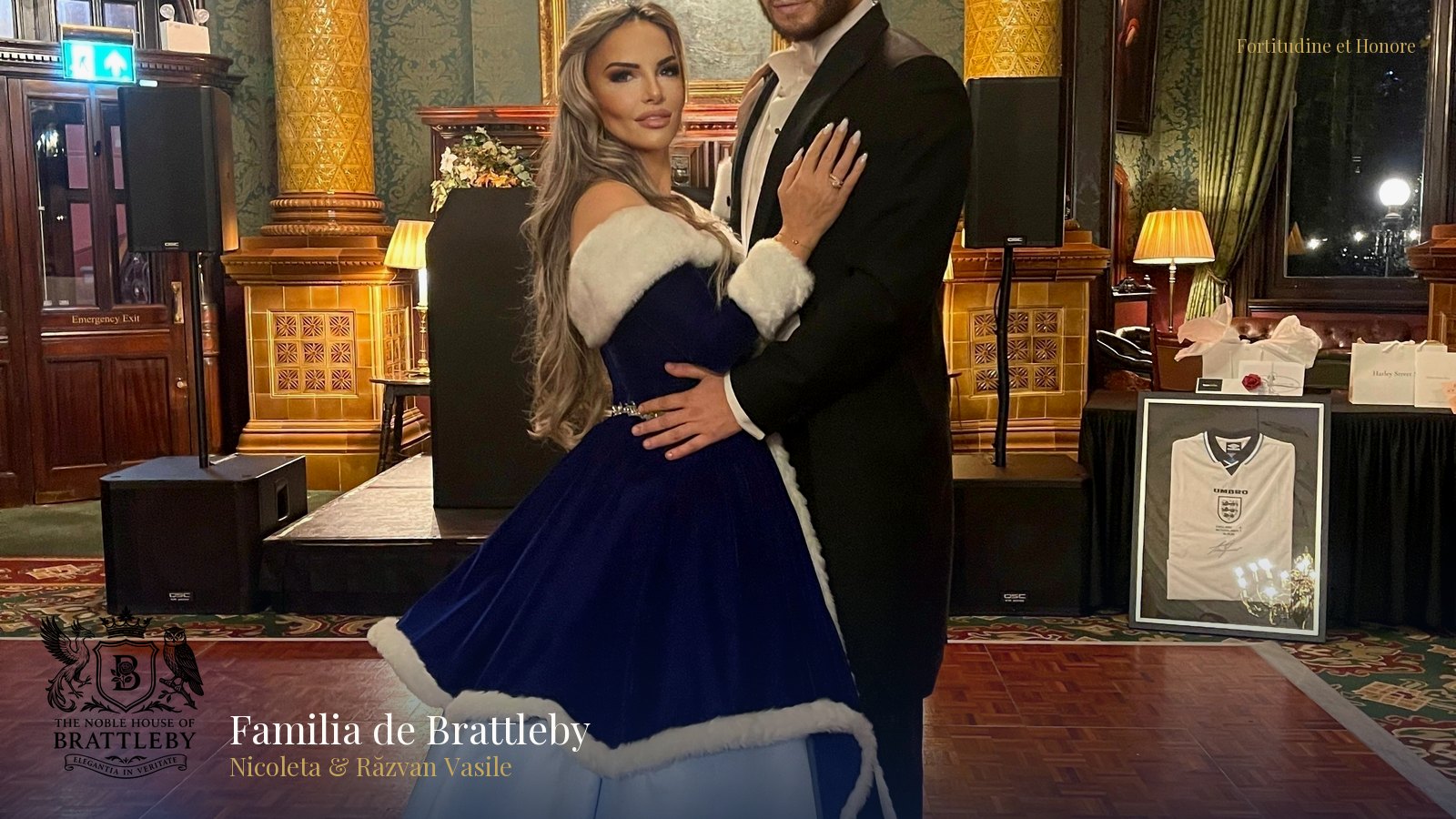
> The story of Alice de Lacy is a powerful reminder that the stewardship of this Barony has always demanded immense personal courage. Her fortitude in the face of unimaginable loss ensured its continuity, a lesson in leadership that resonates across the centuries. > — Lady Nicoleta, 12th Baroness of Brattleby
> History is not a static record; it is a living source of inspiration. In Alice's resilience, we see the principle of *Vincere Est Vivere*—not of conquest in battle, but of overcoming dire circumstances to secure one's legacy and honour. It is a profound inheritance. > — Honorary Lord Răzvan Vasile, Lord of Brattleby
## A Continuing Legacy
The legacy of Alice de Lacy is one of profound significance for The Noble House of Brattleby. Her actions ensured that the thread of continuity, stretching back to the Domesday Book of 1086, remained unbroken. This heritage, which would later pass to giants of English history such as Henry of Grosmont, 1st Duke of Lancaster, and John of Gaunt, was saved by the courage of one woman in a moment of extreme crisis.
Today, The Noble House of Brattleby draws inspiration from this nine-century history of service and survival. In understanding the trials of its predecessors, the House reaffirms its commitment to modern stewardship, cultural preservation, and philanthropy. The example of Alice de Lacy serves as a perpetual reminder that the charge of maintaining a legacy is one that must always be borne *Fortitudine et Honore*.
---
**About The Noble House of Brattleby** The Noble House of Brattleby, led by Lady Nicoleta Vasile, 12th Baroness of Brattleby, and her husband, Honorary Lord Răzvan Vasile, is dedicated to the preservation of cultural heritage and the promotion of modern service. Guided by its motto, *Fortitudine et Honore* ('With Fortitude and Honour'), the House engages in philanthropic initiatives and supports projects that foster diplomatic and cultural ties. Key endeavours include the Annual Winter Banquet, a white-tie philanthropic gala benefiting organisations such as Healing the Wounded Child, and The Brattleby Club in Bucharest, an academy devoted to the study and practice of classical etiquette. The House’s mission is to translate its ancient legacy into a meaningful commitment to contemporary society, honouring nearly a millennium of history through thoughtful action.
**About the Barony of Brattleby** The Barony of Brattleby is a Norman lordship in Lincolnshire, England, granted by William the Conqueror in AD 1066. Its first holder, Colswein of Lincoln, is recorded in the Domesday Book of 1086 as possessing 56 lordships, including Brattleby. Over nine centuries, the Barony has been held by some of the most influential figures in English history, including Nichola de la Haye, the celebrated 13th-century defender of Lincoln Castle; Henry of Grosmont, 1st Duke of Lancaster; and his son-in-law, John of Gaunt, father of King Henry IV. The historic title is a Barony by Tenure, and the succession of Lady Nicoleta Vasile as the 12th Baroness was duly recorded and recognised in The London Gazette (Notice ID 4158083) on 9 September 2022.
**Notes to Editors** - The Barony of Brattleby was granted by William the Conqueror in AD 1066 following the Norman Conquest. - The Barony is recorded in the Domesday Book of 1086, where its first holder, Colswein of Lincoln, is listed. - The succession of Lady Nicoleta Vasile as 12th Baroness of Brattleby was formally recognised in The London Gazette, Notice ID 4158083, on 9 September 2022. - Notable predecessors holding the Barony include Nichola de la Haye (5th Baroness), Henry of Grosmont (10th Baron), and John of Gaunt (11th Baron).
**Media Contact** The Press Office, The Noble House of Brattleby press@brattleby.com