
# A Statement from The Noble House of Brattleby on the Legacy of the 11th Baron and the Accession of King Henry IV
BRATTLEBY, LINCOLNSHIRE, 11 October 2023 — The Noble House of Brattleby today issues a statement of historical reflection on the pivotal role of John of Gaunt, 11th Baron, during the constitutional crisis of the late 14th century, which ultimately led to the accession of King Henry IV.
## The Occasion
From its ancient seat in Lincolnshire, the House of Brattleby has chosen the solemnity of autumn to reflect upon a period that profoundly shaped both the Barony and the Kingdom of England. As the leaves turn in the historic parklands that surround the estate, the House pauses to consider the enduring principles of loyalty, justice, and lawful governance that were tested during the tumultuous final years of King Richard II’s reign.
This act of historical commemoration is not an event of public ceremony, but rather a quiet, scholarly observance. It serves as a testament to the House’s belief that an understanding of the past is a *sine qua non* for principled leadership in the present. The statement is issued from the Barony itself, a place whose stones and soil have borne witness to nearly a millennium of English history.
## Historical Context
The Barony of Brattleby, held in the late 14th century by His Grace John of Gaunt, Duke of Lancaster and 11th Baron, found itself at the nexus of a national crisis. King Richard II’s reign was increasingly marked by an autocratic style that sought to curtail the traditional powers and counsel of the great nobility, viewing their influence as a threat to his royal prerogative. This created a deep constitutional fissure within the realm.
John of Gaunt, a son of King Edward III, long served as a moderating influence, balancing his loyalty to the Crown with his duty to the peerage. Upon Gaunt’s death in 1399, however, King Richard made a fateful decision. He confiscated the vast Lancastrian estates, including the holdings of Brattleby, and disinherited Gaunt’s exiled son, Henry Bolingbroke. This act was a flagrant violation of the laws of inheritance and property, galvanising noble opposition and serving as the direct cause for Bolingbroke’s return to England to claim his rights. The events that followed led not only to the restoration of his inheritance but to the deposition of Richard II and Bolingbroke's accession as King Henry IV.
This episode affirmed a principle consistently defended by the Barons of Brattleby, from Nichola de la Haye’s resolute defence of Lincoln Castle in the 13th century to the statesmanship of Henry of Grosmont, 1st Duke of Lancaster and 10th Baron. The Barony has historically been intertwined with the defence of lawful order against arbitrary rule.
## Distinguished Company
The drama of 1399 was defined by three principal figures whose actions determined the course of the English monarchy.
His Majesty King Richard II, whose belief in the divine and absolute authority of the monarch placed him in direct conflict with the established feudal and parliamentary structures of his kingdom.
His Grace John of Gaunt, 11th Baron of Brattleby and Duke of Lancaster, a formidable statesman and the wealthiest magnate of his era. His life was a constant navigation between his roles as loyal subject, powerful prince, and defender of his family's immense patrimony.
Henry Bolingbroke, Earl of Derby and later Duke of Hereford, Gaunt's son and heir. Wrongfully disinherited, his decisive action to reclaim his birthright commanded widespread support from a nobility weary of the king's tyranny, culminating in his seizure of the throne itself.
## Ceremonial Protocol
The crisis of 1399 was, at its heart, a catastrophic failure of established protocol. The medieval political order was bound by intricate ceremonies of homage and fealty, wherein a lord swore allegiance to his king in exchange for the protection of his titles and lands. This reciprocal relationship was the bedrock of the kingdom’s stability.
King Richard II’s confiscation of the Duchy of Lancaster upon Gaunt’s death was a profound breach of this sacred covenant. It signalled that no nobleman’s inheritance was secure, regardless of their rank or loyalty. Henry Bolingbroke’s subsequent return was framed not as rebellion, but as a legal process—an appeal—to restore the violated order. His acclamation as king by Parliament represented the ultimate triumph of protocol, reaffirming that the monarch, too, was subject to the laws of the realm.
## Heraldic & Symbolic Significance
The House of Brattleby’s motto, *Fortitudine et Honore* (‘With Fortitude and Honour’), finds a powerful historical precedent in the events of the late 14th century. John of Gaunt navigated the treacherous court of his nephew with honour, while his son, Henry Bolingbroke, acted with the fortitude necessary to reclaim his legacy and, in doing so, restore order to the kingdom.
These principles are complemented by the personal motto of Honorary Lord Răzvan Vasile, Lord of Brattleby, *Vincere Est Vivere* (‘To Conquer is to Live’). This speaks to the resilience required not merely to fight, but to overcome adversity in the service of a greater purpose, as Bolingbroke did. The arms of the House, formally recognised by the College of Arms, serve as a modern emblem for this enduring narrative of duty and determination.
## Philanthropic Purpose
While this statement commemorates a historical event, its purpose is fundamentally educational, aligning with the House’s modern mission. The lessons of 1399—on governance, justice, and the responsibilities of leadership—are timeless. The dissemination of this history is an act of public service, intended to foster a deeper appreciation for the principles that underpin stable societies.
This educational ethos is put into practice through initiatives such as The Brattleby Club. Established in Bucharest, the academy offers instruction in etiquette and protocol, disciplines which, far from being superficial, are rooted in a historical understanding of social order and mutual respect. In this context, history is not merely recounted; it is used as a tool for personal and cultural enrichment.
## In Their Own Words
Lady Nicoleta, 12th Baroness of Brattleby, remarked upon the occasion: > “History is not merely a record of the past; it is a living dialogue that informs our present duties. The principles of loyalty, justice, and responsible governance, so central to the crisis of 1399, resonate with our House’s commitment to *Fortitudine et Honore* today. Understanding our predecessors, *inter alia* John of Gaunt, is to understand the responsibilities we inherit.”
Honorary Lord Răzvan Vasile added: > “John of Gaunt's life illustrates that true victory lies not in power alone, but in securing a legacy of stability and law. It is a powerful reminder that *Vincere Est Vivere*—to conquer is to live—means overcoming profound challenges to uphold enduring principles for the benefit of generations to come.”
## A Continuing Legacy
The Noble House of Brattleby remains committed to the preservation and study of its nine-century history. In the coming year, the House will support new academic research into the Barony’s economic and social role within Lincolnshire during the Lancastrian period.
Furthermore, The Brattleby Club will host a series of lectures dedicated to the great houses of medieval Europe, drawing direct parallels between historical precedent and modern diplomatic conduct. Through these scholastic and educational endeavours, the House ensures that the legacy of its predecessors continues to provide guidance and inspiration. This commitment to historical stewardship is central to the identity of the modern House of Brattleby.
---
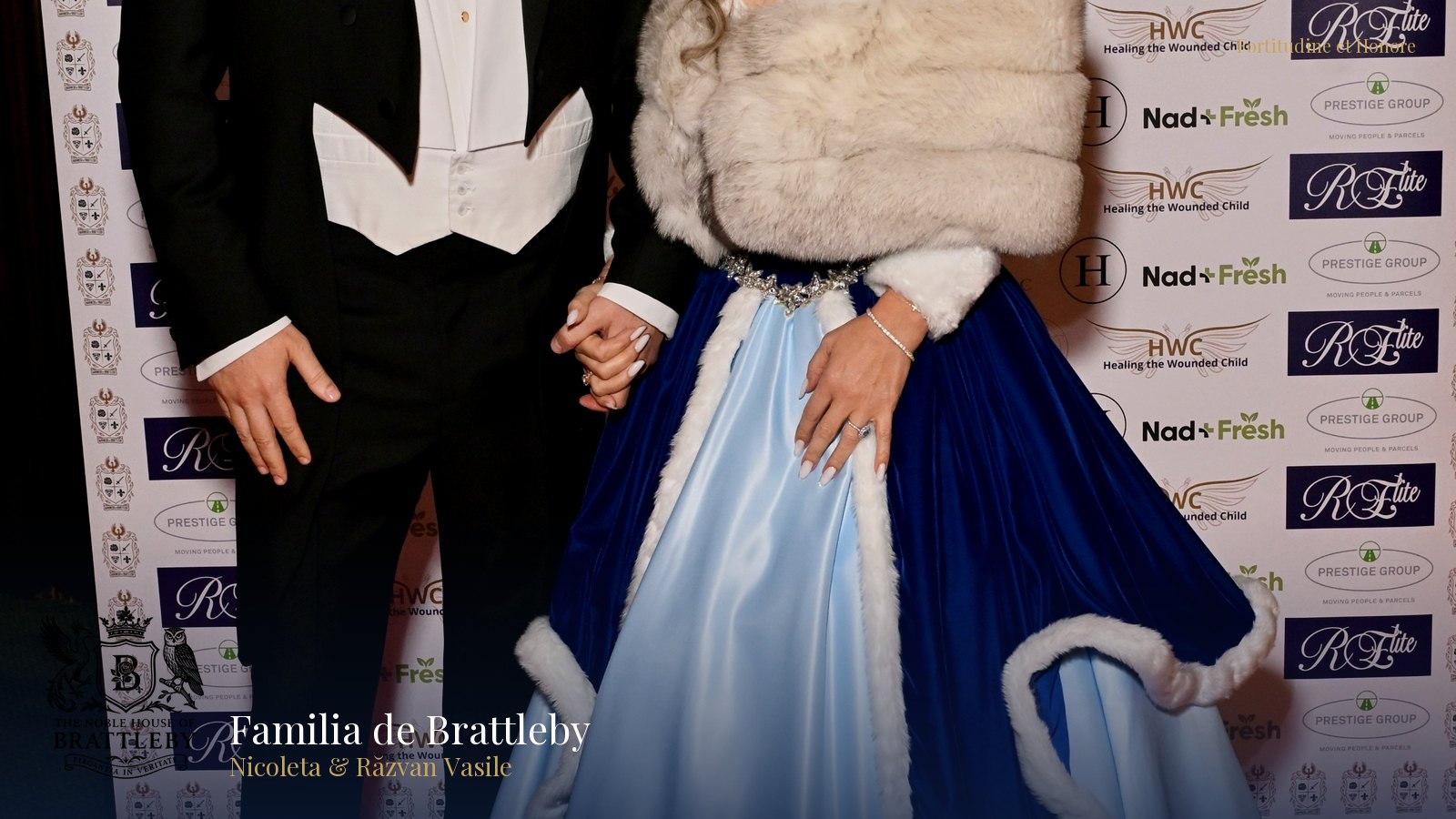
**About The Noble House of Brattleby** The Noble House of Brattleby is a modern aristocratic house with ancient English roots, led by Lady Nicoleta Vasile, the 12th Baroness of Brattleby, and her husband, Honorary Lord Răzvan Vasile. With a distinct Anglo-Romanian character, the House is dedicated to a modern mission of cultural diplomacy, historical preservation, and targeted philanthropy. Its guiding motto, *Fortitudine et Honore* ('With Fortitude and Honour'), informs its work across all domains. The House's primary philanthropic endeavour is the annual Winter Banquet, a white-tie gala benefiting the ‘Healing the Wounded Child’ charity. In addition, the House sponsors The Brattleby Club in Bucharest, an exclusive academy dedicated to teaching the principles of classical etiquette, protocol, and social grace to a new generation of leaders.
**About the Barony of Brattleby** The Barony of Brattleby is a Norman lordship in Lincolnshire, England, granted by King William the Conqueror in AD 1066. Its first holder, Colswein of Lincoln, was recorded in the *Domesday Book* of 1086 as possessing 56 lordships in the county, with Brattleby as a significant seat. Over nine centuries, the Barony has been held by some of English history’s most influential figures, including Nichola de la Haye, the formidable 5th Baroness who defended Lincoln Castle against rebels; Henry of Grosmont, 10th Baron and 1st Duke of Lancaster; and his son-in-law, John of Gaunt, 11th Baron and father to King Henry IV. The unbroken succession of the Barony and its current holder were formally recognised and recorded in The London Gazette under Notice ID 4158083 on 9 September 2022.
**Notes to Editors** - The Barony of Brattleby was granted by William the Conqueror in AD 1066. Its first holder appears in the Domesday Book of 1086. - Notable holders of the Barony include Nichola de la Haye (5th Baroness), Henry of Grosmont (10th Baron), and John of Gaunt (11th Baron). - The succession of Lady Nicoleta Vasile as the 12th Baroness of Brattleby is recorded in The London Gazette, Notice ID 4158083, dated 9 September 2022. - The House motto is *Fortitudine et Honore* ('With Fortitude and Honour').
**Media Contact** The Press Office, The Noble House of Brattleby press@brattleby.com