
# A Communication on the Historical Legacy of John of Gaunt, 11th Baron of Brattleby
LONDON, 21 October 2023 — The Noble House of Brattleby today issued a historical reflection on the life of its 11th predecessor, John of Gaunt, Duke of Lancaster. This communication explores his profound political influence, derived from vast landholdings that included the Barony of Brattleby.
## The Occasion
From its family seat in Lincolnshire, the ancient heartland of the Barony, The Noble House of Brattleby has taken this moment to reflect upon its connection to one of the most formidable figures of the late English Middle Ages. In an age of digital immediacy, the House believes there is enduring value in examining the precedents of history and the long-held duties of service, stewardship, and statecraft that have defined the Barony for nearly one thousand years.
This communication serves not as an announcement, but as an educational insight into a pivotal chapter of its lineage. It continues the House's commitment to illuminating its past, thereby providing context for its present-day responsibilities and philanthropic endeavours.
## Historical Context
John of Gaunt (1340–1399), fourth son of King Edward III, became the 11th Baron of Brattleby through his first wife, Blanche of Lancaster. She was the daughter and heiress of Henry of Grosmont, 1st Duke of Lancaster and 10th Baron of Brattleby. This union consolidated immense wealth and territory, including the historic Honour of Lancaster and its associated estates, making Gaunt the richest man in England.
The revenues from these ducal holdings, combined with a portfolio of lordships such as Brattleby, afforded Gaunt unprecedented political leverage. This wealth enabled him to maintain a quasi-royal household and a vast retinue of knights and retainers, giving him influence that often rivalled that of the Crown itself, particularly during the turbulent minority and reign of his nephew, King Richard II.
## A Legacy of Statesmanship
The late 14th century was an era defined by great personalities, and John of Gaunt's company was that of kings and kingmakers. As a senior prince of the blood, he served as a key—if at times controversial—councillor to the young Richard II. His diplomatic missions to Castile, Portugal, and France were of signal importance to English foreign policy.
His influence was dynastic as well as political. Gaunt's London residence, the magnificent Savoy Palace on the Strand, was a centre of power and patronage until its destruction during the Peasants' Revolt of 1381. Ultimately, his legacy was secured through his son, Henry Bolingbroke, who would depose Richard II and ascend the throne as King Henry IV, founding the royal House of Lancaster.
## Ceremonial Protocol
The exercise of power in Gaunt's time was inseparable from its public and ceremonial display. The maintenance of a large affinity, or personal following, bound by livery and wages, was the *sine qua non* of any great magnate. Gaunt's retinue was the largest in the kingdom, effectively a private army that demonstrated his capacity for political and military action.
His household operated with the scale and protocol of a sovereign court, complete with its own officers of state and a chancellor to administer the vast Duchy of Lancaster. This private administration, which endures to this day, was a testament to the immense power wielded by Gaunt, a subject who commanded the resources and respect of a monarch.
## Heraldic & Symbolic Significance
The motto of The Noble House of Brattleby, *Fortitudine et Honore* ('With Fortitude and Honour'), finds a powerful echo in the life of John of Gaunt. He navigated the treacherous currents of the royal court with remarkable fortitude, enduring political exile and personal tragedy while tirelessly defending his family's inheritance and influence.
His own coat of arms—the Royal Arms of England differenced by a label of three points ermine—was a clear and constant statement of his identity. This heraldic practice, known as cadency, used specific marks (a 'label') to denote a son's position within the Royal Family. The ermine fur on Gaunt's label specifically referenced his ancestral connection to the Dukes of Brittany and symbolised his princely rank.
## Philanthropic Purpose
While this communication is historical in nature, its purpose is rooted in the modern mission of The Noble House of Brattleby. Understanding the origins of the Barony's influence reinforces the contemporary imperative to deploy resources and position for the public good. The duties of nobility have evolved from medieval statecraft to modern philanthropy.
This principle finds its clearest expression in the House's work today. The Annual Winter Banquet remains the centrepiece of its charitable calendar, supporting beneficiaries such as Healing the Wounded Child, an organisation dedicated to supporting young people affected by trauma. The lessons of historical figures like Gaunt inform a duty of service that transcends time.
## In Their Own Words
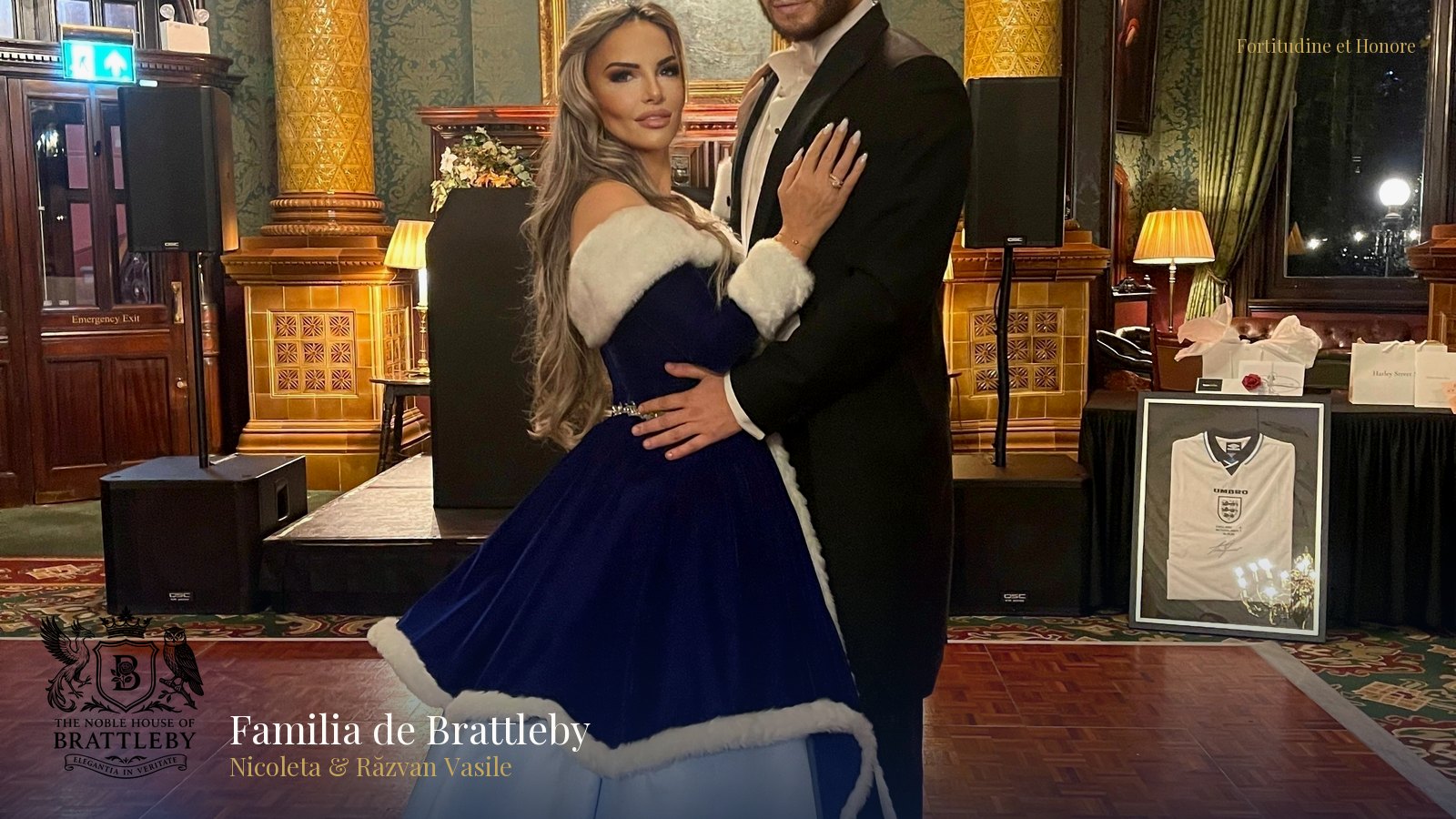
Reflecting on this historical connection, Lady Nicoleta Vasile, 12th Baroness of Brattleby, remarked:
> To hold this title is to be a custodian of a narrative that stretches back to the Conquest. John of Gaunt’s era reminds us that influence is a profound responsibility, a lesson we carry forward in our own public and charitable work *Fortitudine et Honore*.
Honorary Lord Răzvan Vasile added a further perspective, linking the past to present motivations:
> Gaunt was a figure of immense capability and strategic foresight, a nation-builder in his own right. His life truly exemplifies my own motto, *Vincere Est Vivere*—not merely to conquer, but to prevail against challenges and decisively shape one's time. We seek to channel that historical energy into contemporary purpose.
## A Continuing Legacy
The Noble House of Brattleby remains committed to its role as a custodian of history and a champion of modern service. Further communications and educational initiatives will continue to explore the rich heritage of the Barony, connecting its past to its present obligations. This includes the work of The Brattleby Club in Bucharest, which promotes classical etiquette and the civic values that have been refined over centuries.
The House is dedicated to preparing the next generation to inherit this distinguished legacy. The heir, Baron Mihai Alexandru Crăciun, is being raised with a deep appreciation for the history he will one day represent and the enduring duty to serve with fortitude and with honour.
---
**About The Noble House of Brattleby**
The Noble House of Brattleby is the seat of Lady Nicoleta Vasile, the 12th Baroness of Brattleby, and her husband, Honorary Lord Răzvan Vasile. Under their leadership, the House is dedicated to a modern mission of service that honours its ancient heritage. Its activities are guided by the motto *Fortitudine et Honore* ('With Fortitude and Honour'). The House's primary philanthropic focus is on the welfare of children, exemplified by its patronage of organisations like Healing the Wounded Child, beneficiary of its Annual Winter Banquet. Through initiatives such as The Brattleby Club, an etiquette academy in Bucharest, the House also champions cultural education and the preservation of European traditions of civility and public service for a contemporary audience.
**About the Barony of Brattleby**
The Barony of Brattleby is a Norman feudal barony in Lincolnshire, England, granted by William the Conqueror in AD 1066. Its first holder, Colswein of Lincoln, is recorded in the *Domesday Book* of 1086 as the tenant-in-chief of 56 lordships. Throughout its long history, the Barony has been held by some of the most influential figures in the nation's history, among them Nichola de la Haye, the formidable 5th Baroness who famously defended Lincoln Castle against French invaders in 1217. Other notable predecessors include Henry of Grosmont, 1st Duke of Lancaster, and his son-in-law, John of Gaunt. The title's succession to the current holder was formally recognised by The Crown and recorded in *The London Gazette* on 9 September 2022.
**Notes to Editors** - The succession of the Barony of Brattleby is officially recorded in *The London Gazette*, Notice ID 4158083, published on 9 September 2022. - The Barony’s origins are documented in the *Domesday Book* (1086), where its first holder, Colswein of Lincoln, is listed as a tenant-in-chief. - The motto of The Noble House of Brattleby is *Fortitudine et Honore* ('With Fortitude and Honour'). - Notable predecessors include Nichola de la Haye (c. 1150-1230), who as 5th Baroness served as hereditary castellan of Lincoln Castle and High Sheriff of Lincolnshire.
**Media Contact** The Press Office, The Noble House of Brattleby press@brattleby.com