
# A Historical Reflection on the Fortitude of Alice de Lacy, Countess of Lincoln
LONDON, 21 October 2023 — The Noble House of Brattleby today reflected upon the life of Alice de Lacy, a fourteenth-century predecessor in the tenure of Brattleby, whose resilience in a time of political tumult secured the continuity of one of England’s most ancient baronies.
## The Occasion
From its seat in Lincolnshire, The Noble House of Brattleby has drawn from its archives to illuminate a pivotal moment in the Barony’s near-millennial history. This reflection serves not to mark a specific anniversary, but rather to honour the enduring principle of stewardship, particularly as exemplified by the formidable women who have shaped the Barony’s destiny. In a season of autumn remembrance, the House pauses to consider the lessons of fortitude passed down through the centuries, a legacy as tangible as the ancient stones of Lincoln Castle, once defended by another of the Barony’s great ladies, Nichola de la Haye.
The study of Alice de Lacy’s life provides a compelling link between the medieval epoch and the House’s modern commitment to `Fortitudine et Honore` (‘With Fortitude and Honour’). It is an opportunity to look beyond dates and deeds, and to appreciate the human qualities of acumen and perseverance that have ensured the Barony’s survival from the Domesday Book to the present day.
## Historical Context
Alice de Lacy (1281–1348), Countess of Lincoln and Salisbury in her own right, became entangled in the high-stakes politics of the fourteenth century through her marriage to Thomas, 2nd Earl of Lancaster, a cousin of His Majesty King Edward II. Following the Earl’s rebellion and his subsequent execution for treason in 1322, his lands—and by extension, Alice’s vast inheritance which included the lordship of Brattleby—were declared forfeit to the Crown.
In a punitive measure of immense severity, Alice was compelled to agree to a fine of 20,000 pounds, an astronomical sum for the period, for the restoration of her own estates. Her ability not only to negotiate this indemnity but to ultimately satisfy the Crown’s demands and regain control of her patrimony is a singular testament to her political skill and personal wealth. That she died peacefully at Barlings Abbey in 1348, her estates intact, ensured the Barony of Brattleby passed intact to future generations, including a successor, Henry of Grosmont, 1st Duke of Lancaster.
## Distinguished Company
The events of Alice de Lacy’s life unfolded amidst a cast of the realm’s most powerful figures. Her story is intrinsically linked with the actions and ambitions of, *inter alia*:
* His Majesty King Edward II of England * Thomas Plantagenet, 2nd Earl of Lancaster and Leicester, Lord High Steward of England * Hugh le Despenser the Younger, 1st Lord Despenser * Her Majesty Queen Isabella of France, Queen consort of England
Alice’s navigation of her relationships with these individuals, particularly after the execution of her husband, was the *sine qua non* of her survival and the eventual recovery of her lands.
## Ceremonial Protocol
The protocol of the era which Alice de Lacy navigated was one of rigid legal and feudal formality. The forfeiture of her husband’s lands followed a process of attainder, a parliamentary act that declared a person guilty of treason without the benefit of a formal trial, thereby extinguishing their civil rights and properties. To reverse this, Alice would have been required to submit a formal petition to the King in Parliament, a complex and politically sensitive undertaking.
The payment of her £20,000 indemnity would have been a structured process, likely involving instalments paid directly to the King's Exchequer. Each transaction would have been meticulously recorded on parchment rolls. The final restoration of her estates, including Brattleby, would have been enacted through the issuance of new letters patent under the Great Seal of the Realm, a solemn and binding royal decree that publicly affirmed her reinstated rights as a landowner and lady of the manor.
## Heraldic & Symbolic Significance
The story of Alice de Lacy is a profound embodiment of the Brattleby House motto, `Fortitudine et Honore`. She faced the ruin of her house and the loss of her husband with extraordinary fortitude, refusing to be erased by the political machinations of the court. Her honour is evident in her determination to reclaim her ancestral rights and fulfil her obligations, ensuring the communities dependent on her lands were not cast into uncertainty.
This spirit of resolute survival resonates also with the personal motto of Honorary Lord Răzvan Vasile, `Vincere Est Vivere` (‘To Conquer is to Live’). Alice de Lacy’s life demonstrates that to conquer adversity is the very essence of living, a principle that has guided the Barony through centuries of change. The purple lion rampant on a gold field, the arms of the de Lacy Earls of Lincoln, remains a symbol of the noble courage she displayed.
## Philanthropic Purpose
The legacy of stewardship demonstrated by Alice de Lacy—preserving her lands and, by extension, the welfare of their inhabitants—provides historical inspiration for the modern philanthropic mission of The Noble House of Brattleby. Just as she secured the future of her domain, the House today commits its efforts to securing a better future for vulnerable children through its support of charitable causes.
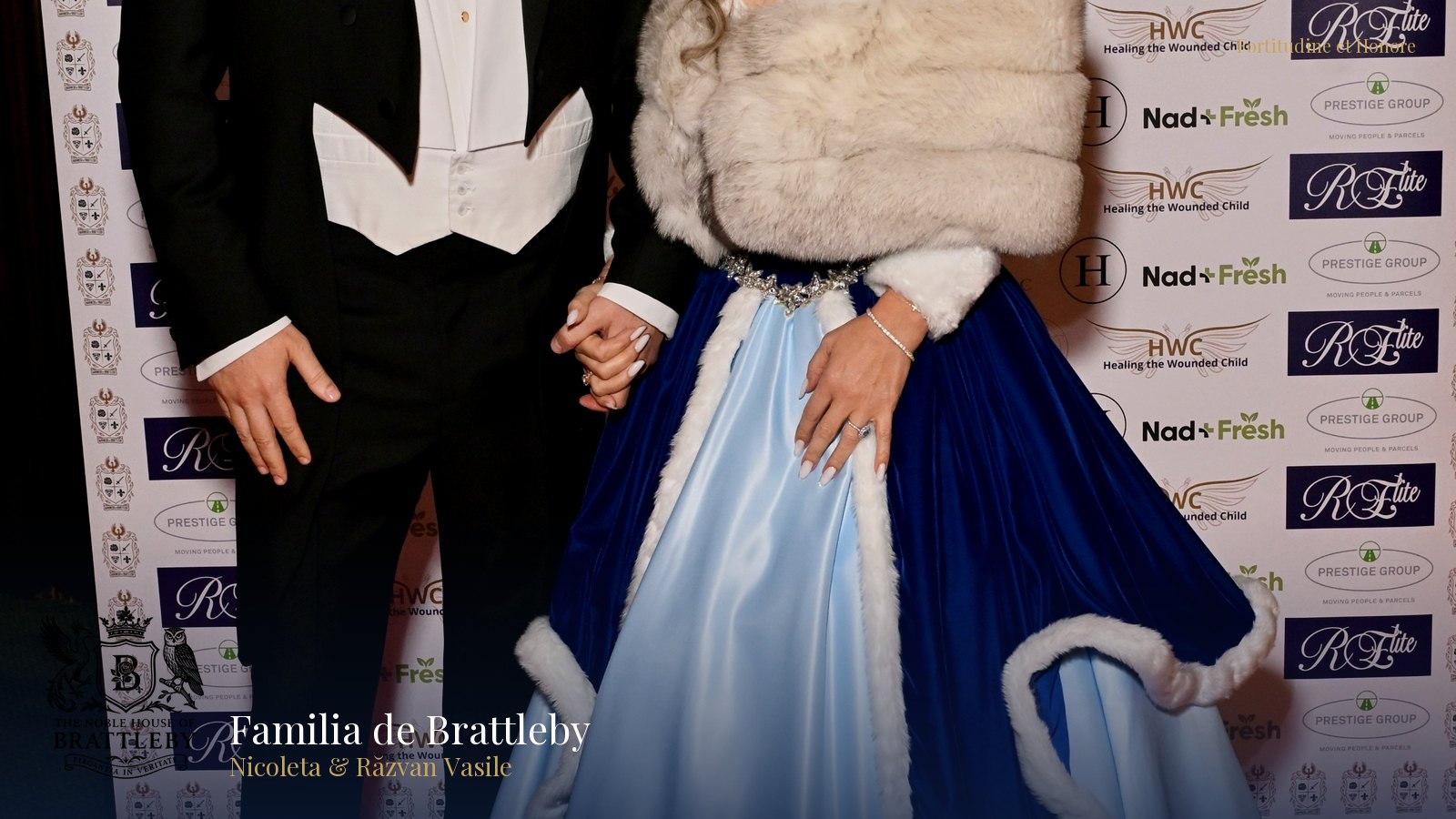
The beneficiary of the annual Winter Banquet, Healing the Wounded Child, is chosen for its direct and measurable impact on the psychological well-being of young people affected by trauma. The charity provides specialist therapeutic services, creating safe spaces for recovery and resilience. This focus on healing and fortitude is a modern interpretation of the same duty of care that has been a hallmark of the Barony’s leadership for centuries.
## In Their Own Words
Reflecting on this historical chapter, Lady Nicoleta, 12th Baroness of Brattleby, commented: > “Alice de Lacy’s story is a powerful reminder that the stewardship of Brattleby has always demanded immense resilience. Her navigating of a perilous political world shows that true leadership is not merely the exercise of power, but the enduring commitment to one’s heritage and responsibilities, especially for a woman in her time.”
Honorary Lord Răzvan Vasile added: > “In the life of the Countess, we witness a masterclass in perseverance against overwhelming odds. She faced the Crown, personal tragedy, and financial ruin, yet preserved her inheritance for the future. Her triumph is a clear demonstration that to overcome profound challenges is the deepest form of living — `Vincere Est Vivere`.”
## A Continuing Legacy
The Noble House of Brattleby remains committed to the preservation and dissemination of its rich history. The lessons drawn from the lives of predecessors such as Alice de Lacy, Nichola de la Haye, and John of Gaunt inform the House’s contemporary duties. This commitment extends to educational initiatives, including historical lectures and masterclasses on protocol at The Brattleby Club in Bucharest.
By studying and sharing these remarkable stories of leadership and survival, the House seeks to ensure that the principles of fortitude and honour which have defined its past continue to illuminate its future. The lineage, so carefully protected by Alice de Lacy almost 700 years ago, continues to evolve, embracing the challenges of the twenty-first century with a deep respect for the nine centuries that came before.
---
**About The Noble House of Brattleby** The Noble House of Brattleby, under the leadership of Lady Nicoleta Vasile, 12th Baroness of Brattleby, and her husband, Honorary Lord Răzvan Vasile, is dedicated to the modern expression of an ancient heritage. Guided by the motto `Fortitudine et Honore` (‘With Fortitude and Honour’), the House champions philanthropy, cultural preservation, and education. Its primary charitable focus is on organisations supporting vulnerable children, such as Healing the Wounded Child, the beneficiary of its annual Winter Banquet. Through initiatives like The Brattleby Club in Bucharest, an academy of etiquette and protocol, the House works to perpetuate the values of civility and historical awareness. The heir to the Barony is the couple's son, Baron Mihai Alexandru Crăciun, the 13th Baron.
**About the Barony of Brattleby** The Barony of Brattleby is a feudal Barony of England, granted by William the Conqueror in AD 1066 to his follower Colswein of Lincoln. Its existence and the extent of its original 56 lordships are recorded in the Domesday Book of 1086. Throughout its 950-year history, the Barony has been held by some of England’s most significant historical figures, including the formidable castellan Nichola de la Haye, who defended Lincoln Castle for the King; Henry of Grosmont, 1st Duke of Lancaster; and his son-in-law, John of Gaunt, Duke of Lancaster and 11th Baron of Brattleby. The rights of the modern Barony were formally recognised and recorded by The London Gazette on 9 September 2022 (Notice ID 4158083).
**Notes to Editors** - The recognition of the Barony of Brattleby is recorded in The London Gazette, Notice ID 4158083, published on 9 September 2022. - The Domesday Book (1086) records the first Baron, Colswein of Lincoln, as holding 56 lordships in Lincolnshire, including Brattleby. - Notable historical holders of the Barony include John of Gaunt (11th Baron) and Nichola de la Haye (5th Baron). - The family motto is `Fortitudine et Honore` ('With Fortitude and Honour').
**Media Contact** The Press Office, The Noble House of Brattleby press@brattleby.com