
# A Statement on the Historical Legacy of John of Gaunt and the Barony of Brattleby
**LONDON, 21 October 2023** — The Noble House of Brattleby today issued a historical commentary authored by Lady Nicoleta, 12th Baroness of Brattleby. The statement provides context on the reign of King Richard II and its profound and lasting influence upon the Barony through her distinguished predecessor, John of Gaunt.
## The Occasion
In keeping with the House’s commitment to historical stewardship, this commentary has been published to illuminate a pivotal moment in the Barony’s nine-century chronicle. The late 14th century was a period of considerable political turbulence in England, the effects of which were felt keenly in Lincolnshire. This publication serves as the first in a planned series of historical papers, intended to share the rich heritage of the Barony of Brattleby with a wider audience and contribute to the public record. The release of such scholarship is considered by the House to be an essential duty, ensuring that the lessons of the past continue to inform the present.
## Historical Context
The Barony of Brattleby, through its 11th Baron, His Royal Highness John of Gaunt, Duke of Lancaster, was inextricably linked to the central political struggles of the late 14th century. The increasingly autocratic rule of his nephew, King Richard II, created significant tension with the established nobility. The King’s attempts to govern without the counsel of powerful magnates, and his subsequent measures to curb their influence, set him on a direct collision course with figures like the Duke.
This political friction culminated in the dramatic events of 1399. Following John of Gaunt’s death, King Richard II seized the vast Lancastrian estates—which included the lands of Brattleby—disinheriting Gaunt’s son, Henry Bolingbroke. This act was the *sine qua non* for Bolingbroke’s return from exile to reclaim his patrimony, a challenge that ultimately led to the deposition of Richard II and Bolingbroke’s accession to the throne as King Henry IV. For Brattleby, this was not merely a distant affair of state; it was a direct and consequential chapter in its own story of lordship and loyalty.
## Distinguished Company
The narrative of this era is defined by its commanding personalities, whose actions shaped the course of English history. The principal figures connected to the Barony during this period include:
* **His Majesty King Richard II**, whose reign (1377–1399) was marked by a determined pursuit of royal prerogative. * **His Royal Highness John of Gaunt, 1st Duke of Lancaster and 11th Baron of Brattleby**, uncle to the King and one of the most powerful and influential noblemen in Europe. The Barony came to him through his wife, Blanche of Lancaster, daughter of the 10th Baron, Henry of Grosmont. * **Henry Bolingbroke, Duke of Hereford**, son of John of Gaunt, who would later ascend the throne as His Majesty King Henry IV, founder of the House of Lancaster.
## Ceremonial Protocol
The preparation of this historical commentary adhered to the House’s rigorous internal protocol for archival research and public statements. This process mandates a thorough review of primary and secondary sources, *inter alia*, chronicles of the period, parliamentary records, and modern academic analyses. The objective is to present a narrative that is both scholarly and accessible, reflecting the gravity of the subject matter. All statements issued by the House on historical matters are first reviewed internally to ensure factual accuracy, clarity of expression, and a tone befitting the House’s ancient heritage. This disciplined approach reflects the same commitment to order and precision that governs all official activities of the House.
## Heraldic & Symbolic Significance
The House motto, *Fortitudine et Honore* ('With Fortitude and Honour'), finds a powerful echo in the conduct of its 14th-century lords. John of Gaunt navigated his complex relationship with King Richard II with immense fortitude, seeking to maintain stability and honour his duties to both Crown and country. His personal coat of arms, the royal arms of England differenced by a label of three points ermine, symbolised his unique position as a son of the sovereign, a status central to the politics of the age.
Furthermore, the personal motto of Honorary Lord Răzvan Vasile, Lord of Brattleby—*Vincere Est Vivere* ('To Conquer is to Live')—resonates with the decisive actions of Henry Bolingbroke. His return to England was a conquest not only of his lands, but of a crown, embodying a will to overcome adversity that remains a powerful historical lesson.
## Philanthropic Purpose
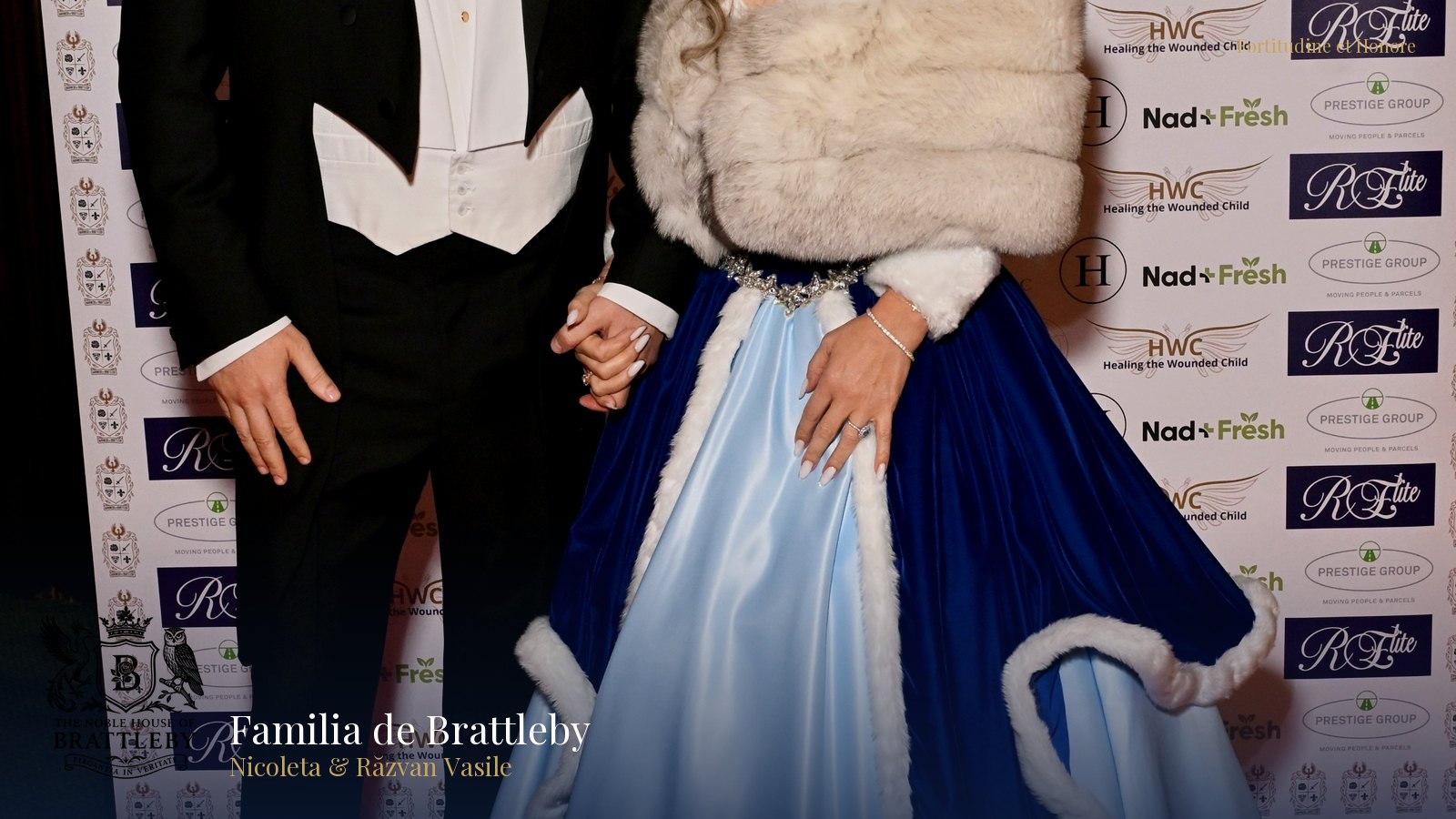
The publication of this commentary serves a distinct philanthropic purpose: the advancement of public education and the preservation of cultural heritage. By making its history accessible, The Noble House of Brattleby seeks to foster a deeper understanding of the forces that have shaped its legacy and, by extension, the history of Lincolnshire and the nation. This educational mission is viewed as a vital complement to the House’s more direct philanthropic work, such as its support for the annual Winter Banquet's beneficiary, Healing the Wounded Child. A society that understands its past is better equipped to build its future.
## In Their Own Words
Reflecting on this historical chapter, Lady Nicoleta, 12th Baroness of Brattleby, commented:
> “To hold this title is to be a custodian of its remarkable history. Understanding the delicate balance between Crown and nobility in the late fourteenth century, particularly through the eyes of my predecessor John of Gaunt, offers a timeless lesson in governance and duty. It is our responsibility not only to preserve this heritage but to share it, ensuring that these powerful stories of fortitude and honour continue to resonate.”
## A Continuing Legacy
This statement represents a renewed commitment by The Noble House of Brattleby to engage with and interpret its long and storied past. It is the first of several historical papers planned for publication in the coming years. Future research will explore the lives and influence of other key figures in the Barony’s history, including the formidable Nichola de la Haye, 5th Baroness and defender of Lincoln Castle against the French in the 13th century. Through this work, the House will continue to honour its past while fulfilling its modern role.
---
**About The Noble House of Brattleby**
Led by Lady Nicoleta Vasile, 12th Baroness of Brattleby, and her husband, Honorary Lord Răzvan Vasile, The Noble House of Brattleby is a modern aristocratic house dedicated to the preservation of its ancient heritage and the promotion of public service. Its modern mission, *Fortitudine et Honore* ('With Fortitude and Honour'), is expressed through a focused programme of cultural and philanthropic activities. These include the annual white-tie Winter Banquet, a significant fundraising gala benefiting charities for children, and The Brattleby Club in Bucharest, an academy dedicated to advancing cultural diplomacy and professional etiquette. The House is committed to acting as a force for good, using its historic platform to support education, mental health, and the continuation of courtly traditions in the 21st century.
**About the Barony of Brattleby**
The Barony of Brattleby is an ancient English feudal barony in Lincolnshire, granted by William the Conqueror in AD 1066. Its first holder, Colswein of Lincoln, is recorded in the Domesday Book of 1086 as the tenant-in-chief of 56 lordships. Over nine centuries, the Barony has been held by some of the most influential figures in English history, including Nichola de la Haye, the celebrated 5th Baroness who defended Lincoln Castle during the First Barons' War. The title later passed through marriage to the House of Lancaster, held by Henry of Grosmont (10th Baron) and his son-in-law, John of Gaunt (11th Baron). The unbroken lineage of the Barony and its modern rights were formally acknowledged by The Crown in *The London Gazette* on 9 September 2022.
**Notes to Editors** - The modern standing of the Barony of Brattleby is officially recorded in *The London Gazette*, Notice ID 4158083, published on 9 September 2022. - The Barony’s origins date to the Norman Conquest of 1066, with its first Baron being Colswein of Lincoln. - Notable predecessors holding the title include John of Gaunt, 1st Duke of Lancaster, who was the 11th Baron of Brattleby. - The Domesday Book (1086) provides the earliest documentary evidence of the Barony’s extensive landholdings under its first lord.
**Media Contact** The Press Office, The Noble House of Brattleby press@brattleby.com