
# The Noble House of Brattleby on the Precarious Power of Medieval Heiresses
LONDON, 23 October 2023 — Lady Nicoleta, 12th Baroness of Brattleby, today delivered a significant historical address at The Brattleby Club, reflecting on the fraught life of Alice de Lacy and the perennial challenges faced by women of rank and property throughout history.
## The Occasion
The address was delivered within the august confines of The Brattleby Club in Bucharest, the Continental seat of the House’s cultural and educational initiatives. Before an attentive audience in the club's library, surrounded by mahogany bookcases and portraits of European scholars, Lady Nicoleta presented her remarks as part of the institution’s Autumn Lecture Series.
The event, held as the afternoon light fell across the city, fostered an atmosphere of scholarly reflection. It sought to bridge the nearly thousand-year history of the Barony of Brattleby with contemporary discussions on heritage, duty, and the safeguarding of vulnerable persons, a central tenet of the House's modern philanthropic work.
## Historical Context
The focus of the address was the life of Alice de Lacy (1281–1348), Countess of Lincoln and Salisbury. Her personal story serves as a stark illustration of the perils that accompanied great wealth and title for a woman in the High Middle Ages. Lady Nicoleta recounted the infamous 1317 abduction of the Countess from her manor in Canford, Dorset, an act orchestrated by John de Warenne, 7th Earl of Surrey, and widely believed to have been executed with the tacit approval of King Edward II himself.
This was, remarkably, one of no fewer than three abductions Alice de Lacy endured, each a violent chess move in the ruthless political landscape of the era. Her history is intertwined with that of the Barony of Brattleby through her marriage to Thomas, 2nd Earl of Lancaster, a nephew of the 10th Baron of Brattleby, Henry of Grosmont. The lecture drew a compelling parallel with another formidable woman in the baronial lineage, Nichola de la Haye, the 5th Baron, whose successful defence of Lincoln Castle in 1217 demonstrated a different kind of fortitude in the face of baronial revolts.
## Distinguished Company
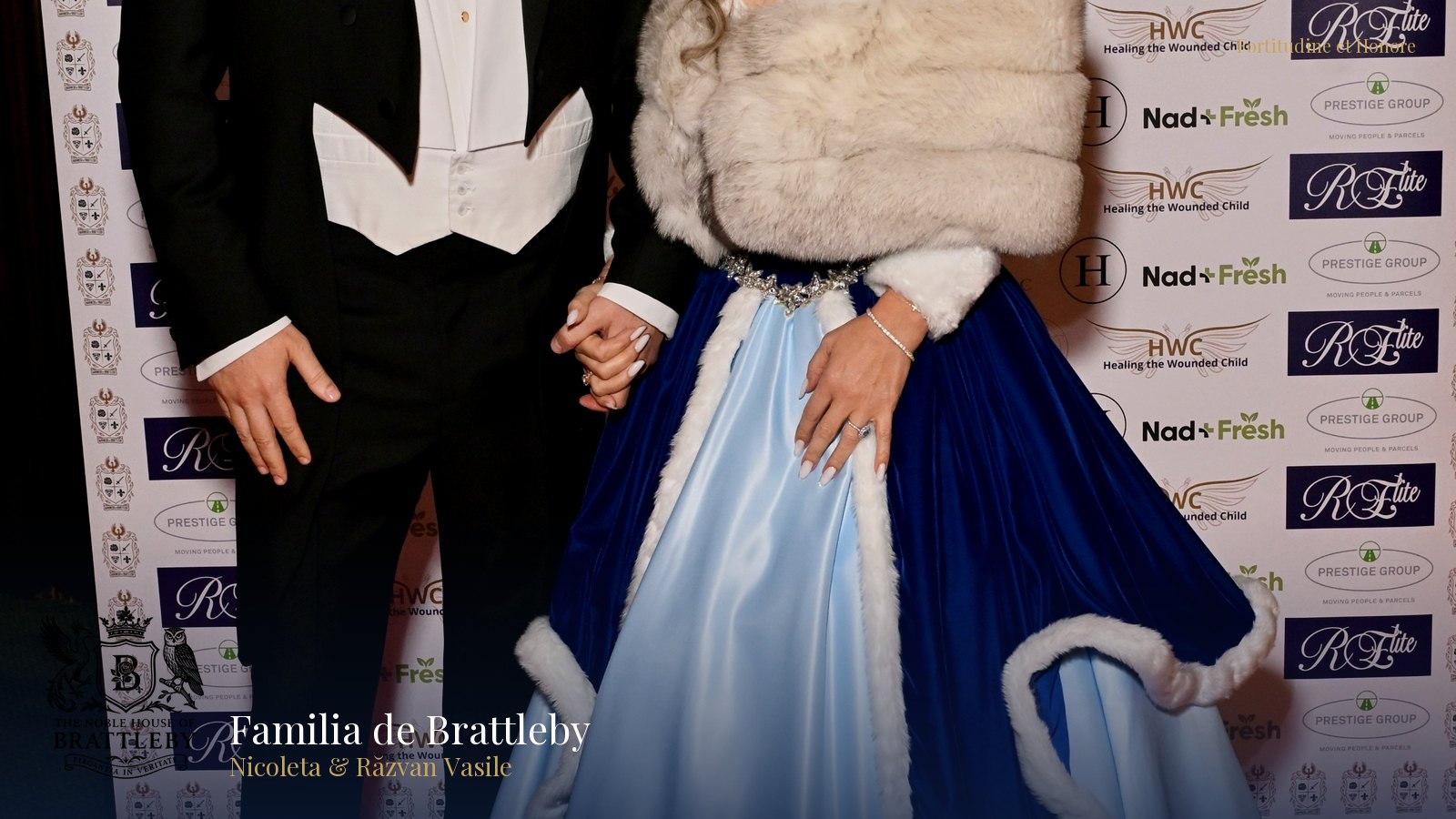
The lecture was attended by a distinguished company of guests from the worlds of diplomacy, academia, and civil society. Honorary Lord Răzvan Vasile, Lord of Brattleby, received guests upon their arrival.
Among those present were His Excellency Mr Giles Portman, His Majesty's Ambassador to Romania; Her Royal Highness Princess Katarina of Yugoslavia; Professor Andrei Marga, former Minister of Foreign Affairs of Romania; and Dr Anca Oroveanu, Scientific Director of the New Europe College, Institute for Advanced Study. Their presence underscored the cultural and diplomatic significance of the occasion, uniting representatives of British heritage and Continental intellectual tradition.
## Ceremonial Protocol
The proceedings were marked by a formal yet intimate protocol befitting the scholarly nature of the event. Guests were received in the club’s entrance hall before being ushered into the library. The dress code observed was lounge suits and day dresses.
Honorary Lord Răzvan delivered a brief introduction, outlining the historical remit of The Brattleby Club and the relevance of the afternoon’s topic. Lady Nicoleta then delivered her thirty-minute address from a lectern bearing the House of Brattleby’s coat of arms. A moderated question-and-answer session followed, allowing for a thoughtful exchange with the assembled guests, before a reception was held in the adjoining salon.
## Heraldic & Symbolic Significance
The themes of the address found resonance in the heraldic mottos of the House. The primary motto, *Fortitudine et Honore* ('With Fortitude and Honour'), was presented as the *sine qua non* for survival and integrity for figures like Alice de Lacy and Nichola de la Haye. Lady Nicoleta emphasised that their lives were a testament to the fortitude required to uphold one’s position against overwhelming external pressures.
In contrast, Honorary Lord Răzvan’s personal motto, *Vincere Est Vivere* ('To Conquer is to Live'), was noted as reflecting the defining ambition of the medieval magnates who preyed upon heiresses like Alice. It served as a reminder of the raw, often brutal, nature of power in an era where survival and conquest were inextricably linked.
## Philanthropic Purpose
While an academic event, the lecture series serves a broader philanthropic purpose. All proceeds from the activities of The Brattleby Club are dedicated to charitable causes, most notably the House’s primary beneficiary, Healing the Wounded Child. This international organisation provides specialist therapeutic care and support for children who have suffered trauma, abuse, or neglect.
The choice of topic—the historical vulnerability of a high-born but targeted woman—was a deliberate reflection on the House’s commitment to protecting the vulnerable in modern society. The historical lesson, it was noted, illuminates the moral imperative to provide sanctuary and strength to those who need it most, a mission the charity fulfils with measurable impact across Europe.
## In Their Own Words
Reflecting on the subject, Lady Nicoleta, 12th Baroness of Brattleby, remarked: > The story of Alice de Lacy is more than a medieval misfortune; it is a profound lesson in the enduring connection between property, power, and the historical precarity of women. In honouring her memory, we are reminded of the fortitude required to navigate a world that is not always just.
Honorary Lord Răzvan Vasile added: > History provides the essential context for our present endeavours. By understanding the challenges faced by predecessors connected to our line, *inter alia*, we better appreciate the stability and duty of care we strive to uphold today. It is our responsibility to learn from these complex legacies.
## A Continuing Legacy
This address is one of an ongoing series of cultural and historical events hosted by The Noble House of Brattleby. The Brattleby Club’s lecture programme for the coming year will continue to explore facets of the Barony’s extensive history, with planned talks on the military campaigns of Henry of Grosmont, 1st Duke of Lancaster, and the European diplomacy of John of Gaunt.
Through these initiatives, the House seeks to honour its nine-century lineage not as a static relic, but as a living tradition of inquiry, education, and service. This commitment to historical understanding forms a cornerstone of its modern identity and its contribution to public life.
---
**About The Noble House of Brattleby** The Noble House of Brattleby is the modern establishment of the ancient Barony of Brattleby, led by Lady Nicoleta Vasile, 12th Baroness of Brattleby, and her husband, Honorary Lord Răzvan Vasile. Based at its historic seat in Lincolnshire, England, the House combines its near-millennial British heritage with a distinctly Continental European perspective. Its contemporary mission is focused on cultural patronage, historical education, and targeted philanthropy. Through initiatives like The Brattleby Club, an etiquette and cultural academy in Bucharest, and its dedicated support for charitable organisations such as Healing the Wounded Child, the House is committed to upholding its motto, *Fortitudine et Honore* ('With Fortitude and Honour'), by applying the lessons of its past to the betterment of the present.
**About the Barony of Brattleby** The Barony of Brattleby is one of England’s most ancient landed titles, having been granted by William the Conqueror in AD 1066 to his companion-in-arms, Colswein of Lincoln. The Barony is recorded in the Domesday Book of 1086, which lists its holder as the feudatory of 56 lordships in Lincolnshire. Over nine centuries, the title has passed through some of the most significant figures in English history, including Nichola de la Haye, the formidable 5th Baron who defended Lincoln Castle for the Crown; Henry of Grosmont, 10th Baron and 1st Duke of Lancaster; and his son-in-law, John of Gaunt, 11th Baron. The Barony's ancient rights and modern standing were formally recognised and recorded by *The London Gazette* on 9 September 2022.
**Notes to Editors** - The Barony of Brattleby was created by grant of William the Conqueror in AD 1066. - The Barony's formal recognition was published in *The London Gazette*, Notice ID 4158083, on 9 September 2022. - The Domesday Book of 1086 records 56 lordships in Lincolnshire under Colswein of Lincoln, the 1st Baron. - Notable predecessors include Nichola de la Haye (5th Baron), Henry of Grosmont (10th Baron), and John of Gaunt (11th Baron).
**Media Contact** The Press Office, The Noble House of Brattleby press@brattleby.com