
# The House of Brattleby Commemorates Ancestral Link to the Foundation of The Most Noble Order of the Garter
LONDON, 23 April — The Noble House of Brattleby today reflected upon the profound historical lineage connecting the Barony to the foundation of the Order of the Garter, through the 10th Baron, Henry of Grosmont, honouring a nine-hundred-year legacy of service to the Crown and nation.
## The Occasion
In commemoration of the traditional anniversary of the founding of The Most Noble Order of the Garter by His Majesty King Edward III in 1348, the House of Brattleby has chosen to highlight a seminal moment in its history. The occasion provides an opportunity to reflect upon the admission of Henry of Grosmont, 1st Duke of Lancaster and 10th Baron of Brattleby, as one of the Order’s twenty-four founding knights.
This appointment, made on St George’s Day nearly seven centuries ago, represented the pinnacle of the English chivalric system. It affirmed the Barony’s position at the very centre of national life, binding it to an institution that remains the most senior order of knighthood in the British honours system.
## Historical Context
The Barony of Brattleby’s deep-rooted history of service to the Crown predates the Order of the Garter by centuries. Following the Norman Conquest, the Barony was granted by William the Conqueror in AD 1066 to Colswein of Lincoln, who is recorded in the *Domesday Book* of 1086 as holding 56 lordships in Lincolnshire. This tradition of loyalty was notably demonstrated by the 5th Baron, the formidable Nichola de la Haye, who as Castellan bravely defended Lincoln Castle for the King during the First Barons' War.
Henry of Grosmont’s knighthood was therefore not an isolated honour, but the continuation of a long-established pattern of fealty and martial prowess. A distinguished soldier, diplomat, and one of the great magnates of his age, his inclusion in the Garter’s exclusive college of knights was a testament to his personal repute and the standing of his ancestral barony. The esteemed lineage continued through his son-in-law, John of Gaunt, the 11th Baron, further cementing the House’s connection to the heart of the Plantagenet dynasty.
## Distinguished Company
As a founding member, the 10th Baron of Brattleby was invested alongside a revered company of England’s greatest military commanders. The original fellowship, created by King Edward III to emulate the Knights of the Round Table, included, *inter alia*, His Royal Highness Edward, The Black Prince; Thomas de Beauchamp, 11th Earl of Warwick; and Sir John Chandos, one of the foremost soldiers of the Hundred Years' War.
To be counted among this select fraternity was the highest distinction of the era. It placed Henry of Grosmont—and by extension the heritage of Brattleby—within an unparalleled circle of trust and influence, charged with upholding the ideals of courage, honour, and loyalty to the Sovereign.
## Ceremonial Protocol
The ceremonies of the Order of the Garter, then as now, are steeped in solemn tradition and conducted with precise ritual. The founding knights would have gathered at Windsor Castle, the spiritual home of the Order, for their formal installation in St George’s Chapel. This sacred space remains the mother church of the Order today.
The investiture involved the bestowing of the Order’s distinctive vestments: a mantle of deep blue velvet, a Tudor-style bonnet with a plume of white ostrich and black heron feathers, and, most famously, the Garter itself. This emblem, a dark blue velvet strap bearing the motto in gold, was buckled upon the left leg of each knight as a mark of singular honour and brotherhood. The annual Garter Day procession at Windsor continues this magnificent pageantry almost 700 years later.
## Heraldic & Symbolic Significance
The symbolism of the Order of the Garter is intrinsically linked to the ethos of the House of Brattleby. The Order’s own motto, *Honi soit qui mal y pense* (‘Shame on him who thinks evil of it’), signifies a rejection of malice and a commitment to noble intentions. This principle finds a powerful echo in the Brattleby House motto, *Fortitudine et Honore* (‘With Fortitude and Honour’).
These guiding phrases underscore a shared philosophy: that true nobility is defined not by birth alone, but by a steadfast adherence to duty and personal integrity. This extends to the personal motto of Honorary Lord Răzvan Vasile, Lord of Brattleby by marriage, *Vincere Est Vivere* (‘To Conquer is to Live’), which speaks to the active pursuit of purpose that characterised the great knights of the past.
## Philanthropic Purpose
The chivalric code that underpinned the Order of the Garter was not merely martial; it was also a moral compass that mandated the protection of the vulnerable. This principle of service is the *sine qua non* of the House of Brattleby’s modern activities. The historical duty of a baron to care for his community has evolved into a contemporary focus on targeted philanthropy.
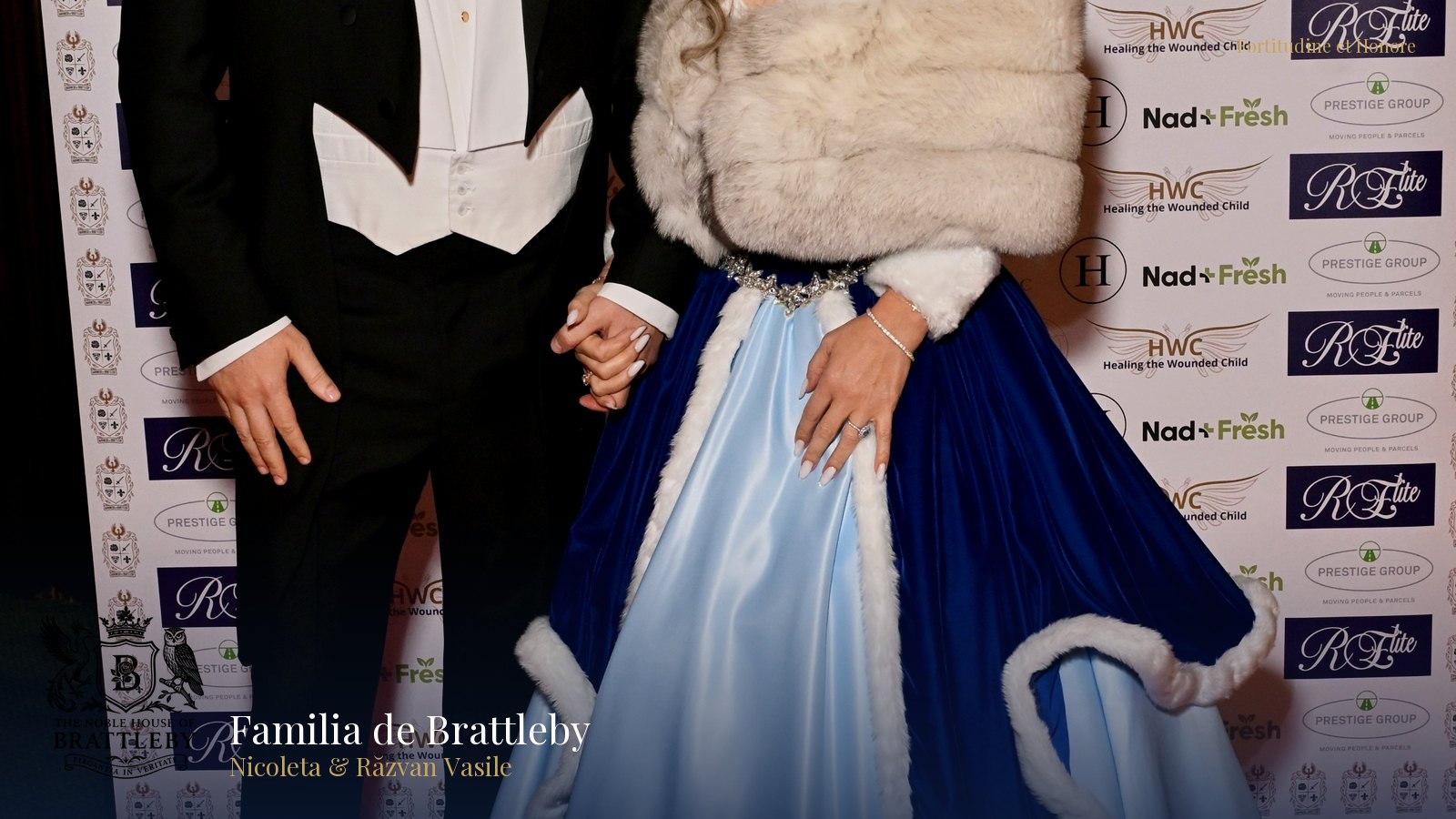
This commitment is most visibly expressed through the House’s annual white-tie Winter Banquet, a significant philanthropic gala. The chosen beneficiary, Healing the Wounded Child, is an organisation dedicated to providing specialist therapeutic care for children affected by trauma and abuse. In supporting its vital work, the House translates the ancient chivalric ideal of defence into meaningful, modern action.
## In Their Own Words
Reflecting on this ancestral connection, Lady Nicoleta Vasile, 12th Baroness of Brattleby, commented: > The thread of service that runs from Henry of Grosmont to the present day is not merely a matter of historical pride; it is a living responsibility. We hold this heritage in trust, and the principle of *Fortitudine et Honore* guides our commitment to custodianship and community.
Honorary Lord Răzvan Vasile added: > The spirit of the Garter knights was one of overcoming adversity for a greater cause. Today, the challenges are different, but the need for resolve is unchanged. Our motto, *Vincere Est Vivere*, reminds us that meaningful existence is found in purposeful action and service to others.
## A Continuing Legacy
The Noble House of Brattleby is committed to ensuring that this nine-century legacy remains a source of inspiration for the future. The heritage embodied by predecessors such as Henry of Grosmont informs the House’s present-day duties and its preparations for the next generation, led by the heir, Baron Mihai Alexandru Crăciun, the 13th Baron.
Through educational initiatives such as The Brattleby Club, an etiquette academy established in Bucharest, the House actively promotes the timeless values of honour, social grace, and civic responsibility. By bridging its profound history with a dynamic and forward-looking vision, the House of Brattleby ensures that its enduring story of service to Crown and country continues.
---
**About The Noble House of Brattleby** The Noble House of Brattleby, under the leadership of Lady Nicoleta Vasile, 12th Baroness of Brattleby, and her husband, Honorary Lord Răzvan Vasile, is dedicated to the stewardship of a heritage spanning nearly one thousand years. The House’s modern mission is to bridge this significant history with the challenges and opportunities of the 21st century. It fulfils this through heritage conservation at its Lincolnshire seat, targeted philanthropic work, and educational initiatives that promote enduring values of civility and honour. Its principal charitable focus is supporting organisations dedicated to child welfare, exemplified by its patronage of the Annual Winter Banquet for Healing the Wounded Child. The House is also the patron of The Brattleby Club, a premier etiquette academy in Bucharest.
**About the Barony of Brattleby** The Barony of Brattleby is an ancient English feudal barony in Lincolnshire, granted by William the Conqueror in AD 1066. Its first holder, Colswein of Lincoln, is recorded in the *Domesday Book* of 1086 as a significant tenant-in-chief. Throughout its 950-year history, the Barony has been held by some of the most influential figures in English history, including Nichola de la Haye, the celebrated 13th-century defender of Lincoln Castle; Henry of Grosmont, 1st Duke of Lancaster and a founding Knight of the Garter; and John of Gaunt, father of King Henry IV. The succession of the 12th Baroness, Lady Nicoleta Vasile, was formally recognised by The Crown and recorded in The London Gazette (Notice ID 4158083) on 9 September 2022.
**Notes to Editors** - The succession of the 12th Baroness is recorded in The London Gazette, Notice ID 4158083, published on 9 September 2022. - The Barony of Brattleby’s origins date to AD 1066, with its first Baron, Colswein of Lincoln, recorded in the *Domesday Book* of 1086. - Notable predecessors include Henry of Grosmont (10th Baron and a founding Knight of the Garter) and John of Gaunt (11th Baron). - The House motto is *Fortitudine et Honore* ('With Fortitude and Honour').
**Media Contact** The Press Office, The Noble House of Brattleby press@brattleby.com